





More Insights: Why Trucking May Not Be a Leading Economic Indicator This Cycle
How Truck Freight Is Flowing in These ‘Crazy Times’
What do inflation, inventories, employment numbers, freight rates and more mean for trucking's outlook?
July 18, 2022
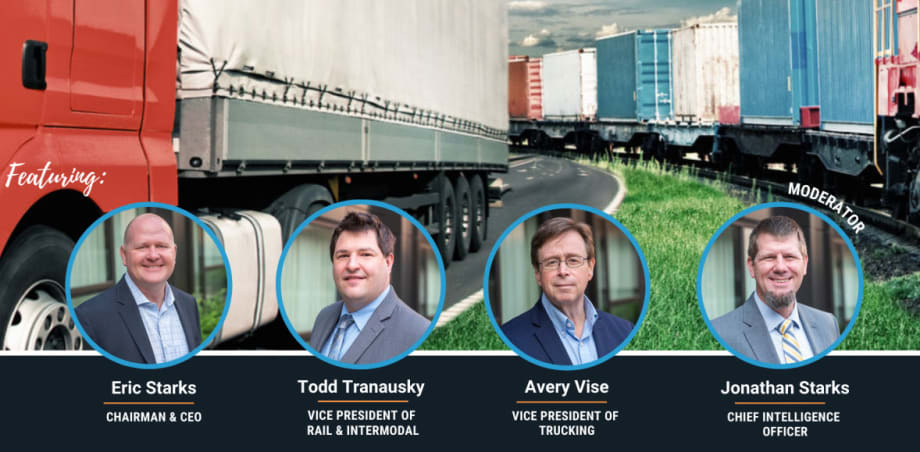
FTR analysts discussed the economic numbers affecting trucking in a July 14 webinar.
Photo: FTR
4 min to read
“These are crazy times for the economy, and the elephant in the room is inflation,” said Eric Starks, chairman and CEO of FTR, kicking off the freight forecasting firm’s State of Freight webinar on July 14.
The Consumer Price Index shows that all items saw high inflationary pressure, amounting to 9% “all in,” meaning including volatile food and energy costs. However, he noted, the Core CPI number, which excludes food and energy, is starting to go down. “That’s in the 6% range, which is too high. We want to see it down at 2% to 2.5%.
“So, we need to slow [the economy down],” Starks continued. The Fed is already raising interest rates to help downshift growth, but those actions churn up another concern: “What if they overcorrect? That’s not likely, but we must keep an eye on it. Those of us who were around in the ‘70s remember how inflation went up and down.”
Starks pointed out that a driving factor this time around is that “much of the inflationary pressure is global, not due to the U.S. economy.” The perfect example of that is how Russia’s war on Ukraine forced a historic drop in global fuel production that drove up the cost of diesel and gasoline here.
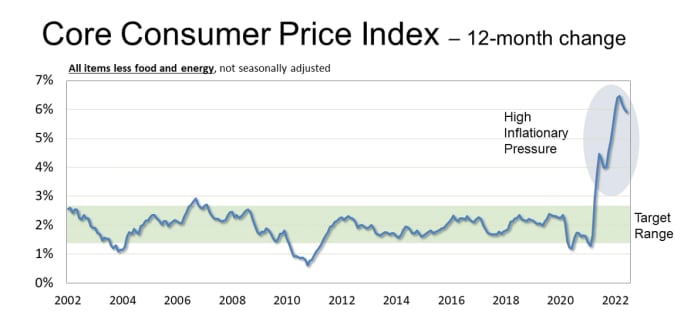
Much of the inflationary pressure is global, not due to the U.S. economy.
Source: FTR
The Impact of Inventories on the State of Freight
Turning to inventories and their impact on freight flows, Starks pegged inventories for the consumer market as having been too low, but now we’re starting to see excess inventories. “This is likely to get worse as the year goes on. China is on [COVID] lockdown now, but expect a surge to come.”
Back in 2019, pre-pandemic, inventories were relatively normal.
“That has radically changed since then. Whenever we have a surge in imports and a decline in exports, the imbalance creates problems at ports and for supply chains. What we’ll see is a shift from consumer goods to increases in core capital goods orders. These are continuing to rise.” He noted that the U.S. is “not seeing a softening in employment. Instead, we’re seeing growth in labor.”
Avery Vise, FTR vice president for trucking, weighed in more directly on the state of freight, observing that spot rates have come down sharply in recent weeks. “There’s some cooling in spot loads but growth in dry van loads, [indicating] not that freight has had a sharp drop, but that the contract market has picked up that volume.”
He also pointed out that broker-posted rates are about 63 cents lower than last year, yet still strong. “Take out the fuel surcharge and you’ll see the rate has returned almost to what it was before the pandemic.”
What Employment and Authority Numbers Tell us About Availability of Truck Drivers
Turning to the state of trucking jobs, Vise said current employment figures reinforce the view that we’re returning to a more normal split between spot and contract markets. “Trucking has recovered jobs far greater than the general economy has.” Bureau of Labor Statistics numbers for April and May show the second-highest gain historically. “Clearly, there’s plenty of demand for truck drivers— and there seem to be ample drivers available.”
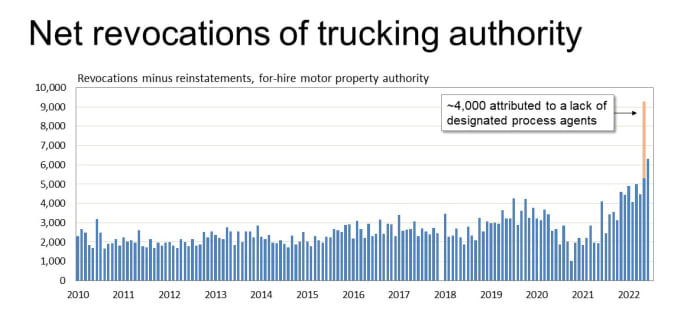
If you exclude a one-time enforcement, June had the highest number of net federal trucking authority revocations on record.
Source: FTR
Vise said that’s because “the drivers were not there, just somewhere else. Grants of authority have risen dramatically since 2020. So, many drivers who worked for carriers are now working for intermediaries [brokerages] that may be offshoots of truckload fleets.”
Looking at where that trend may be going, he pointed out that the number of new carriers is high, but we’re also seeing a rise in the revocation of authority since last year. If you exclude a one-time FMCSA enforcement, he said, June had the highest number of net revocations on record. He added that these new carriers are “just now beginning to see the impact of the fuel price rise taking effect,” so that will impact their numbers as well.
“It’s no mystery where the drivers are,” Vise said. “Now, a large number of the independents that gave up their authority — and gave up their tractors— are rejoining bigger carriers.”
Going forward, the big wildcard will be how well carriers will comply with California’s AB5 law severely restricting the use of independent contractors — and whether similar laws will spread to other states. He said compliance could entail converting independents to company drivers or moving to a system of separate payment for use of their trucks, which he termed a “logistic model.”
Summing up, Vise noted that FTR forecasting indicates near-term “a fairly tight freight market overall, with rates lower due to the drop in the spot market.”
More Fleet Management

Why Private Fleets Are Taking More Freight
Private fleets are putting their own trucks on demanding customers and high-cost lanes as companies seek greater control over service, costs, and capacity.
Read More →
Sponsored•September 16, 2026
Color Match Smarter: Tools That Restore & Perform
For fleet managers and collision repair professionals keeping heavy-duty trucks on the road, getting the color right the first time isn't just about appearance — it's about efficiency, turnaround time, and bottom-line results. Discover how today's digital color tools are transforming the repair process from guesswork to precision.
Read More →
FMCSA Pauses Biennial-Update Enforcement Amid Motus Transition
Carriers whose updates were due on or after June 1 have more time, while FMCSA works to stabilize its new registration system and warns of phishing sites impersonating its new carrier registration system, Motus.
Read More →


Sponsored•September 14, 2026
2026 Blueprint for Countering Smarter Supply Chain Theft
Cargo theft is no longer just the cost of doing business. It's a multi-billion-dollar criminal enterprise exploiting vulnerabilities across your fleet, drivers, and supply chain.
Read More →
Sponsored•September 1, 2026
How Telematics Improves Visibility, Control, and Performance in Refrigerated Fleets
Explore how telematics help refrigerated fleets improve visibility, uptime, efficiency, compliance, and cargo protection across connected cold chain operations.
Read More →
What the U.S.-Canada Trade War Means for Trucking
Escalating U.S.-Canada tariffs could disrupt cross-border freight, reduce truck volumes, raise costs, and create new uncertainty for carriers on both sides of the border.
Read More →
What Are Trucking’s Top Concerns for 2026?
The American Transportation Research Institute wants to know what's worrying trucking fleet managers, drivers, and other stakeholders in its annual Industry Issues survey.
Read More →
American Trucking Associations Looks for a New Leader
ATA President and CEO Chris Spear abruptly left his job at the association on August 21, at a pivotal time for the trucking industry.
Read More →
Public Wi-Fi Cybersecurity Risks: How Truck Drivers and Fleets Can Protect Their Data
Public Wi-Fi can expose truck drivers and fleets to credential theft, malware, and other cyber threats. Here’s how to reduce the risk on the road.
Read More →
For Nicky Cupp, Fleet Innovation Starts With Frustration
HDT Truck Fleet Innovator Nicky Cupp turns everyday pain points at Fraley & Schilling into opportunities for better technology and smarter processes.
Read More →