





From the archives (2/27/2020): Hope Expressed for Surface Transportation Reauthorization Passage
House Bill Would Spend $319 Billion on Highways, Postpone New HOS Rules
A $500 billion, five-year infrastructure bill introduced by the House of Representatives would not only fund highways and advance clean transportation efforts, but also would delay implementation of the new hours-of-service rule, require a rulemaking on driver detention, push revision of how motor carrier safety is measured under the CSA program.
June 3, 2020
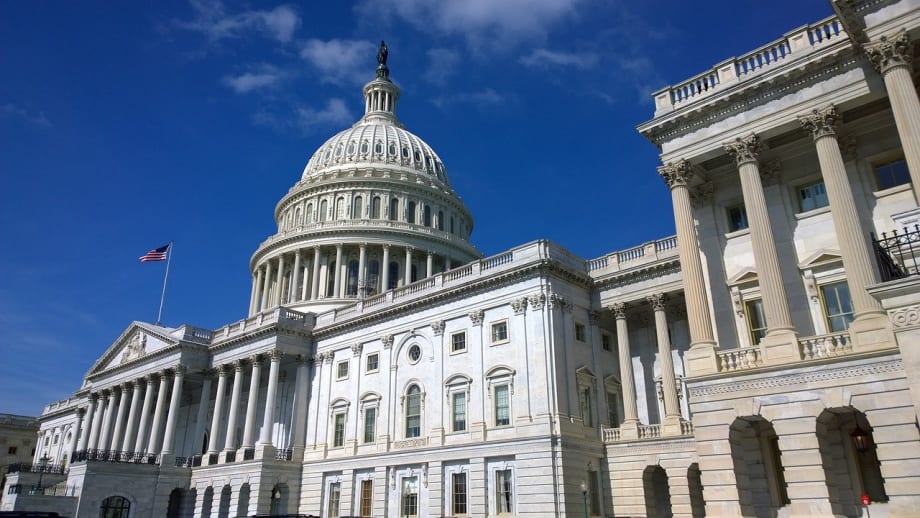
Congress is looking at a September deadline to reauthorize highway funding.
Image: MotionStudios via Pixabay
6 min to read
The House Committee on Transportation and Infrastructure introduced a $500 billion, five-year infrastructure bill on June 3. The bill would not only fund highways and advance clean transportation efforts, but also would delay implementation of FMCSA’s hours-of-service final rule and require the agency to initiate a rulemaking on driver detention and pushes it to finish its work to revise how motor carrier safety is measured under the CSA program.
The Senate passed its bipartisan version of an infrastructure bill last summer; America’s Transportation Infrastructure Act of 2019 was billed by its four sponsors as “the largest highway legislation in history.” That bill would authorize $287 billion over five years.
The current highway program authorization expires at the end of September.
Infrastructure Investment
The House Investing in a New Vision for the Environment and Surface Transportation in America (INVEST in America) Act is a key component of the Moving Forward Framework that House Democrats released earlier this year. The bill’s original cosponsors are Subcommittee on Highways and Transit Chair Eleanor Holmes Norton (D-DC) and Subcommittee on Railroads, Pipelines, and Hazardous Materials Chair Dan Lipinski (D-IL).
The bill, which sponsors say includes strong Buy America provisions and labor protections, authorizes nearly $500 billion over five years to address infrastructure needs, including:
Tackling the backlog of roads, bridges, and transit systems in need of repair and replacement;
Building resilient infrastructure that will withstand climate change and extreme weather;
Designing streets that are safer for all road users, including pedestrians and cyclists;
Pushing zero-emissions transportation by prioritizing carbon pollution reduction, investing in public transit and the national rail network, building out fueling infrastructure for low-and zero-emission vehicles, and deploying technology and innovative materials;
Sharply increasing funding for public transit options in urban, suburban and rural areas;
Making investments in Amtrak;
Improving access to federal funding to help communities “undertake transformative projects that are smarter, safer, and made to last.”
Sponsors said the INVEST in America Act also accounts for the economic downturn caused by the global pandemic, authorizing a sharp increase in funding to continue current programs in the first year of enactment of the bill (FY 2021), with wider policy implementation occurring in FY 2022.
The bill would target highways with $319 billion. It would prioritize fixing the broken, outdated infrastructure we already have, including 47,000 structurally deficient bridges, before building new highway capacity, and the authors tout “bold new funding for addressing gridlock.”
The INVEST in America Act would measure state-by-state greenhouse gas emissions, with incentives for best performers in carbon pollution reduction, and it dramatically increases funding for development of charging stations and other alternative fueling options for electric and zero-emissions vehicles.
It also would increase funding for truck and bus safety programs under the Federal Motor Carrier Safety Administration, providing $4.6 billion over five years. Part of that funding would be required to go to a new Large Truck Crash Causal Factors Study.
$105 billion would go to transit investments and $60 billion to rail investments.
Trucking Provisions
The Owner-Operator Independent Drivers Association released a statement supporting provisions such as increased funding for highway construction, $250 million for truck parking projects, provisions that will help limit excessive detention time and predatory lease-to-own schemes, new restrictions on tolling, and analysis of H-1B Visa use within the trucking industry.
However, OOIDA said, it has concerns about provisions that would return CSA scores to public view before the system has been perfected and delay implementation of FMCSA’s hours-of-service final rule.
The bill would require the Transportation Department to delay the final hours of service rule, published on June 1 and scheduled to go into effect in late September, until 60 days after submitting a “comprehensive review of hours of service rules and the impacts of waivers, exemptions, and other allowances that limit the applicability of such rules.” The bill would require that report to be completed in no more than 18 months and published in the Federal Register for public comment.
The bill also directs the Federal Motor Carrier Safety Administration to change its personal conveyance guidance to establish specific mileage or time limits, or both.
It calls for the department to initiate a rulemaking on a regulation that would establish limits on the amount of time a driver can be detained by a shipper or receiver without compensation.
The bill would require the DOT to implement a revised methodology to be used in the Compliance, Safety, Accountability program no later than a year after the date of enactment as called for in the 2015 FAST Act.
In 2018, FMCSA submitted to Congress a required “corrective action plan” that outlined how the agency planned to address recommendations made in the National Academy of Sciences’ “Improving Motor Carrier Safety Measurement” report. The NAS report, commissioned by FMCSA to comply with a provision of the FAST Act, recommended that the agency consider adopting a more-scientific statistical-modeling approach known as “Item Response Theory” to make the SMS function more accurately.
Last year, a DOT internal audit found that the ongoing process to change the CSA program was solid on the whole, but lacking in data.
American Trucking Associations President and CEO Chris Spear said in a statement, “This draft legislation contains significant investment in our country’s roads and bridges and approaches highway and truck safety from a data-driven perspective. And while we may not agree on every provision therein, this is a real and commendable step on the part of the committee to advance the process in the House and ultimately arrive at a negotiable solution with the Senate."
Partisan Politics
The bill drew swift reaction from House Republicans and other critics saying a more bipartisan approach is needed.
Committee on Transportation and Infrastructure Ranking Member Sam Graves (R-MO), Subcommittee on Highways and Transit Ranking Member Rodney Davis (R-IL), and Subcommittee on Railroads, Pipelines, and Hazardous Materials Ranking Member Rick Crawford (R-AR) made a joint statement, saying, “Democrats and Republicans alike know the only way to complete a reauthorization is if we work together. For decades, that’s been the proven formula for successfully producing surface transportation laws. Unfortunately, driven by the Speaker’s partisan agenda, Committee Republicans were not involved in the development of this bill.”
The bill, they said, “lacks critical flexibility for the states, its outsized funding increases for urban areas will leave rural America even further behind, and numerous new green mandates and extreme progressive goals are woven throughout the fabric of new and existing core programs.”
American Association of State Highway and Transportation Officials Executive Director Jim Tymon praised the committee for taking the first step in reauthorizing surface transportation programs before they expire this fall, but said, “Transportation has traditionally been a bipartisan issue, and both sides of the aisle will have to work together to get a surface transportation bill over the finish line,” Tymon said. “We remain encouraged that infrastructure appears to be a priority in both the House and the Senate and we look forward to working with Congressional leaders to enact legislation before the expiration of the FAST Act that will fully fund the highway trust fund and ensure the nation's transportation system remains the backbone to economic vitality and overall quality of life.”
Neil Bradley, U.S. Chamber of Commerce executive vice president and chief policy officer, said in a statement, “With historic unemployment, tremendous unmet infrastructure needs, and less than four months before the expiration of surface transportation programs, this is no time for another partisan approach to infrastructure.”
The INVEST in America Act is highly unlikely to make it into law in its current form. It first must be passed by the full House, and then the House and Senate must work on creating a compromise bill before it can go to the president's desk for a signature.
In addition, regardless of the form of the final highway reauthorization bill, Congress must still determine how to pay for it.
More Safety & Compliance

FMCSA Pauses Biennial-Update Enforcement Amid Motus Transition
Carriers whose updates were due on or after June 1 have more time, while FMCSA works to stabilize its new registration system and warns of phishing sites impersonating its new carrier registration system, Motus.
Read More →
ZF Expands Commercial Vehicle Push in North America
ZF is expanding its North American commercial-vehicle presence with new transmission applications, electrification, trailer technology and autonomous-driving systems.
Read More →
Truck Drivers Need More Than Another Alert
Fleets have more visibility into truck health, safety events, and driver activity than ever. The next challenge is turning all that information into useful guidance for the person who has to decide what to do next.
Read More →
Tesla Wants a Self-Driving Semi. Are Cameras Enough?
Could Tesla’s camera-only autonomous driving technology work on an 80,000-pound Semi? In this commentary, HDT's Deborah Lockridge takes a look at Tesla, Cybercab, and how autonomous trucks see the road.
Read More →
What DOT’s Automated Vehicle Strategy Means for Trucking
The U.S. Department of Transportation issued a new automated-vehicle strategy that outlines plans for driverless-truck regulations, cross-state freight corridors, and federal safety standards.
Read More →
NYC Expands Speed, Pedestrian Safety Tech Across Fleet
New York City is expanding intelligent speed assistance and pedestrian-alert systems across its municipal fleet, moving the technologies from pilot programs into vehicle procurement and retrofit requirements.
Read More →
FMCSA Removes 110 Truck Driver Training Schools from Certified ELDT List
Federal regulators also are targeting more than 160 additional training providers and launching a nationwide audit of third-party CDL skills testers as part of a broader crackdown on trucking fraud.
Read More →
Beyond DOT Compliance: What Makes a Trucking Fleet Truly Safe?
A trucking fleet can follow every rule and still make unsafe decisions. The real test comes when safety conflicts with freight, productivity, or cost.
Read More →
Hours of Service Pilot Programs: FMCSA Readies for 2027 Rollout
Two pilot programs could eventually reshape hours-of-service rules, giving truck drivers options to pause their 14-hour clock or use longer split sleeper rest periods.
Read More →
New Guide Offers Pet Safety Tips for Truck Drivers
Hundreds of thousands of pets travel in truck cabs. A new safety guide from Volvo Trucks and the Center for Pet Safety offers practical advice for truck drivers who bring dogs and cats along for the ride.
Read More →