




HOS Restart Reform Keeps Cranking on Capitol Hill
Updated on May 20: A House Appropriations subcommittee has advanced language to “fix” the Hour of Service rule’s 34-hour restart provisions that goes much further than a measure contained in a bill passed by the full Senate on May 19.

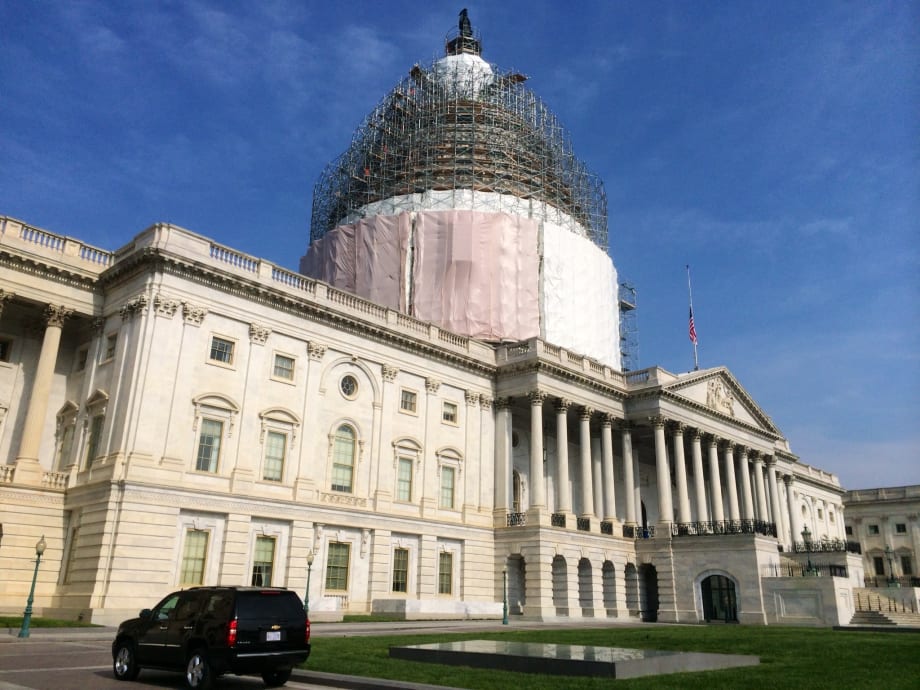
U.S. Capitol Photo: David Cullen
U.S. Capitol Photo: David Cullen
Updated on May 20. Following on the heels of the FY2017 Transportation, Housing and Urban Development (THUD) package approved by the Senate Appropriations Committee last month that included a controversial legislative “fix” for the Hour of Service rule’s 34-hour restart provisions, a House Appropriations subcommittee has advanced its version of the funding bill with language that goes much further.
The House measure, which cleared the subcommittee on May 18 by a simple voice vote, would simply roll back the Hours of Service clock.
It calls for removing altogether the 2011 restart provisions, which became effective on July 1, 2013 but were suspended by Congress in late 2014. Since then, trucking has been operating under the pre-2011 HOS rule that permits unlimited use of the restart provision and doesn’t require drivers to take two periods off between 1 a.m. and 5 a.m. during their 34-hour restart.
The House subcommittee’s take on THUD addresses more than just the HOS issue. The proposed bill contains two other policy riders widely sought by trucking interests:
One would ensure that federal rules take precedence over state laws regarding meal and rest breaks for CMV drivers.
The other would keep the Federal Motor Carrier Safety Administration from moving ahead with a Safety Fitness Determination rulemaking until the previously mandated review of the agency’s Compliance, Safety, Accountability enforcement program is completed.
The Senate THUD bill that passed out of committee in April, and is now under consideration by the full chamber, seeks to fix wording in earlier legislation that muddied what the status of the 34-hour restart provisions would be if a mandated study by the Department of Transportation cannot show that the restart changes benefit drivers.
Language in that bill also aims to prevent drivers from abusing the restart rule by capping the amount of time they can spend behind the wheel or on duty at 73 hours per week: “If the 34-hour restart rule in effect on June 30, 2013, is restored, then drivers who use the 34-hour restart may not drive after being on duty more than 73 hours in a 7-day period."
By contrast, the new House measure requires that “The 34-hour restart rule in effect on December 26, 2011, shall be restored to full force and effect.” It also includes a separate passage stating that no funds “may be used to implement, administer, or enforce the requirement for two off-duty periods from 1 a.m. to 5:00 a.m… or the prohibition on use of more than one restart during a consecutive 168- hour period… and such provisions shall have no force or effect.”
But wait, there’s more. Shortly after the House subcommittee put forward its THUD bill, Sen. Richard Blumenthal (D-CT) filed an amendment to the Senate Appropriations Committee’s THUD bill that goes the other way entirely by seeking to restore the 2011 restart provisions. And Blumenthal’s measure would put the more restrictive rules back in place no matter what the results are of the study demanded by Congress on the effectiveness of the rule change.
In a statement released after the House subcommittee action, the American Trucking Associations said it was “pleased that despite sensational media reports, and misinformation fomented by anti-truck advocacy groups, both the House and Senate have advanced legislation that would remove the threat of the restart being eliminated as a result of a drafting error in last year’s Omnibus appropriations bill.”
“Congress’ intent in last year’s Omnibus spending bill was clear: Unless these new restrictions on the restart are shown to measurably improve safety and driver health, they should not be imposed,” said Dave Osiecki, ATA’s executive vice president and chief of national advocacy. “As it stands, because of this glitch in the wording of that bill, the restart could be eliminated, and Congress should address that swiftly so our industry can continue safely moving America’s goods without needless upheaval and confusion.”
There’s yet another wrinkle to a legislative process that already looks about as crisp as a seersucker suit on a humid midsummer afternoon in Washington.
While some legislators are determined to fix the HOS wording glitch as well as push through some other pro-trucking policy riders by attaching them to the THUD legislation, others have been pushing back against inserting changes in safety regulations into must-pass spending bills rather than offering them in stand-alone bills that are harder to pass.
For example, as reported by Politico, the House subcommittee's Ranking Member, Rep. David Price (D-NC), said he intends to submit amendments during the full committee markup to remove what he views as “problematic” policy riders from the THUD bill.
Another example: Back in April, Sen. Barbara Boxer (D-CA), the influential Ranking Member of the Environment and Public Works Committee, made clear her objection to including in THUD a provision that would prevent states from enacting their own meal and rest break rules for CDL drivers.
In a letter to the leaders of the Senate Appropriations Committee, she expressed her strong opposition to “any efforts” to attach “a terrible anti-safety provision” to the THUD bill that would “dock the pay of truck drivers by attacking state laws that protect their pay during bathroom or lunch breaks, or when performing necessary activities like loading or unloading a truck."
The White House has also weighed in. President Obama has cited HOS reform as one of several reasons why he may veto the funding package— once both houses of Congress manage to pass it. On May 16, the White House stated that “The Administration is concerned about provisions in the [Senate THUD] bill that have the potential to undercut public safety, including section 131 of the bill regarding DOT's ‘Hours of Service’ regulation addressing driver fatigue.”
And along with outside “pro-safety” groups that don’t want any of the aforementioned policy riders to go through, bear in mind not every stakeholder group in trucking favors all of them, either.
Most recently, a coalition of major carriers came out firmly against the Senate’s proposed HOS fix. In a May 2 statement, The Trucking Alliance said it “urges the U.S. Senate to delete the proposed ’73 hours in a 7-day period’ provision from the bill” because HOS rules “should rely on sound science and statistical data to reduce truck driver fatigue.” The group also argued that Congress should leave the HOS rule alone-- at least until data on driver fatigue is compiled after the upcoming electronic logging device mandate has gone into effect.
So, trucking lobbyists seeking regulatory reform via legislation can’t let up. There is enough firm opposition— in Congress, in the Obama Administration, and from other interest groups including within trucking— that the current cavalry of policy riders will have as rough a ride making it across Capitol Hill as similar measures did last year.
UPDATE:The Senate passed the aforementoned THUD bill, which includes the HOS fix described above as well as a firm deadline on the proposed speed-limiter rule for Class7-8 trucks. The bill was included within a larger appropriations package that was approved by a wide bipartisan margin..
More Fleet Management

Why Private Fleets Are Taking More Freight
Private fleets are putting their own trucks on demanding customers and high-cost lanes as companies seek greater control over service, costs, and capacity.
Read More →
Color Match Smarter: Tools That Restore & Perform
For fleet managers and collision repair professionals keeping heavy-duty trucks on the road, getting the color right the first time isn't just about appearance — it's about efficiency, turnaround time, and bottom-line results. Discover how today's digital color tools are transforming the repair process from guesswork to precision.
Read More →
FMCSA Pauses Biennial-Update Enforcement Amid Motus Transition
Carriers whose updates were due on or after June 1 have more time, while FMCSA works to stabilize its new registration system and warns of phishing sites impersonating its new carrier registration system, Motus.
Read More →


2026 Blueprint for Countering Smarter Supply Chain Theft
Cargo theft is no longer just the cost of doing business. It's a multi-billion-dollar criminal enterprise exploiting vulnerabilities across your fleet, drivers, and supply chain.
Read More →
How Telematics Improves Visibility, Control, and Performance in Refrigerated Fleets
Explore how telematics help refrigerated fleets improve visibility, uptime, efficiency, compliance, and cargo protection across connected cold chain operations.
Read More →
What the U.S.-Canada Trade War Means for Trucking
Escalating U.S.-Canada tariffs could disrupt cross-border freight, reduce truck volumes, raise costs, and create new uncertainty for carriers on both sides of the border.
Read More →
What Are Trucking’s Top Concerns for 2026?
The American Transportation Research Institute wants to know what's worrying trucking fleet managers, drivers, and other stakeholders in its annual Industry Issues survey.
Read More →
American Trucking Associations Looks for a New Leader
ATA President and CEO Chris Spear abruptly left his job at the association on August 21, at a pivotal time for the trucking industry.
Read More →
Public Wi-Fi Cybersecurity Risks: How Truck Drivers and Fleets Can Protect Their Data
Public Wi-Fi can expose truck drivers and fleets to credential theft, malware, and other cyber threats. Here’s how to reduce the risk on the road.
Read More →
For Nicky Cupp, Fleet Innovation Starts With Frustration
HDT Truck Fleet Innovator Nicky Cupp turns everyday pain points at Fraley & Schilling into opportunities for better technology and smarter processes.
Read More →