




Holiday Season Prime Time for Cargo Theft
Cargo thieves don't take time off during the holidays -- in fact, they may turn to more aggressive methods, say freight security experts
Cargo thieves don't take time off during the holidays -- in fact, they may turn to more aggressive methods, say freight security experts.
CargoNet's analysis of historical cargo theft data shows that the rate of cargo theft increases over holiday weekends.
Freightwatch International also notes that criminal elements may adjust their tactics to get the product needed for fencing on the black market for holiday consumers. These methods are often more aggressive than traditional cargo theft techniques and often result in smaller volumes of loads being stolen, such as smash-and-grab style thefts at open docks and trailer-container pilferage.
Also, with cold weather upon us, trucks are being left running, which can decrease driver situational awareness due to noise, increasing the risk of theft.
Freightwatch International also points out that trucking companies will work to have personnel home for the holidays. This may result in driver swap outs over-the-road. Security levels can be diminished with additional stops and additional personnel entering into the supply chain.
Cargo Watch offered the following steps to help prevent theft and recover stolen cargo:
* Avoid having loaded trailers sit unattended over the weekend. If loaded trailers do need to sit unattended, be sure they are parked in secure areas.
* Make sure that both security managers and drivers have accurate license plate, VIN, and descriptive information for tractors, trailers, containers, and container chassis. Police agencies will need this information to open an investigation in the event of an incident.
* Consider deploying covert tracking devices in product and on trailers. If using tracking devices, be sure to geofence all stationary trailers that are not being actively monitored.
* Secure all tractors with high-security locking devices, such as air-cuff and tractor steering joint locks.
* Secure all trailers (loaded and unloaded) with high-security ISO 17712-compliant barrier seals in combination with hardened padlocks. Use kingpin locks for unattached trailers.
* Check to make sure that facility lighting, back-up generators, alarm system(s) and surveillance equipment are all in good working order.
* Never treat any alarm signal as a "false alarm". When targeting warehouse locations, cargo thieves tend to trip facility alarm systems multiple times before breaking-in to give law enforcement and facililty managers the impression that the alarm system is malfunctioning.
* Remove keys from all facility equipment, especially motorized pallet jacks and forklifts.
* Document and report all suspicious activity that occurs in and around a facility to security personnel & the CargoNet operations center. This information can be critical to law enforcement in the event of a cargo theft incident.
More Safety & Compliance

Marijuana and Trucking’s Drug-Testing Dilemma
Marijuana is getting stronger, laws are changing, and drug tests still can’t reliably establish impairment. What does that mean for truck drivers and the fleets that employ them?
Read More →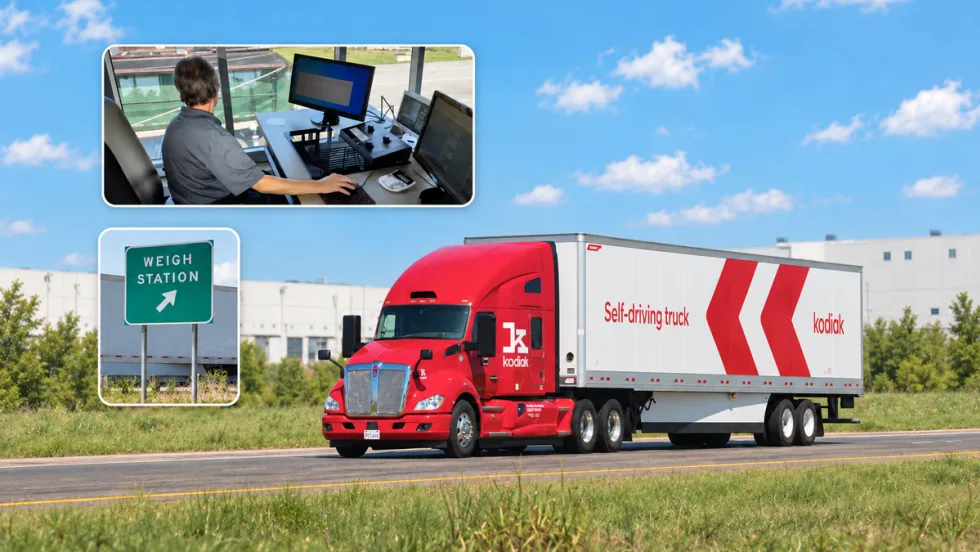
PrePass, Kodiak Connect Driverless Trucks to Roadside Enforcement
The system will allow enforcement agencies to verify Enhanced Inspection information and decide whether Kodiak’s autonomous trucks can bypass roadside screening sites.
Read More →
From One Generation to the Next: How Mentorship Builds Safer Truck Drivers
After three decades in trucking, Harold Perry shares what he's learned about driver safety, mentorship, and helping the next generation build confidence behind the wheel.
Read More →
FMCSA Pauses Biennial-Update Enforcement Amid Motus Transition
Carriers whose updates were due on or after June 1 have more time, while FMCSA works to stabilize its new registration system and warns of phishing sites impersonating its new carrier registration system, Motus.
Read More →
ZF Expands Commercial Vehicle Push in North America
ZF is expanding its North American commercial-vehicle presence with new transmission applications, electrification, trailer technology and autonomous-driving systems.
Read More →
Truck Drivers Need More Than Another Alert
Fleets have more visibility into truck health, safety events, and driver activity than ever. The next challenge is turning all that information into useful guidance for the person who has to decide what to do next.
Read More →
Tesla Wants a Self-Driving Semi. Are Cameras Enough?
Could Tesla’s camera-only autonomous driving technology work on an 80,000-pound Semi? In this commentary, HDT's Deborah Lockridge takes a look at Tesla, Cybercab, and how autonomous trucks see the road.
Read More →
What DOT’s Automated Vehicle Strategy Means for Trucking
The U.S. Department of Transportation issued a new automated-vehicle strategy that outlines plans for driverless-truck regulations, cross-state freight corridors, and federal safety standards.
Read More →
NYC Expands Speed, Pedestrian Safety Tech Across Fleet
New York City is expanding intelligent speed assistance and pedestrian-alert systems across its municipal fleet, moving the technologies from pilot programs into vehicle procurement and retrofit requirements.
Read More →
FMCSA Removes 110 Truck Driver Training Schools from Certified ELDT List
Federal regulators also are targeting more than 160 additional training providers and launching a nationwide audit of third-party CDL skills testers as part of a broader crackdown on trucking fraud.
Read More →