




Hazmat Changes at Ambassador Bridge?
Hazardous materials shipments might be able to cross the U.S.-Canadian border via the privately owned Ambassador Bridge in the future, according to a report by Canadian trucking publication Today's Trucking
Hazardous materials shipments might be able to cross the U.S.-Canadian border via the privately owned Ambassador Bridge in the future, according to a report by Canadian trucking publication Today's Trucking.
Todaystrucking.com reported last week that the owner of the bridge, the Detroit International Bridge Company, is requesting a change to the National Hazardous Materials Route Registry, to allow certain flammable, corrosive, and explosive materials to cross between Canada and the U.S. via the 75-year-old Ambassador Bridge. Many of those materials are currently barred from the bridge.
The State of Michigan initiated a review of the NHMRR earlier this year, which includes reassessing the non-radioactive aspects of the rule, according to the publication.
Currently, the Detroit Windsor the Truck Ferry is the only mode designated to transport hazmat trucks across the Detroit River. However, Todaystrucking.com has reported that the bridge "routinely allows such vehicles to cross anyway via special permit that it writes for select fleets. Some of those passing trucks belong to carriers controlled by the bridge's owner, Matty Moroun."
The ferry owner, Gregg Ward, told Today's Trucking that the move would endanger security at the bridge, as well as the future of his business.
More Equipment

ZF Expands Commercial Vehicle Push in North America
ZF is expanding its North American commercial-vehicle presence with new transmission applications, electrification, trailer technology and autonomous-driving systems.
Read More →
Tesla Wants a Self-Driving Semi. Are Cameras Enough?
Could Tesla’s camera-only autonomous driving technology work on an 80,000-pound Semi? In this commentary, HDT's Deborah Lockridge takes a look at Tesla, Cybercab, and how autonomous trucks see the road.
Read More →
Kodiak: Driverless Long-Haul Truck Launch on Track for 2026
Kodiak AI says its driverless long-haul safety case is 93% complete and it remains on track to begin commercial operations by year-end 2026.
Read More →
What DOT’s Automated Vehicle Strategy Means for Trucking
The U.S. Department of Transportation issued a new automated-vehicle strategy that outlines plans for driverless-truck regulations, cross-state freight corridors, and federal safety standards.
Read More →
East Coast Port Launches $45M Electric Truck Push
The Port Authority of New York and New Jersey announced millions in incentives for zero-emission drayage trucks, yard tractors, and new charging hubs near the port.
Read More →
PlusAI Going Public to Fund Autonomous Truck Launch
A SPAC deal could provide PlusAI with up to $300 million as it works toward a 2027 commercial launch of factory-built autonomous trucks.
Read More →
NHTSA Moves to Rewrite Truck Fuel-Economy Rules
The National Highway Traffic Safety Administration says it lacks authority to regulate medium- and heavy-duty truck engines separately from complete vehicles, but the existing standards have not yet been eliminated.
Read More →
Detroit Opens Orders for EPA 2027 Engines
Detroit isn’t starting from scratch to meet EPA 2027 diesel emissions standards. Its Gen 6 DD13 and DD15 engines keep much of today’s platform while updating the fuel and aftertreatment systems.
Read More →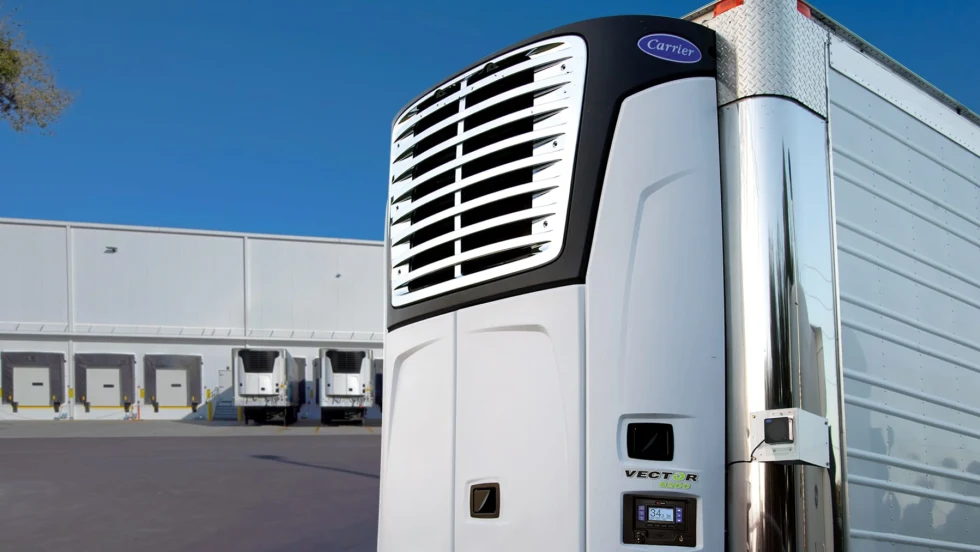
Carrier Transicold Adds All-Electric TRU for Stationary Cold Storage
Carrier Transicold’s new Vector 8200 all-electric transport refrigeration unit gives fleets a diesel-free option for temporary refrigerated and frozen trailer storage.
Read More →
A Closer Look at Kenworth’s Electric T880E Vocational Truck [Video]
Learn more about Kenworth's T880E battery-electric vocational truck at the Paccar Technical Center, including its range, applications, upfitting considerations, and PTO options, in this HDT Spotlight video.
Read More →