




Half Of Nation's Drivers Are Sleepy Behind The Wheel
Findings from a poll by the National Sleep Foundation (NSF), released at the National Summit to Prevent Drowsy Driving in Washington, DC., indicate that about half of America's adult drivers feel sleepy while they are driving
Findings from a poll by the National Sleep Foundation (NSF), released at the National Summit to Prevent Drowsy Driving in Washington, DC., indicate that about half of America's adult drivers feel sleepy while they are driving.
Nearly two in 10 drivers -- 17% or about 14 million people -- say they have actually fallen asleep at the wheel in the past year.
The goal of the two-day summit, spearheaded by NSF, was to make drowsy driving prevention a national public health and safety priority. The poll findings were released just as some 70 million drivers were preparing to be on the roads for the Thanksgiving holiday.
This marks the fifth consecutive year that one-half or more adult drivers admitted to driving while drowsy or sleepy in NSF's annual poll. One percent of the respondents say they have had an accident because they dozed off or were too tired to drive, a figure that has remained consistent in the polls.
"We are definitely on a collision course in this country," says Richard L. Gelula, NSF's executive director. "More and more drivers are on the road, and millions of them get behind the wheel feeling sleepy, apparently without considering the inherent dangers they pose to themselves and others. This is a wake-up call to everyone who drives a motor vehicle or rides in a car, truck or bus: Driving while feeling drowsy or fatigued is a lethal combination, and is no less an impairment than driving while drunk," he adds.
Males and young adults between 18 and 29 are at the highest risk for drowsy driving and falling asleep at the wheel, according to the NSF poll. In fact, 71% of these young adults who drive report driving while drowsy in the past year. Adults with children in the household are more likely to drive drowsy than those without children, while older adults, those 65 and over, are the least likely to drive drowsy or to fall asleep at the wheel.
A strong connection between the quantity and quality of sleep and drowsy driving is apparent in the poll findings. One-quarter of those who rate their sleep as fair/poor are much more likely to drive drowsy than those who say their sleep is good or excellent. Respondents reporting they sleep less than the minimum they need to be fully alert the next day are more likely to doze off at the wheel than those who sleep enough or more than necessary to be fully alert.
"One of the most alarming findings in the 2002 Sleep in America poll is that so many people stay on the roads without stopping in spite of feeling sleepy, or even dozing off at the wheel," says NSF's Gelula. More than one-half (59%) of the drowsy drivers admit they did not stop because of their sleepiness.
More Safety & Compliance

Wabash Trailers Recalled for Improperly Installed Underride Guards
More than 900 Wabash dry van trailers may not comply with the Federal Motor Vehicle Safety Standard for rear impact guards.
Read More →
Why K&B Trucking Is Embracing AI and Driver Safety Technology
Crunching data and embracing artificial intelligence are key in K&B Trucking's safety efforts, says the company's safety director.
Read More →
The Hidden Problem Behind FMCSA's ELD Revocations
NMFTA researchers say dozens of registered ELDs may be built on the same software platforms, allowing compliance and security concerns to persist even after individual devices are removed from the market.
Read More →
ATRI Wants Motor Carriers for Driver-Facing Camera Study
In this new study, the American Transportation Research Institute will explore how driver-facing cameras can impact safety and operational metrics in trucking fleets.
Read More →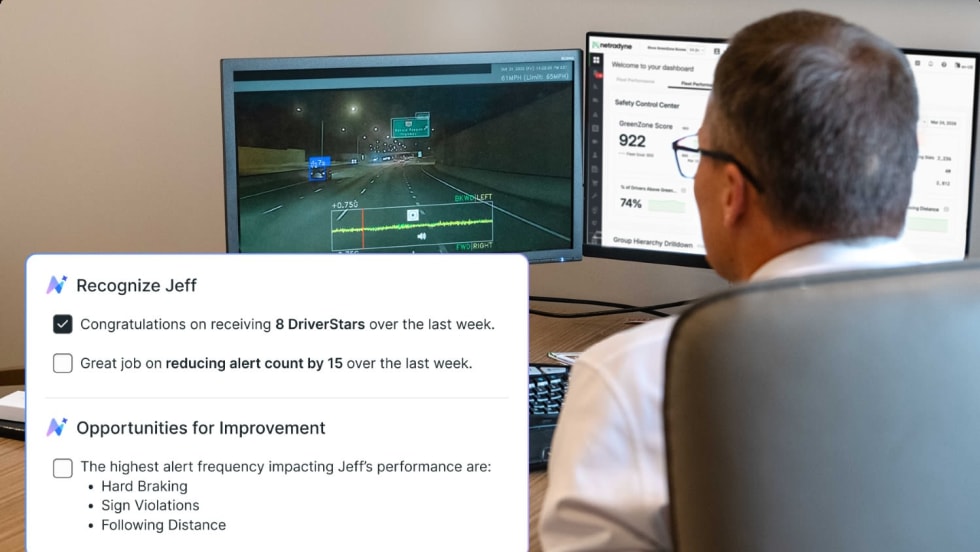
Netradyne Intelligence Uses New AI Agents to Automate Response to In-Cab Camera Data
The company called the next-generation in-cab camera safety platform "a fundamental shift from systems that report on what happened to systems that actively drive what should happen next."
Read More →Mack, Volvo Issue ‘Do Not Drive’ Recall on Possible Wheel-Offs
Owners will be sent advance notice not to operate their affected vehicles until the remedy is performed.
Read More →
Fleetworthy Integrates Lytx Video Snapshots into Safety+ Platform
A new Fleetworthy-Lytx integration gives fleet managers access to video context alongside safety event data, streamlining driver coaching and incident review.
Read More →
How Waste Connections is Using Data, Telematics, and AI
How do you manage and maintain more than 18,000 connected trucks? Data. Lots of it.
Read More →
Fleet Advantage: Top Logistics Fleets Outperform National Safety Benchmarks
Fleet Advantage's latest TRUST Safety Index found leading logistics fleets maintained significantly lower out-of-service rates and stronger safety scores than national averages, while highlighting persistent challenges related to tires, brakes, and unsafe driving behaviors.
Read More →
Why Fleet Data Matters More Than Ever at Waste Connections [Watch]
Waste Connections' Chuck Palmer explains how telematics, predictive maintenance, safety analytics, and AI help keep vehicles on the road and drivers safe in this episode of HDT Talks Trucking.
Read More →