




GiraffeG4 Sentinel Updates Low-Clearance Alert System
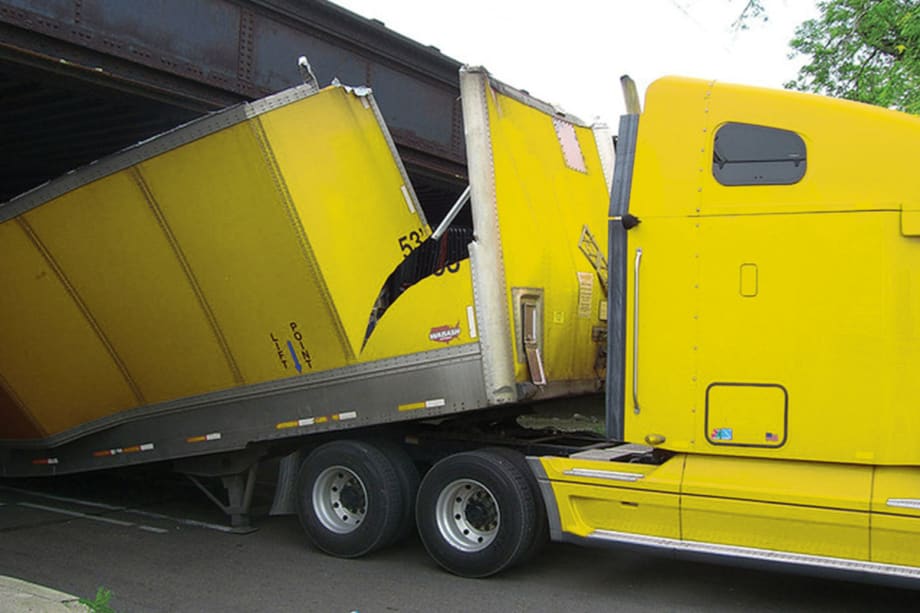
The GiraffeG4 low-clearance alert system has been upgraded and can alert drivers through in-cab fleet telematics screens about upcoming low bridges.

The GiraffeG4 Sentinel System, a two-part system featuring a Tracking App and a User App, is designed to alert drivers to low-clearance obstacles.
Photo: Giraffe G4 LLC
The original GiraffeG4 low-clearance alert system has been upgraded to the GiraffeG4 Sentinel System, a two-part system featuring a Tracking App and a User App.
Giraffe G4 LLC said drivers wanted the GiraffeG4 to warn them of a potential low-clearance hazard before they reached it. The company said fleets wanted to keep driver distraction to a minimum, so the fleet telematics screen had to be the hub for driver information.
Upgraded System
Using GiraffeG4's original weatherproof sound wave system for measuring clearance height, the new GiraffeG4 Sentinel was redesigned as a two-part system.
The Tracking App can pre-measure and GPS locate any potential low-clearance hazard, whether it's a bridge, trestle, parking garage, or tree, according to the company. That information is downloaded onto a database.
Starting the following day, the User App uses that recorded height and GPS data to alert a driver with an alarm and height sign, 200 yards before they reach the hazard ahead.
Integrating with Fleet Telematics
The company said its GiraffeG4 Sentinel System has been built to integrate smoothly into any fleet telematics system.
The GiraffeG4 Sentinel System, according to the company, is not a navigation tool. It is a safety tool that follows underneath the route the driver is on and provides an audible warning to a distracted, tired, or lost driver.
The GiraffeG4 Sentinel staff, the company said, has already pre-measured and GPS located all the potential low-clearance hazards in New York City; New Jersey; Chicago, Illinois; Milwaukee, Wisconsin; Connecticut, and Philadelphia, Pennsylvania.
Plus, the Sentinel User App has an audible alarm at the entrance to every parkway in New York, New Jersey, Connecticut, and Massachusetts where commercial vehicles are prohibited.
Original Idea
The original idea for the GiraffeG4 System came about when Frank Nugent saw a film crew measuring the distance to the ceiling with a laser to learn how much rope was needed to hang some curtains.
After college and before working in the film business as a production manager, Nugent drove a tractor-trailer for A&P Supermarkets delivering groceries all around New York City. He became familiar with the low-clearance hazards that subway trestles provided — the hard way. He hit one with his trailer.
Nugent enlisted his son to help develop the GiraffeG4 System. Neither was trained as electrical, mechanical, or sound engineers, so, they hired freelance engineers and did all the on-the-street testing themselves under the subway trestles and tunnels around New York City.
Measuring Methods
Laser measuring was the first attempt, the company said, but it wouldn't work outdoors in sunlight.
Insead, they turned to sound waves. Weatherproof and hardy, a sensor could send a signal up and back to a subway steel beam. Timing that trip could tell them the exact height of the low-clearance hazard.
Eighteen months and three U.S. patents later, according to the company, the GiraffeG4 System was ready to go. It was marketed to truckers and recreational vehicle drivers. Drivers could pull the tow vehicle up to the low-clearance hazard, measure it, and continue to measure as they travel under the hazard.
More Safety & Compliance

FMCSA Pauses Biennial-Update Enforcement Amid Motus Transition
Carriers whose updates were due on or after June 1 have more time, while FMCSA works to stabilize its new registration system and warns of phishing sites impersonating its new carrier registration system, Motus.
Read More →
ZF Expands Commercial Vehicle Push in North America
ZF is expanding its North American commercial-vehicle presence with new transmission applications, electrification, trailer technology and autonomous-driving systems.
Read More →
Truck Drivers Need More Than Another Alert
Fleets have more visibility into truck health, safety events, and driver activity than ever. The next challenge is turning all that information into useful guidance for the person who has to decide what to do next.
Read More →
Tesla Wants a Self-Driving Semi. Are Cameras Enough?
Could Tesla’s camera-only autonomous driving technology work on an 80,000-pound Semi? In this commentary, HDT's Deborah Lockridge takes a look at Tesla, Cybercab, and how autonomous trucks see the road.
Read More →
What DOT’s Automated Vehicle Strategy Means for Trucking
The U.S. Department of Transportation issued a new automated-vehicle strategy that outlines plans for driverless-truck regulations, cross-state freight corridors, and federal safety standards.
Read More →
NYC Expands Speed, Pedestrian Safety Tech Across Fleet
New York City is expanding intelligent speed assistance and pedestrian-alert systems across its municipal fleet, moving the technologies from pilot programs into vehicle procurement and retrofit requirements.
Read More →
FMCSA Removes 110 Truck Driver Training Schools from Certified ELDT List
Federal regulators also are targeting more than 160 additional training providers and launching a nationwide audit of third-party CDL skills testers as part of a broader crackdown on trucking fraud.
Read More →
Beyond DOT Compliance: What Makes a Trucking Fleet Truly Safe?
A trucking fleet can follow every rule and still make unsafe decisions. The real test comes when safety conflicts with freight, productivity, or cost.
Read More →
Hours of Service Pilot Programs: FMCSA Readies for 2027 Rollout
Two pilot programs could eventually reshape hours-of-service rules, giving truck drivers options to pause their 14-hour clock or use longer split sleeper rest periods.
Read More →
New Guide Offers Pet Safety Tips for Truck Drivers
Hundreds of thousands of pets travel in truck cabs. A new safety guide from Volvo Trucks and the Center for Pet Safety offers practical advice for truck drivers who bring dogs and cats along for the ride.
Read More →