




FTR: Trucking Industry Seeing Relatively Good Recovery
The trucking industry, at least for the short term, is experiencing good recovery, according to FTR Associates Senior Consultant Noel Perry. The recovery has maybe a year and a half or two years to go, he said during FTR's "State of Freight" webinar
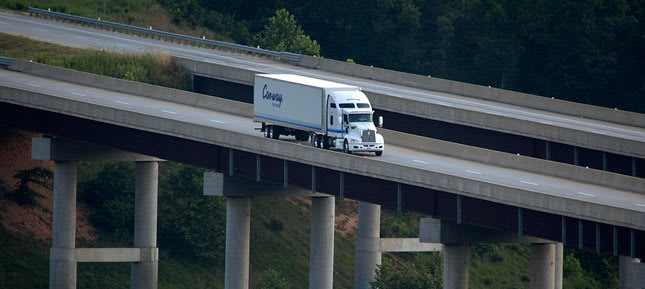
The trucking industry, at least for the short term, is experiencing good recovery, according to FTR Associates Senior Consultant Noel Perry. The recovery has maybe a year and a half or two years to go, he said during FTR's "State of Freight" webinar.
One of the reasons FTR is confident about 2012, Perry said, is because of the relationship between gross domestic product (GDP) and freight. "Because GDP is back up above 2%, we should be generating pretty good freight growth. As GDP recovers right now, we would expect a freight bonanza that comes from that would be a quarter or two later."
Despite the expected growth in freight, Perry said we're still a long way from recovery when it comes to truckloads, which peaked at almost 200 million a year in 2006 and fell to about 158 million in 2009.
"In the first quarter of 2012, we're only about 40% recovered back to previous peak," Perry said. "This says something fundamental about the need for fixed infrastructure and fixed investment in transportation. We won't get to a new peak until at least 2015, and that assumes we have no recession out there. If we get a recession, which I think we will mid-decade, we could not get to a new peak in trucking or rail perhaps until the end of the decade."
Automobile and housing markets
A major drag on the economy has been the automobile market, Perry said. Vehicle miles traveled has fallen in recent years due to the economy and the price of oil.
"People just drive less when gas is more expensive. and when they drive less, they need fewer automobiles," Perry said. Automobiles make up about 10% of the economy. "When you take 10% of the economy and you slow it to almost no growth, you get a slow overall economy."
The housing market should give the industry a needed boost, though, Perry said. Building permits have gone steadily up since the beginning of last fall. "With the construction of new homes, we should get a pretty good boost from this increase in order activity," he said "Housing accounts for about 15% of the economy and a lot of transportation, so this is a good sign."
International and budget concerns
Perry said the industry should expect a couple good years, barring an economic collapse in Europe or China.
"We're optimistic Europe will only be a modest drag on our economy," Perry said. China, though, is where the U.S. should keep a close watch in the long-term.
"A bigger risk, obviously not a 2012 risk, is the recession in China," he said. "Lots about that economy suggests they will have a recession. We need to keep in mind when this occurs, and it will, most of the supply chains in the world haven't seen a recession in China since they started to grow, so it will be a fairly big shock." Perry said a recession in China may happen around 2015.
Another big threat in U.S. is the budget deficit issue, which Perry forecasts will come to a head in 2014. "There is no sign the federal government, the government we elect, has any of the immediate skills to solve this problem. One side refuses to raise taxes, the other side refuses to cut benefits, and we have a stalemate.
"Before we start arguing about Amtrak or aid to schools or the farm program or ethanol subsidies," he said, "we have to cut expenses and raise taxes just to do medical services or Social Security, the things people really care about."
Labor and regulations
The number of people entering the workforce dropped by 50% this decade compared to last. That means, Perry said, each year it's going to be a little harder for us to find new people. "Labor rates are going to be considerably higher at the end of this decade than they are now."
The short-term issue with drivers has to do recruitment, he said.
"Fleets, to save money, laid off all the people who were recruiting in 2009 because they didn't need them. Now we're back to normal turnover and running, according to the ATA statistics, three times what it was running in '09.
"In order to hire this million or more people, we need a lot of people recruiting, and we know [fleets] laid them off, and so far they haven't brought them back. This is why the industry has shortages of drivers in upturns. They simply don't recruit or don't add to recruiting budgets until things get really tight, and they haven't yet, so we're going to stay at that level," Perry said.
An increase in regulations will magnify these challenges. "There will be a dramatic increase in the drag those changes put on driver hiring," Perry warned. "We already know the driver hiring apparatus is not big enough to keep up with economy. Now we're adding more stress on it and we're going to fall farther behind."
Perry said this driver shortage will last longer than in 2004 because the amount of regulation is bigger, although it won't drop quite as low.
Fuel prices
Perry said he's pretty confident that fuel, barring any major political problems in the Middle East, will remain relatively stable.
In addition, the price of natural gas is falling because of fracking, and the U.S. has the most natural gas reserves of anywhere in the world.
"That means our energy situation is getting better, not worse, compared to a number of our competitors in the world," Perry said. "The teens should actually be a good decade for energy in the United States."
The. U.S. is also making great progress in terms of lessening dependence on oil imports.
More Fleet Management
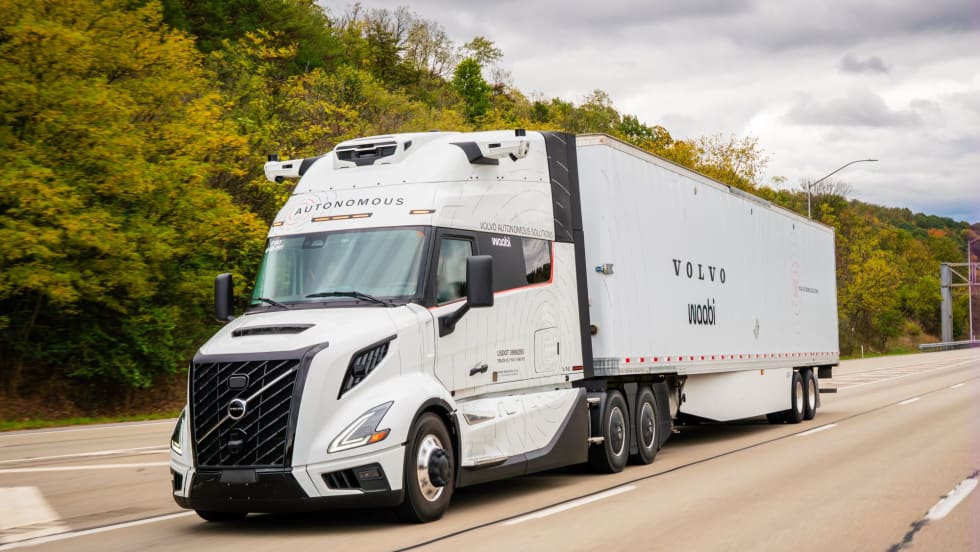
Volvo, Waabi Start Commercial Autonomous Operations in Texas
Volvo VNL Autonomous trucks, powered by the Waabi Driver, are hauling freight directly to third-party facilities for a customer in Texas.
Read More →
Samsara Launches Custom AI Agent Builder
Agent Studio lets fleets create AI tools for hours-of-service monitoring, reporting and driver support, including agents that communicate by phone.
Read More →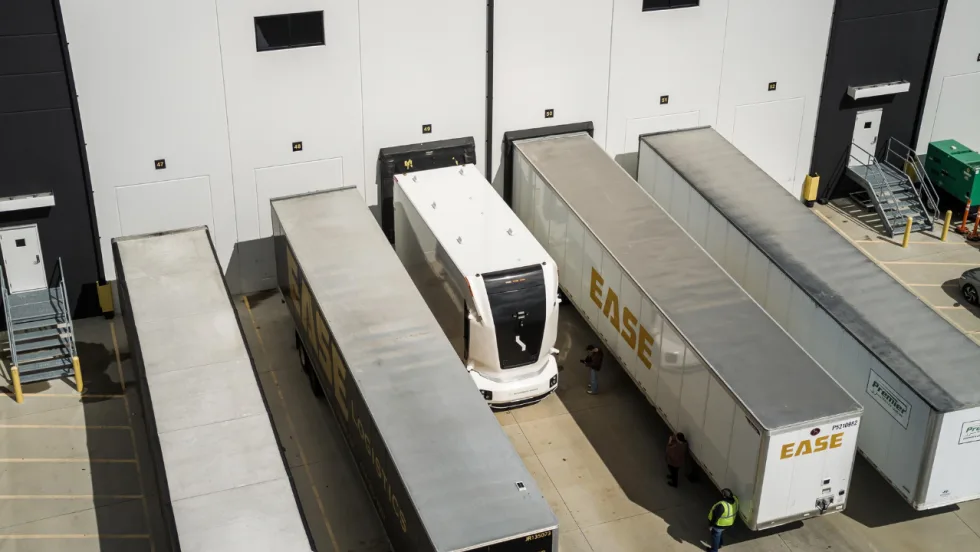
Einride Driverless Electric Trucks Begin Daily Freight Operations in Ohio
Two cabless electric trucks are hauling freight between EASE Logistics facilities in Marysville, Ohio, as part of a multi-state truck automation project.
Read More →
Geotab Links Fleet Card to Vehicle Data
The new card combines fuel discounts with telematics-based purchase controls. Geotab’s analysis also points to potential savings from choosing lower-priced fuel stops.
Read More →
How MFA Helps Protect Trucking Fleets
Multi-factor authentication adds protection when passwords are stolen. Here’s how it works and where fleets should start.
Read More →
How Better Freight Data Helps Trucking Teams Get Ahead of Disruption
Trucking and logistics teams have plenty of data. The problem is getting the right information in front of the right people soon enough to act. Better-connected data can help teams spot trouble earlier and make smarter decisions before small problems become big ones.
Read More →
Trimble: Taking Artificial Intelligence in Trucking Beyond Faster Tasks
At Insight 2026, Trimble executives argued that fleets may need to redesign workflows to get more from AI as it introduced new products and enhancements. AI’s value will depend on how fleets combine automation with their people's knowledge.
Read More →
Build a bulletproof fleet: Uniting ELDs and dash cams for total compliance
An ELD can prove compliance, but it cannot always prove what happened on the road. Discover how uniting accurate ELD data with AI-powered dash cam video can help your fleet strengthen compliance, defend against liability, protect drivers and reduce operational costs.
Read More →
Nominations Open for HDT Emerging Leaders
Heavy Duty Trucking is looking for accomplished trucking fleet professionals under 40 who are making an impact and helping lead the industry forward.
Read More →
Why Private Fleets Are Taking More Freight
Private fleets are putting their own trucks on demanding customers and high-cost lanes as companies seek greater control over service, costs, and capacity.
Read More →