




FTR: In 2016, Economy Should Notch One More Good Year
More gloom than boom, but no doom sums up the economic outlook for 2016 presented by FTR economists in the latest State of Freight webinar hosted by the research and analysis firm.

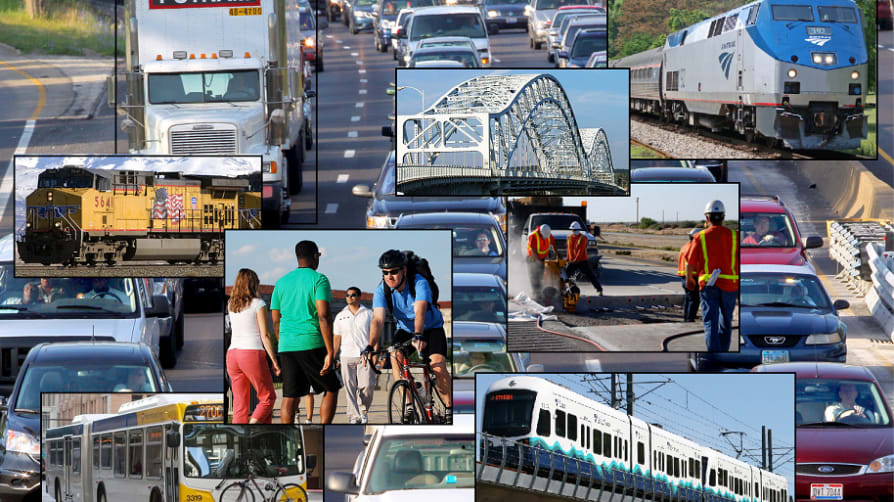
Image: U.S. DOT

Image: U.S. DOT
More gloom than boom but no doom sums up the economic outlook for 2016 presented by economists in the latest State of Freight webinar hosted by the research and analysis firm FTR.
Conceding that his forecasting model has “surrendered to the new normal,” macro economist Bill Witte, FTR senior consultant, said that “2016 will be déjà vu all over again. Economic growth will average between 2 and 2.5% next year.”
Witte said his forecast through the end of 2016 is now “significantly less optimistic than it was nine months ago,” but his model still points to “continuing growth” similar to what has been experienced over the past five quarters, that is back to mid-2014.
He is also optimistic about 2016 because “there is no component of the economy that is growing at an unstainable level” so there are no bubbles to burst. On the other hand, he said “the downside risks to the economy make the outlook more pessimistic.”
Witte elaborated that he does not foresee “any events that will add to the upside. “But [in 2016] we could have a year better than my model [indicates] and end up at 2.8% growth.” However, he put the probability of that happening at about 20%.
On the downside, Witte said there are a number of risks that could constrain growth to only one percent. That probability he set at 25%.
“However,” he continued, “I don’t think an actual recession is likely [in 2016] because the pattern of the U.S. economy is now very balanced with no sector showing ‘irrational exuberance.’”
Economist Noël Perry, FTR senior consultant, was more pessimistic about the year ahead. He said he is “concerned that now, eight years into recovery, the economy will start to slow [to where] we’re facing a growing risk of recession. Secondly, the global economy is very worrisome, especially given the problems China is a having. Chinese manufacturing is in recession now.”
That being said, Perry regards the risk of the economy slipping into recession next year as small, but added that the chance of that happening will increase in 2017.
“When you look at the broader [U.S.] economy,” he remarked, “there’s less than a 20% probability of a dramatic change [next year]. But when we have this discussion a year from now, Bill [Witte} and I will be a hell of a lot more worried.”
Perry also pointed out that something beyond economic factors to consider. “Trucking has experienced more growth than has the GDP — this has been the best freight recovery since 1990. The exposure is could this change?” And if it did, he said, it would happen at the same time the economic recovery starts to show its age.
“History tells us freight slows before a recession occurs,” Perry added. “So, we could have slow growth in freight in 2016. And a recessionary condition in 2017.”
FTR Director of Transportation Analysis Jonathan Starks said key downside risks threatening the economy next year include whether the Federal Reserve will start raising interest rates and how much the domestic economies in key global markets may slow.
“By itself, what the Fed may do does not matter much in my [forecasting] model,” said Witte. “Raising short-term interest rates by 1% per year for several years would have very little impact.” However, he said if the Fed does move on interest rates, there could be “a spillover effect” that would cause a drop in stock prices or lower consumer confidence, “which is the biggest driver of the economy.”
As for the international situation, Starks said it’s not just China as there are negative economic impacts from what is happening in Europe and the Middle East to weigh as well. “International,” Witte contended, “may be the biggest risk [for 2016] but it is hard to quantify its magnitude.
“The problem is a slowdown [in one country or region] will produce large effects on other countries, making it more significant for us,” he continued. “Plus there can be impacts on global financial markets.” He noted that when it comes to China, “a slowdown there affect Europe more than the U.S. because their trade with China is larger.” Witte noted that because of how it was based on rapid industrialization, the “Chinese economic buildup was never sustainable.”
Related: Latest Numbers Disappoint, More Uncertainty with Fed
More Fleet Management

What the U.S.-Canada Trade War Means for Trucking
Escalating U.S.-Canada tariffs could disrupt cross-border freight, reduce truck volumes, raise costs, and create new uncertainty for carriers on both sides of the border.
Read More →
What Are Trucking’s Top Concerns for 2026?
The American Transportation Research Institute wants to know what's worrying trucking fleet managers, drivers, and other stakeholders in its annual Industry Issues survey.
Read More →
American Trucking Associations Looks for a New Leader
ATA President and CEO Chris Spear abruptly left his job at the association on August 21, at a pivotal time for the trucking industry.
Read More →
Public Wi-Fi Cybersecurity Risks: How Truck Drivers and Fleets Can Protect Their Data
Public Wi-Fi can expose truck drivers and fleets to credential theft, malware, and other cyber threats. Here’s how to reduce the risk on the road.
Read More →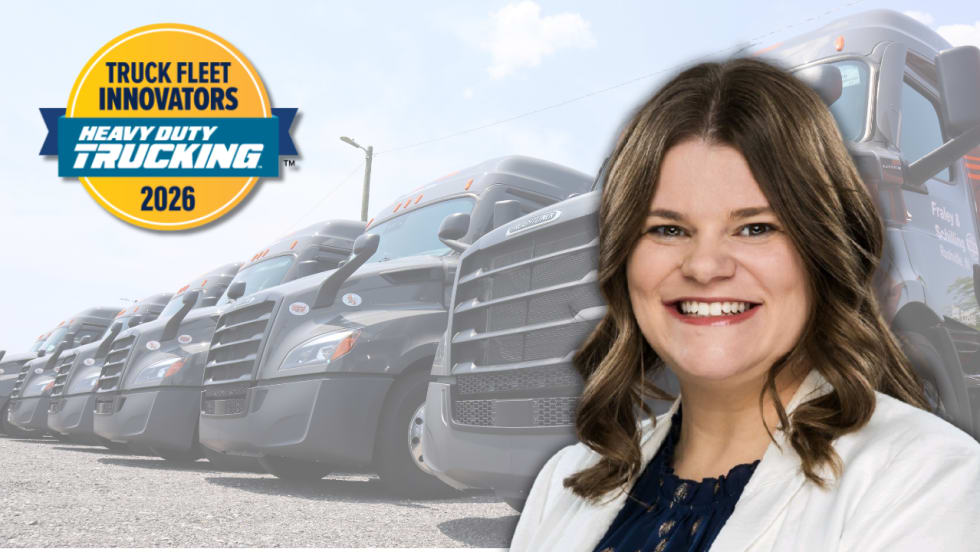
For Nicky Cupp, Fleet Innovation Starts With Frustration
HDT Truck Fleet Innovator Nicky Cupp turns everyday pain points at Fraley & Schilling into opportunities for better technology and smarter processes.
Read More →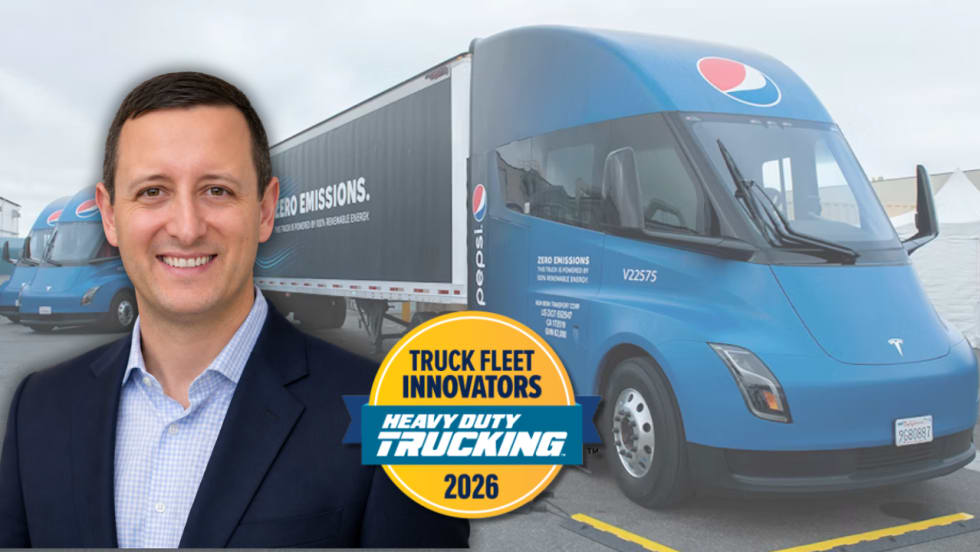
Adam Buttgenbach’s Approach to Electric Trucks: Start With Where They Fit
HDT Truck Fleet Innovator Adam Buttgenbach helped PepsiCo build one of North America’s largest EV fleets by focusing on where electric trucks make operational sense.
Read More →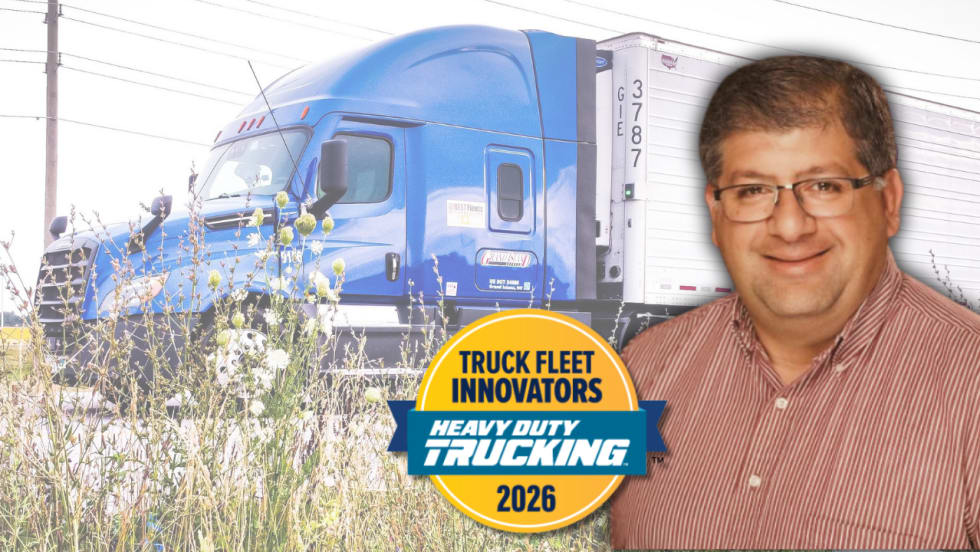
Deen Albert: Let Automation Do the Math, People Make the Decisions
HDT Truck Fleet Innovator Deen Albert makes sure people are still at the heart of operations at Grand Island Express, even while adopting artificial intelligence tools. AI-assisted dispatch helped boost revenue 25% with the same number of trucks.
Read More →
Trimble’s New AI Agent Takes Aim at Fleet Back-Office Busywork
Arc Agent works across Trimble TMS products to automate repetitive tasks such as freight orders, maintenance, invoices, fuel costs and more.
Read More →
How HDT’s 2026 Truck Fleet Innovators Are Rethinking Fleet Operations
Meet five trucking leaders who are challenging assumptions, solving operational problems, and putting innovative ideas to work.
Read More →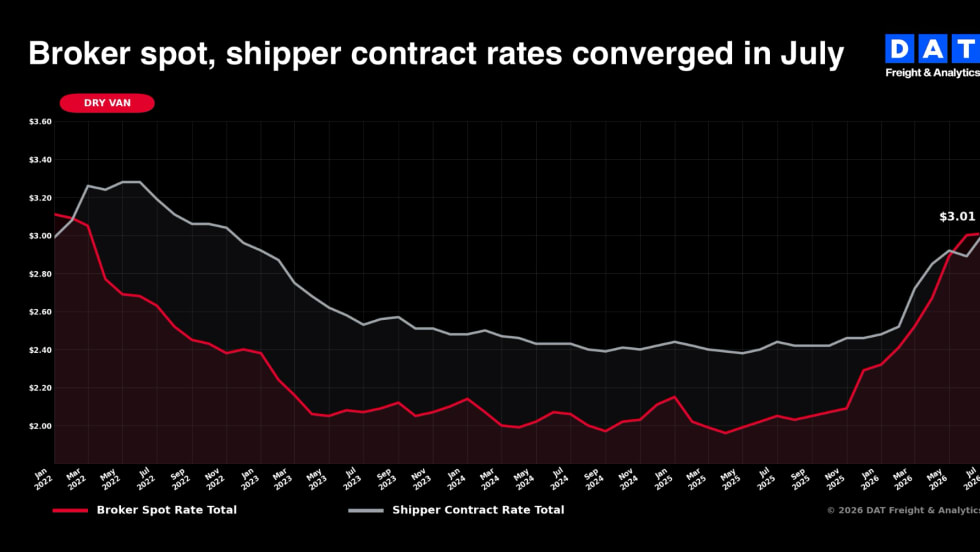
Tight Trucking Capacity Pushes Rates Higher Even as Freight Volumes Fall
“Spot rates moving ahead of contract rates have historically signaled a tightening market, but we haven’t seen a capacity-driven market quite like this one,” said DAT's Dean Croke.
Read More →