





Dig Deeper: Benefits and Challenges in Electrifying Medium-Duty Box Trucks
Frito-Lay Turns California Facility into Sustainability Showcase
With its recent delivery of the first Tesla Semi battery-electric trucks, Frito-Lay is nearly finished transforming its Modesto, California, facility into a showcase for sustainability.
January 18, 2023
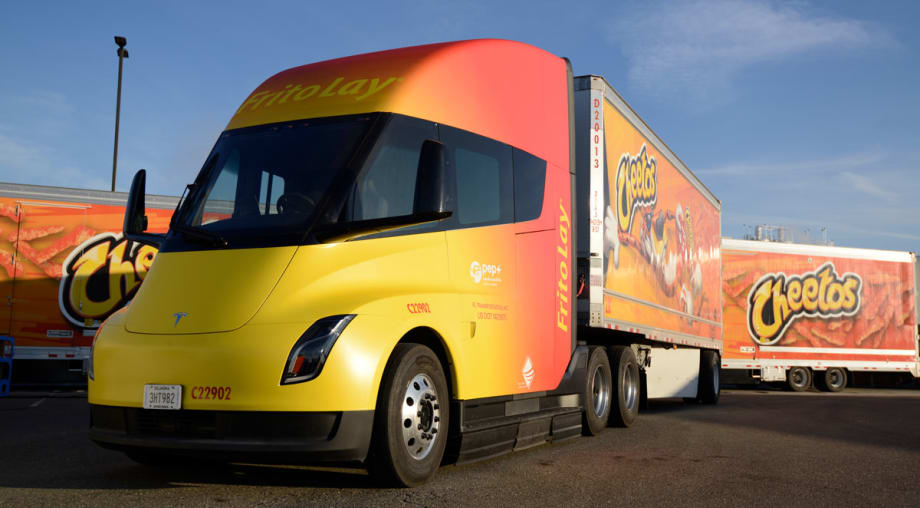
While the delivery of the first Tesla Semi may have gotten the most buzz, Frito-Lay has been implementing medium-duty electric box trucks, compressed natural gas tractors, and electric yard trucks at Modesto for the past few years.
Photo: Frito-Lay
3 min to read
With its recent delivery of the first Tesla Semi battery-electric trucks, Frito-Lay is nearly finished transforming its Modesto, California, facility into a showcase for sustainability. The company said it has cut its fleet greenhouse gas emissions by more than 90% using zero- and near-zero-emission technologies.
Frito-Lay, a division of PepsiCo, explained that the Modesto site is the first Frito-Lay manufacturing facility to implement site-wide alternative fuel vehicles, on-site renewable energy generation, energy storage equipment and employee electric vehicle charging stations. It’s also one of the largest Frito-Lay manufacturing facilities in the United States at 500,000 square feet, sitting on 80 acres and employing more than 1,100 associates.
The project was started in 2019 and supported by the California Climate Investments initiative, in conjunction with the San Joaquin Valley Air Pollution Control District and the California Air Resources Board, to demonstrate the sustainability benefits of zero-emission and near zero-emission technologies.
The project includes replacing its diesel fleet assets with zero- and near-zero-emission alternatives, fueling and charging infrastructure for the new fleet, and on-site renewable energy generation and storage.
Greening the Frito-Lay Fleet
PepsiCo and Frito-Lay are the first company to have a commercial fleet featuring the battery-electric Tesla Semi. The Modesto facility has four Tesla 750kW charging stations to provide the semis with up to 400 miles of range in one hour of charging.
The facility also operates with six Peterbilt 220EV battery-electric box trucks that provide zero emission last-mile delivery into the Modesto community.
The fleet includes 38 Volvo VNL compressed natural gas (CNG) tractors fueled by CNG with RNG attributes from a nearby, public access CNG fueling station owned and operated by Beyond6 (formerly ANG).
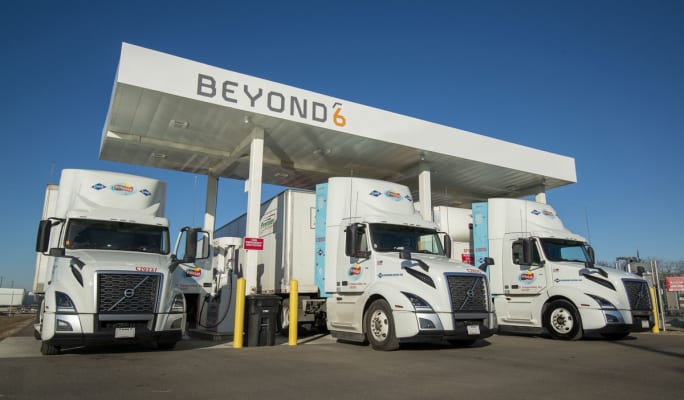
Volvo VNL compressed natural gas tractors are fueled at a nearby, public-access CNG fueling station.
Photo: Frito-Lay
Three BYD 8Y electric yard tractors improve operations efficiency and associated tailpipe emission reductions. Each yard tractor operates 20 hours per day and moves more than 150 trailers while only charging for two hours every day.
Inside, 12 Crown Li-ion forklifts are powered by lithium-ion batteries to improve energy and time efficiency.
Renewable Electricity
In 2021 the Frito-Lay Modesto site achieved sourcing 100% of its electricity from renewable sources. On-site solar power provides up to 20% of the Modesto facility’s energy use daily.
A recently added 1-megawatt solar carport with energy storage doubles the amount of solar generation capacity at the facility by supplementing the site’s 1-megawatt of rooftop solar panels.
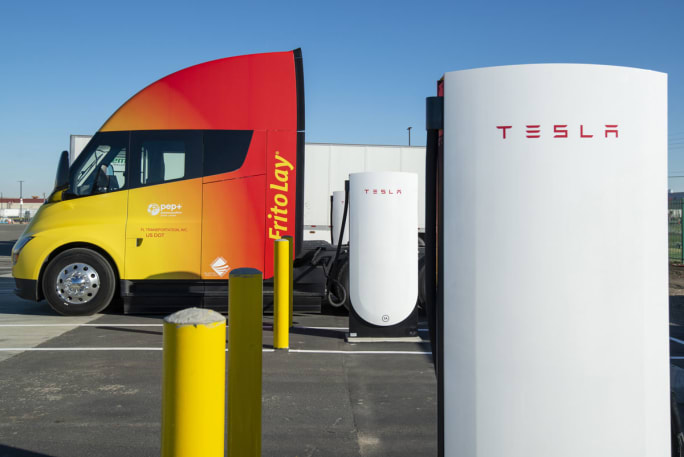
The Modesto facility has four Tesla 750kW charging stations to provide the Semis with up to 400 miles of range in one hour of charging.
Photo: Frito-Lay
2.7 megawatt-hours of on-site battery storage help reduce the site’s electricity costs and support grid capacity by reducing the facility’s electricity load on the grid during peak times.
Zero-Emissions Commitment
“The transformation at Modesto is in direct support of our PepsiCo Positive (pep+) commitment to building a circular and inclusive value chain and achieving net zero emissions by 2040,” said Steven Williams, CEO of PepsiCo Foods North America, in a news release.
To date, he said, the Frito-Lay Modesto transformation has resulted in a 91% reduction in greenhouse gas emissions from direct fleet operations, or 5,250 metric tons of GHG emissions.
“If the standard four-person compact SUV drives on average 15,000 miles per year with an average mpg of 25.5, this reduction is the equivalent of removing just over 1,000 standard compact SUVs from the road,” he added.
Company and government officials believe the transformation at Modesto can serve as a template for large-scale commercialization of zero- and near-zero-emission technologies at freight facilities and warehouses.
Funding Grants
The Frito-Lay Modesto project was supported by the California Climate Investments initiative in conjunction with the San Joaquin Valley Air Pollution Control District, and the California Air Resources Board.
The total grant for $15.4 million covered a portion of the Frito-Lay transformation and the placement of a publicly accessible CNG station, owned by Beyond6, formerly known as American Natural Gas. The grant share for Frito-Lay was $12.2 million, and the match funding required $13.5 million in cash and in-kind services.
Other project participants include Café Coop, CALSTART, Project Clean Air, University of California and Riverside CE-CERT. Equipment and technology suppliers for the project include BYD Motors, ChargePoint, Crown, Meritor, Peterbilt, Tesla and Volvo.
More Fuel Smarts
Trucking’s Diesel Squeeze Isn’t Letting Up
With diesel topping $6 a gallon nationally, ATA's Bob Costello explains why fleets should prepare for continued pressure at the pump.
Read More →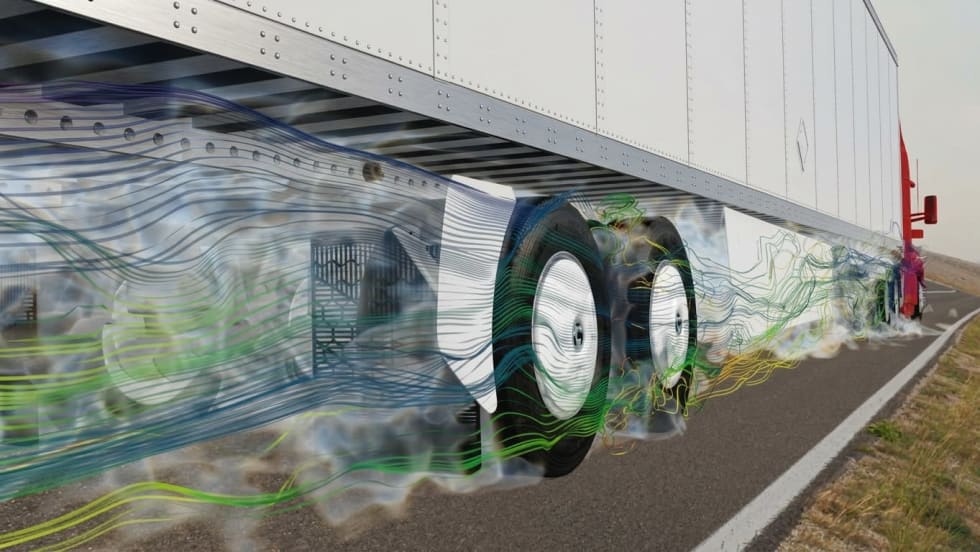
FlowBelow Redesigns Trailer AeroSlider to Cut Fuel Use
The lighter trailer aerodynamic system installs in less than 45 minutes, according to the company, with potential payback in under a year depending on fuel prices and trailer mileage.
Read More →
Why Diesel Price Relief Efforts May Fall Short
Diesel prices have eased from September’s record high, but doubts about additional Russian supply and limits on dyed-diesel tax relief mean trucking fleets still face expensive fuel. And prices could go higher.
Read More →
Why Small Fuel Savings Matter in Trucking
Can better fuel economy help pay for driver raises? In this podcast, GP Transco explains how small efficiency gains create room to reinvest in its people.
Read More →
How GP Transco Cuts Trucking Fuel Costs, a Tenth of a Gallon at a Time
What’s another tenth of a mile per gallon worth? GP Transco shares how equipment upgrades and driver coaching turn small gains into meaningful fuel savings.
Read More →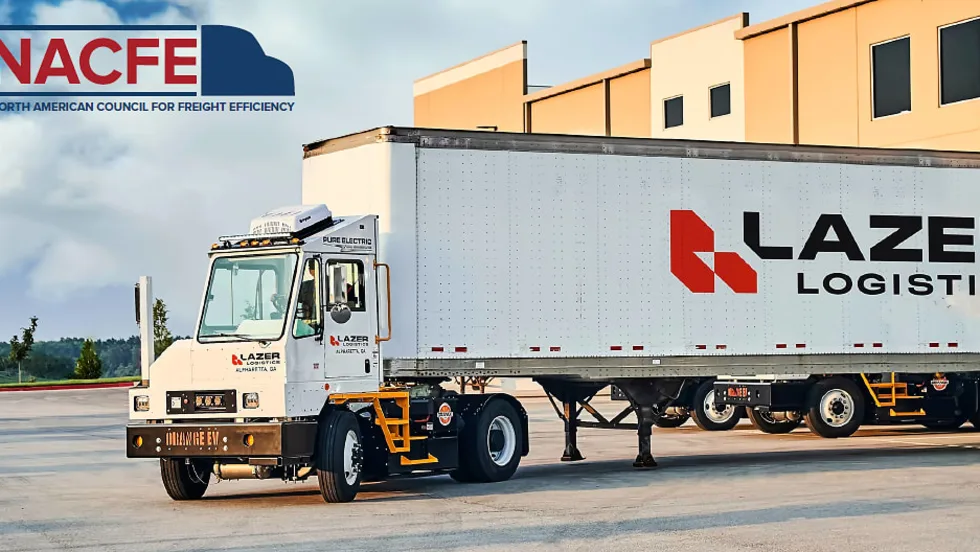
Electric Yard Tractors Move Beyond Pilots
Operating-cost savings have overtaken sustainability goals as the leading reason surveyed fleets are adopting battery-electric terminal tractors, according to new NACFE research.
Read More →
Geotab Links Fleet Card to Vehicle Data
The new card combines fuel discounts with telematics-based purchase controls. Geotab’s analysis also points to potential savings from choosing lower-priced fuel stops.
Read More →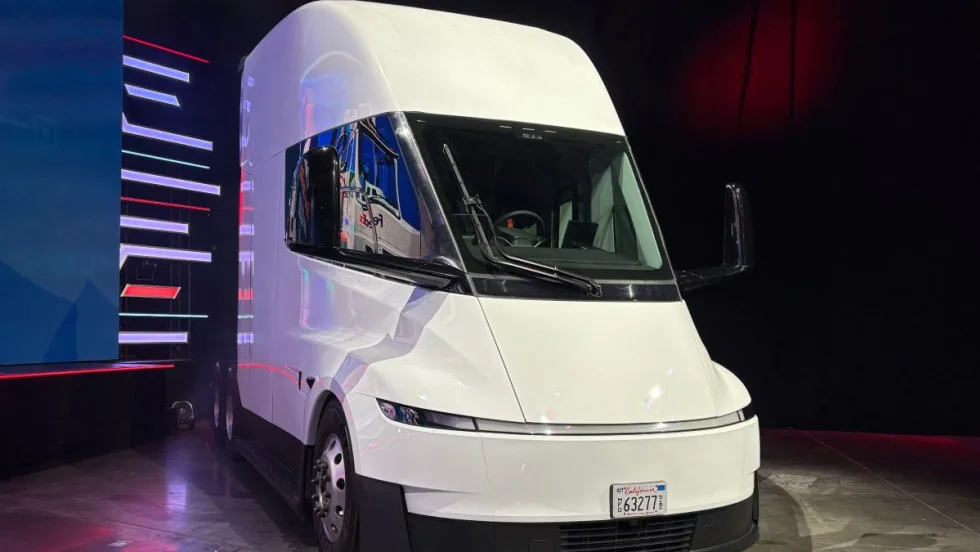
Fleet Economics Shape Electric Truck Outlook
ACT Research expects costs, charging infrastructure, and technology improvements to drive zero-emission commercial vehicle adoption as federal regulations and incentives retreat.
Read More →
Wex Adds Cardless Fuel Payments for Over-the-Road Customers
A new fuel card feature for Wex customers offers convenience and security.
Read More →
New California Law Could Shed Light on Electric Truck Prices
Why do battery-electric Class 8 trucks remain so expensive? A California bill signed by Gov. Gavin Newsom would give fleets and state agencies more visibility into what manufacturers charge.
Read More →