




New Federal Office to Oversee Multimodal Freight Infrastructure
The Biden administration established a new office to oversee the maintenance and improvement of the nation’s freight network and supply chains across transportation modes.

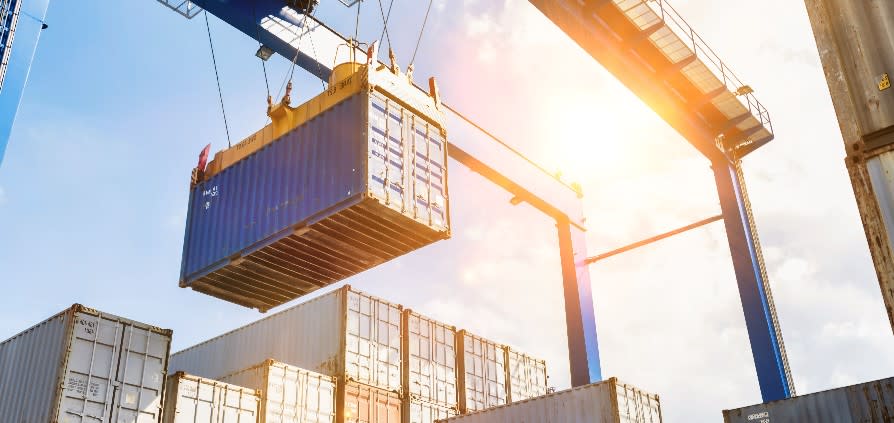
The Office of Multimodal Freight Infrastructure and Policy will oversee the maintenance and improvement of the nation’s freight network and supply chains.
Photo: Multimodal Freight Office
The Biden administration established a new office to oversee the maintenance and improvement of the nation’s freight network and supply chains across transportation modes.
During the inaugural meeting of the White House Council on Supply Chain Resilience, President Joe Biden and Secretary of Transportation Pete Buttigieg announced the launch of the Office of Multimodal Freight Infrastructure and Policy (Multimodal Freight Office).
The Office of Multimodal Freight Infrastructure and Policy is a new office within the DOT's Office of the Undersecretary of Transportation for Policy established and funded by Congress to carry out the national multimodal freight policy.
Congress specified that OST-F shall:
Administer and oversee certain multimodal freight grant programs
Promote and facilitate the sharing of information between the private and public sectors with respect to freight issues
Conduct research on improving multimodal freight mobility, and oversee the freight research activities of the various agencies within the department
Assist cities and states in developing freight mobility and supply chain expertise
Liaise and coordinate with other federal departments and agencies
Carry out other duties, as prescribed by the secretary
The Multimodal Freight Office is part of DOT’s implementation of the Bipartisan Infrastructure Law as directed by Congress. It will be led by Deputy Assistant Secretary for Multimodal Freight Infrastructure and Policy Allison Dane Camden.
“Since President Biden took office we have focused on supply chain improvements, not just to recover from pandemic-driven disruptions but also to make lasting improvements for a stronger and more resilient future,” said U.S. Secretary of Transportation Pete Buttigieg.
“Our new Multimodal Freight Office will lead coordination of our work to strengthen supply chains – including the FLOW data initiative helping companies and ports make better-informed decisions — so that they can move goods more efficiently and keep costs down for Americans."
FLOW Program
In partnership with the Bureau of Transportation Statistics, the new office will continue the advancement of DOT’s Freight Logistics Optimization Works (FLOW) program.
FLOW now includes the five largest U.S. container ports, seven of the largest ocean carriers, and four of the five largest retailers by imports to create a shared picture of supply chain networks and facilitate a more reliable flow of goods. Data from this public-private partnership is beginning to inform decision-making and planning across the supply chain that will speed up the movement of goods.
DOT said FLOW provides greater transparency across supply chain networks, helping make the supply chain more resilient and adaptable in the face of major anomalies and changing circumstances.
Through FLOW, DOT said it is serving as an independent steward of secure supply chain data across a largely privately operated enterprise that spans shipping lines, ports, terminal operators, truckers, railroads, warehouses, and beneficial cargo owners. By providing a secure, shared view of the national logistics system without compromising sensitive proprietary information, including both supply and demand assets, participants can make more informed decisions regarding their capacity and supply chain planning.
In addition to growing the FLOW partnership, the office will oversee the development of the National Multimodal Freight Network, review State Freight Plans, and provide technical assistance to state and local governments, among other duties.
More Fleet Management

Nomination Deadline Extended for HDT Emerging Leaders
Just a few more days to nominate accomplished trucking fleet professionals under 40 who are making an impact and helping lead the industry forward for the HDT Emerging Leaders award. Deadline extended to October 20!
Read More →
What Will ATA’s New Leader Bring to Trucking's Table?
Incoming President and CEO Mark Colson’s record in Alabama offers clues about his priorities and approach following Chris Spear’s abrupt departure as the head of the American Trucking Associations.
Read More →
Volvo, Waabi Start Commercial Autonomous Operations in Texas
Volvo VNL Autonomous trucks, powered by the Waabi Driver, are hauling freight directly to third-party facilities for a customer in Texas.
Read More →
Samsara Launches Custom AI Agent Builder
Agent Studio lets fleets create AI tools for hours-of-service monitoring, reporting and driver support, including agents that communicate by phone.
Read More →
Einride Driverless Electric Trucks Begin Daily Freight Operations in Ohio
Two cabless electric trucks are hauling freight between EASE Logistics facilities in Marysville, Ohio, as part of a multi-state truck automation project.
Read More →
Geotab Links Fleet Card to Vehicle Data
The new card combines fuel discounts with telematics-based purchase controls. Geotab’s analysis also points to potential savings from choosing lower-priced fuel stops.
Read More →
How MFA Helps Protect Trucking Fleets
Multi-factor authentication adds protection when passwords are stolen. Here’s how it works and where fleets should start.
Read More →
How Better Freight Data Helps Trucking Teams Get Ahead of Disruption
Trucking and logistics teams have plenty of data. The problem is getting the right information in front of the right people soon enough to act. Better-connected data can help teams spot trouble earlier and make smarter decisions before small problems become big ones.
Read More →
Trimble: Taking Artificial Intelligence in Trucking Beyond Faster Tasks
At Insight 2026, Trimble executives argued that fleets may need to redesign workflows to get more from AI as it introduced new products and enhancements. AI’s value will depend on how fleets combine automation with their people's knowledge.
Read More →
Build a bulletproof fleet: Uniting ELDs and dash cams for total compliance
An ELD can prove compliance, but it cannot always prove what happened on the road. Discover how uniting accurate ELD data with AI-powered dash cam video can help your fleet strengthen compliance, defend against liability, protect drivers and reduce operational costs.
Read More →