




Fatal Bus Crash Underscores Need for Fatigue Management Programs, NTSB says
As a consequence of a fatal bus crash last year, the National Transportation Safety Board is urging the Federal Motor Carrier Safety Administration to be more assertive in monitoring fatigue management programs
As a consequence of a fatal bus crash last year, the National Transportation Safety Board is urging the Federal Motor Carrier Safety Administration to be more assertive in monitoring fatigue management programs.
The crash at 4:55 a.m. on May 31, 2011, happened because the driver fell asleep, the Board found. The Sky Express bus, northbound on I-95 in Virginia, drifted across the road, struck a cable barrier and flipped. Four passengers were crushed to death, and 14 were seriously injured.
The Board found that the driver was suffering from acute sleep loss, poor sleep quality and disruption of his circadian rhythm.
"Sky Express's failure to exercise even minimal oversight of its drivers' rest and sleep activities enabled the drivers to drive while dangerously fatigued," the Board said.
Among the remedies the Board wants is for FMCSA to establish a program to monitor and improve the fatigue management systems that carriers use.
This follows on an existing Board recommendation that all carriers have a fatigue management program.
The Board also wants new-entrant safety audits to include a review of a structured safety management process so the new carriers will know how to identify safety risks and maintain a safety assurance program.
"Sky Express passed the Federal Motor Carrier Safety Administration new entrant safety assurance audit despite safety shortcomings in its operation, which indicates the new entrant audit process is not always keeping unsafe carriers from entering the motor carrier industry," the Board said.
In addition, the Board urged the agency to incorporate fatigue mitigation strategies into the hours of service rules for bus drivers who work at night.
In its recommendations the Board referenced a joint FMCSA-Transport Canada project to develop a model fatigue management program.
The North American Fatigue Management Program, as it is called, aims to provide carriers with a best-practices manual for implementing fatigue management in their operations.
It has been in the works for several years and now is nearing completion, said Rebecca Brewster, president and COO of the American Transportation Research Institute. ATRI, the research arm of American Trucking Associations, is on the project's steering committee.
Brewster said the project expects to launch a website by November that will provide program materials at no charge. The materials, which will include training for drivers, dispatchers and management, have been developed and tested by carriers in the U.S. and Canada.
More Safety & Compliance
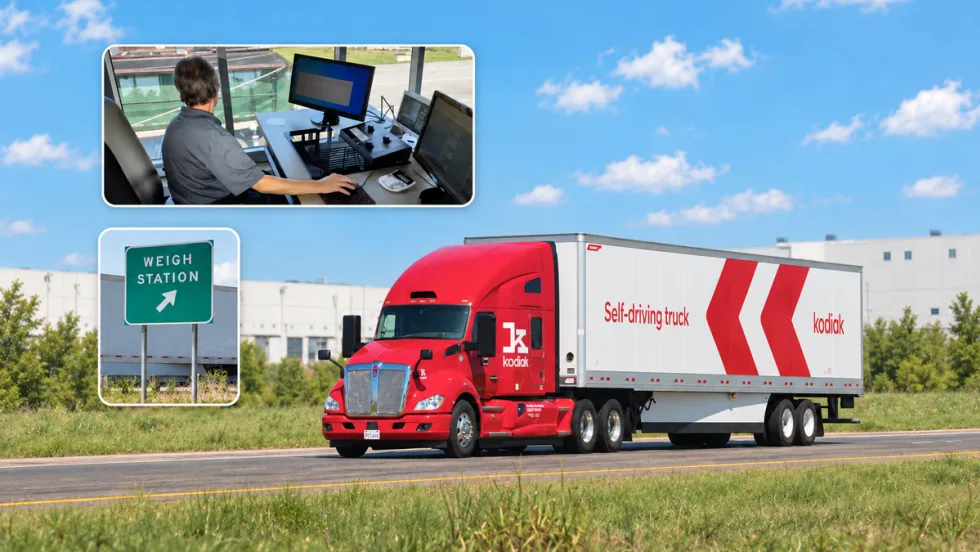
PrePass, Kodiak Connect Driverless Trucks to Roadside Enforcement
The system will allow enforcement agencies to verify Enhanced Inspection information and decide whether Kodiak’s autonomous trucks can bypass roadside screening sites.
Read More →
From One Generation to the Next: How Mentorship Builds Safer Truck Drivers
After three decades in trucking, Harold Perry shares what he's learned about driver safety, mentorship, and helping the next generation build confidence behind the wheel.
Read More →
FMCSA Pauses Biennial-Update Enforcement Amid Motus Transition
Carriers whose updates were due on or after June 1 have more time, while FMCSA works to stabilize its new registration system and warns of phishing sites impersonating its new carrier registration system, Motus.
Read More →
ZF Expands Commercial Vehicle Push in North America
ZF is expanding its North American commercial-vehicle presence with new transmission applications, electrification, trailer technology and autonomous-driving systems.
Read More →
Truck Drivers Need More Than Another Alert
Fleets have more visibility into truck health, safety events, and driver activity than ever. The next challenge is turning all that information into useful guidance for the person who has to decide what to do next.
Read More →
Tesla Wants a Self-Driving Semi. Are Cameras Enough?
Could Tesla’s camera-only autonomous driving technology work on an 80,000-pound Semi? In this commentary, HDT's Deborah Lockridge takes a look at Tesla, Cybercab, and how autonomous trucks see the road.
Read More →
What DOT’s Automated Vehicle Strategy Means for Trucking
The U.S. Department of Transportation issued a new automated-vehicle strategy that outlines plans for driverless-truck regulations, cross-state freight corridors, and federal safety standards.
Read More →
NYC Expands Speed, Pedestrian Safety Tech Across Fleet
New York City is expanding intelligent speed assistance and pedestrian-alert systems across its municipal fleet, moving the technologies from pilot programs into vehicle procurement and retrofit requirements.
Read More →
FMCSA Removes 110 Truck Driver Training Schools from Certified ELDT List
Federal regulators also are targeting more than 160 additional training providers and launching a nationwide audit of third-party CDL skills testers as part of a broader crackdown on trucking fraud.
Read More →
Beyond DOT Compliance: What Makes a Trucking Fleet Truly Safe?
A trucking fleet can follow every rule and still make unsafe decisions. The real test comes when safety conflicts with freight, productivity, or cost.
Read More →