




Experts: Future Truck R&D Focused on Efficiencies
What will the 21st Century Truck look like? Safe, productive, and efficient, according to a panel of experts speaking during the Technology & Maintenance Council Annual Meeting.

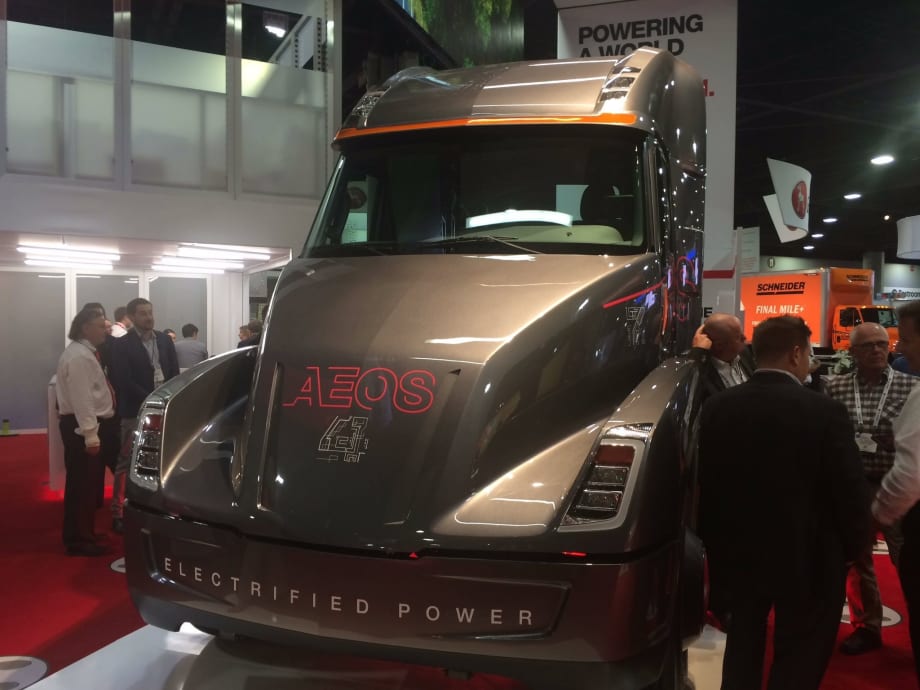
Electric trucks like the Cummins Aeos prototype (shown here at the NACV Show in 2018) show promise, but experts say diesel and gasoline will remain the primary fleet fuels for the foreseeable future.
Photo: Jack Roberts
Ford walked away from the heavy-duty truck market several years ago. So Dan Styles, a technology specialist for Ford, was the first to admit it was a little strange to see the company presenting at a session during the annual meeting of the American Trucking Associations' Technology & Maintenance Council in Atlanta. But such is the pace of development across the entire range of commercial vehicles today, he noted, that Ford remains a dominant player in the medium-duty truck and van market segments.
Styles was the opening speaker at a TMC session entitled The Coming Impact of the New 21st Century Truck Partnership Initiative, which explained how usually fiercely competitive OEM and suppliers are working together on new technologies and systems with the potential to transform transportation, trucking and logistics in North America in the next few years.
Given all these new technologies, Styles first noted that in Ford’s view, diesel will remain the dominant fuel in trucking for the foreseeable future. Gasoline remains equally important, particularly in the smaller vehicle size classes, and electric trucks are currently “of interest” as they continue on their development curve and begin trial runs in real-world fleet operations.
However, Styles cautioned, familiar fuels don't necessarily mean the status quo will continue in terms of how these fuels will be used by fleets.
“There is a tremendous amount of opportunity to improve the base internal combustion engine,” he told TMC attendees. “There are still plenty of interesting areas to research and develop, including the combustion process, fuel injection technologies, reducing heat loss, achieving higher peak engine pressures, increasing pumping efficiency, friction reduction and waste heat recovery, in addition to improving engine control systems, and optimizing operations better with other engine systems such as aftertreatment.”
Of course, Styles noted, any work on diesel engines would use future emission standards as a baseline around which any new technology would be added, in order to ensure they do not penalize fuel economy or CO2 emission performance. Much of this work, he predicted, would be focused on using new materials to reduce weight while offering improved performance for core engine systems and components such as the head, block, pistons and crankcase.
Electric Trucks
Gary Selemme, director of strategy and innovation for Cummins, took a closer look at rapidly developing electric truck technology, telling TMC attendees that OEMs and suppliers were working hard to reduce costs for these vehicles, define their performance and application requirements, ensure the components they use are robust enough for fleet operation while delivering long life cycles, as well as improving overall systems integration, optimization and controls on the vehicles.
A lot of the work being done now is focused on making electric truck components lighter.
“We are working on battery systems that deliver more energy and power per dollar of cost," he added. “And uptime remains a big question mark on some of these electric systems. We need to know what their reliability is going to be. We’re also working on the software that is essential for operating these trucks, and integrating all of these systems, including regenerative brakes, with advanced safety systems.”
Looking at the Whole Transportation System
David Anderson, with the U.S. Department of Energy’s Vehicle Technology Office, gave TMC attendees a high-level view on the 21st Century Truck Initiative, detailing work being done by both the government and private sector on developing a transportation system based on shared mobility, mobility on demand, goods on demand – all delivered by connected and automated vehicles using emerging fuels, advanced powertrains and new modes of transport.
“Our goat is to achieve secure, robust, connected and automated systems by applying deep learning and data analytics to max future freight and passenger mobility, across the scale from independently operated vehicles up to electronic interactions among thousands of vehicles,” Anderson said. “We want to maximize mobility, while reducing costs, the amount of energy used, and the time it takes to move people, and goods. If we can do that, we will be providing people access to business opportunities to access global markets in new ways and help increase economic activity in this country.”
More Equipment
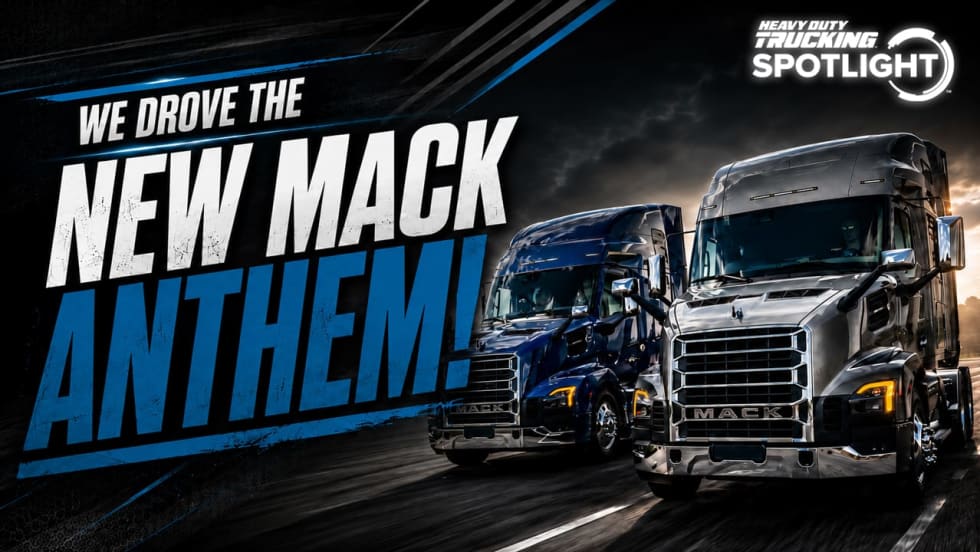
Behind the Wheel of the New Mack Anthem [Video]
HDT takes the new Mack Anthem around Mack’s Pennsylvania test track to see how its driver-focused design, technology, visibility and handling perform from behind the wheel.
Read More →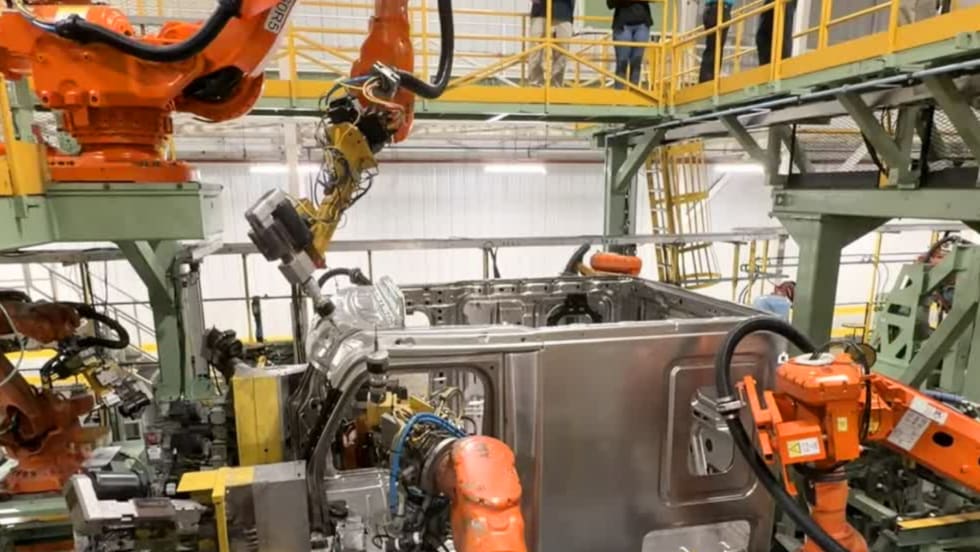
DTNA Plans New U.S. Truck Plant as Manufacturing Footprint Shifts
Daimler Truck North America is evaluating sites for a new assembly plant expected to open in 2029 while winding down operations at its longtime Portland manufacturing facility.
Read More →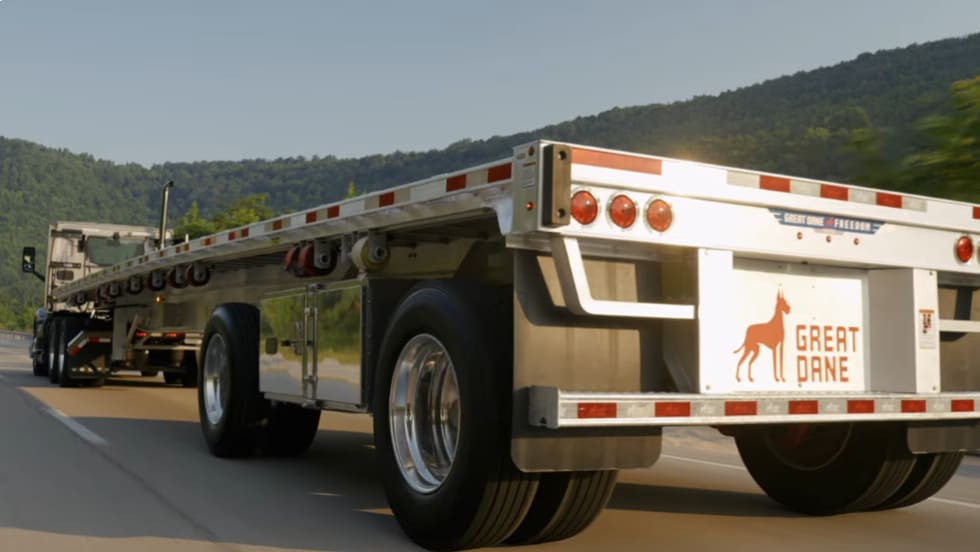
Great Dane Flatbed Trailer Offers Light Weight and Strength
Freedom Ultra is designed for a wide range of open-deck applications, including building materials, lumber, machinery, steel products, industrial freight, and coil hauling.
Read More →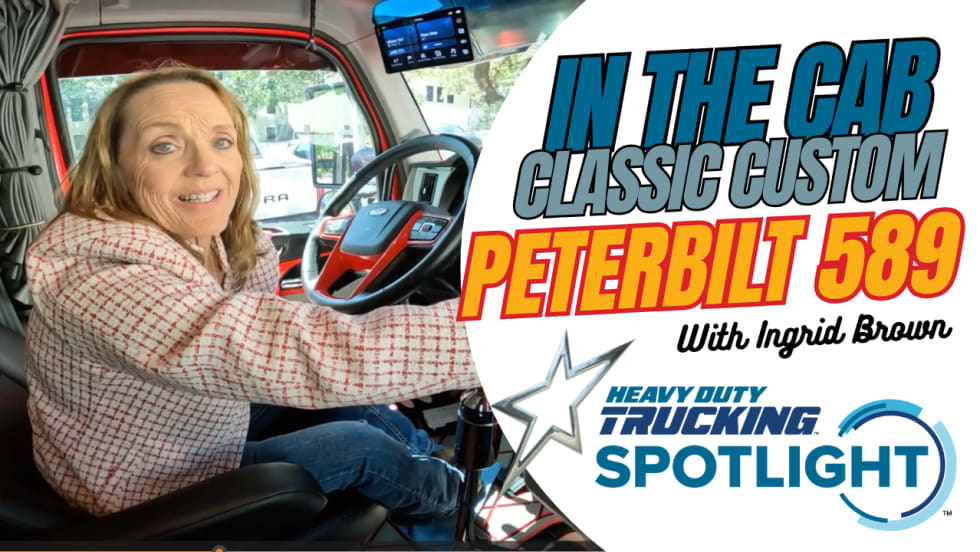
What It's Like Inside this Custom 2025 Peterbilt 589?
Take a driver's-eye tour of this customized 2025 Peterbilt 589 in this video, as longtime driver Ingrid Brown explains its features, compares it to previous models, and shares plenty of personality along the way.
Read More →
Drivers Put Western Star Trucks to the Test at Star Nation Experience
Watch to get an inside look at the Western Star trucks, technology, and community behind the Star Nation Experience 2026!
Read More →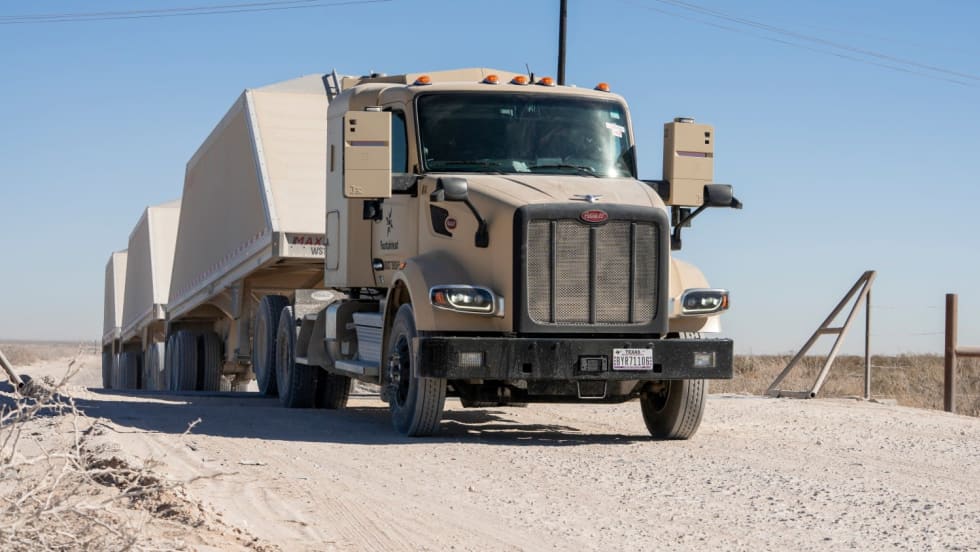
Atlas Expands Kodiak Driverless Truck Fleet in Permian Basin
Atlas Energy Solutions is expanding autonomous frac sand hauling in the Permian Basin with a second load-out location and plans for 100 driverless trucks by mid-2027.
Read More →
Putting Mack’s Command Steer to the Test
A test drive of Mack’s Command Steer active steering system evaluates how it can make truck driving easier and less tiring.
Read More →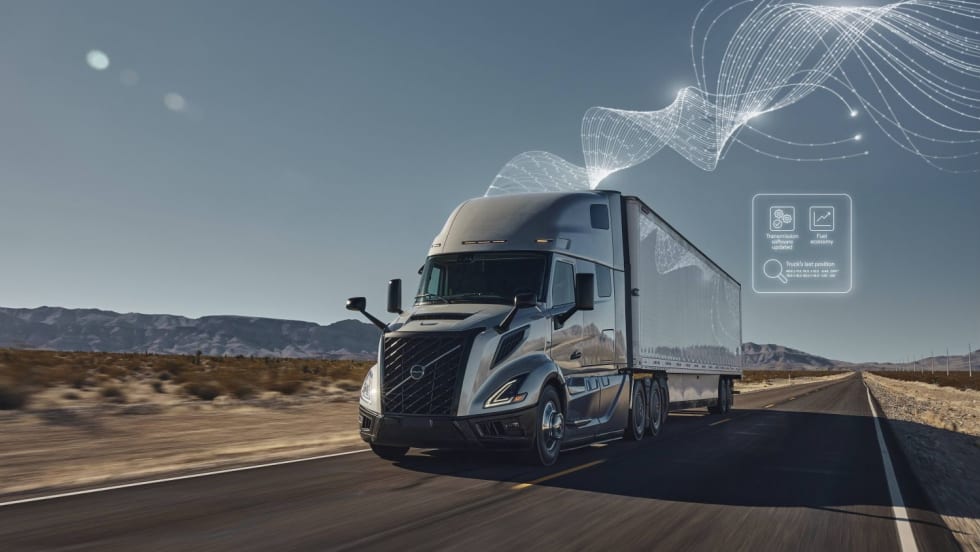
Mack, Volvo Expand DEF Derate Software Updates
The updated software gives Mack and Volvo truck owners more time to address DEF-related issues before the engine derates or the vehicle goes into reduced-speed inducement, following new EPA guidance.
Read More →
Rush, MCT Team Up to Grow Refrigeration Service Network
The joint venture will operate MCT's network of Carrier Transicold dealerships and mobile service locations, with the companies promising greater service capacity and uptime for refrigerated fleets.
Read More →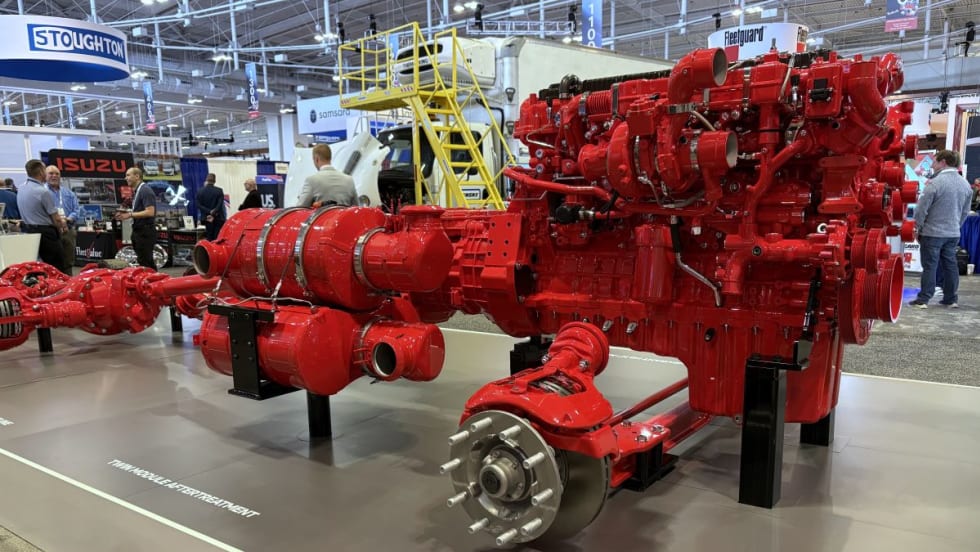
Cummins Adjusts 2027 Engine Rollout After EPA Proposal
The engine maker will gradually introduce its new Model Year 2027 diesel engines while continuing to offer current models during the transition, citing the EPA's proposed emissions rule changes.
Read More →