




European Truck Makers Need Policy Integration to Maintain R&D Efforts, Product Development
Commercial vehicle manufacturers in Europe are calling upon EU policy makers to further integrate the Union's policies for transport, industrial competitiveness and future innovation to help spur sustainable growth
Commercial vehicle manufacturers in Europe are calling upon EU policy makers to further integrate the Union's policies for transport, industrial competitiveness and future innovation to help spur sustainable growth.
Automotive manufacturers face a challenging environment in Europe, with the prospect of economic growth being only marginal if not negative, in the near and mid-term future. At the same time, the need to sustain investment in R&D remains very high.
The commercial vehicle manufacturers have already committed to a further 20% improvement in fuel efficiency by 2020 (compared to 2005 levels), despite the reverse pressure on fuel economy caused by parallel steps to reduce pollutant emissions. The industry, furthermore, supports the European Commission's efforts in establishing an accurate methodology for measuring full-vehicle CO2 emissions to underpin subsequent reduction policy tools.
Such approach will help get the all-important market of transport operators on board, says Alfredo Altavilla, Chairman of the European Automobile Manufacturers Association (ACEA) commercial vehicle board, and CEO of IVECO.
Speaking at the association's annual conference on EU transport policy in Brussels last week, Altavilla said the EU would greatly benefit from a much stronger link between the various strategies for industrial growth, sustainable transport, international trade and research & development.
"The European Union's 26 member countries depend on the innovative power of leading European industries to compete globally, secure growth, meet ambitious environmental objectives and, as such, ensure a healthy economic environment for its citizens," noted Altavilla.
Altavilla says EU transport policy should acknowledge the essential role for trucks and buses for society and economy, as well as the importance of the manufacturing of vehicles in the long run.
"We welcome the fact that the European Commission has opened the debate about a long term vision for sustainable mobility and transport in Europe. But where is the economic dimension of sustainability in the recently published White Paper?" asked Altavilla. "We need to decarbonise our economies. And we need to reduce our dependency on oil. Unfortunately, we do not have the power of magic to give us immediate solutions."
EU policies must support our industry to further make a difference in R&D, he said.
"Europe has a tremendous technological heritage and advanced innovation capacity, in particular also in the commercial vehicle industry. To keep and to enhance this situation, we have to act -- and act fast. For a start, the upcoming new funding framework for research and innovation should allocate resources to automotive in line with the importance of our sector for the European Union."
Vehicle manufacturers go to great lengths to sustain investments in R&D, most notably in the fields of road safety and emissions reduction. The Euro VI emission requirements alone represent industry investments of EUR 6-8 billion. Pollutant emissions such as nitrogen oxide and particulate matter have already been reduced by as much as 85% and 95% respectively since the late 1980s.
Another main priority remains the further improvement of fuel and energy efficiency in order to contribute to global CO2 emission reduction objectives. The commercial vehicle industry has cut the fuel consumption of its products by more than a third since the 1970s. Progress continues through improved combustion engines, hybrid trucks and buses, other innovative drive-trains and the use of alternative fuels. A further 20% increase in fuel efficiency per tonne-kilometre is envisaged by 2020 (compared to 2005), and will require the utmost of the manufacturers' engineers and management.
More Equipment

PlusAI Going Public to Fund Autonomous Truck Launch
A SPAC deal could provide PlusAI with up to $300 million as it works toward a 2027 commercial launch of factory-built autonomous trucks.
Read More →
NHTSA Moves to Rewrite Truck Fuel-Economy Rules
The National Highway Traffic Safety Administration says it lacks authority to regulate medium- and heavy-duty truck engines separately from complete vehicles, but the existing standards have not yet been eliminated.
Read More →
Detroit Opens Orders for EPA 2027 Engines
Detroit isn’t starting from scratch to meet EPA 2027 diesel emissions standards. Its Gen 6 DD13 and DD15 engines keep much of today’s platform while updating the fuel and aftertreatment systems.
Read More →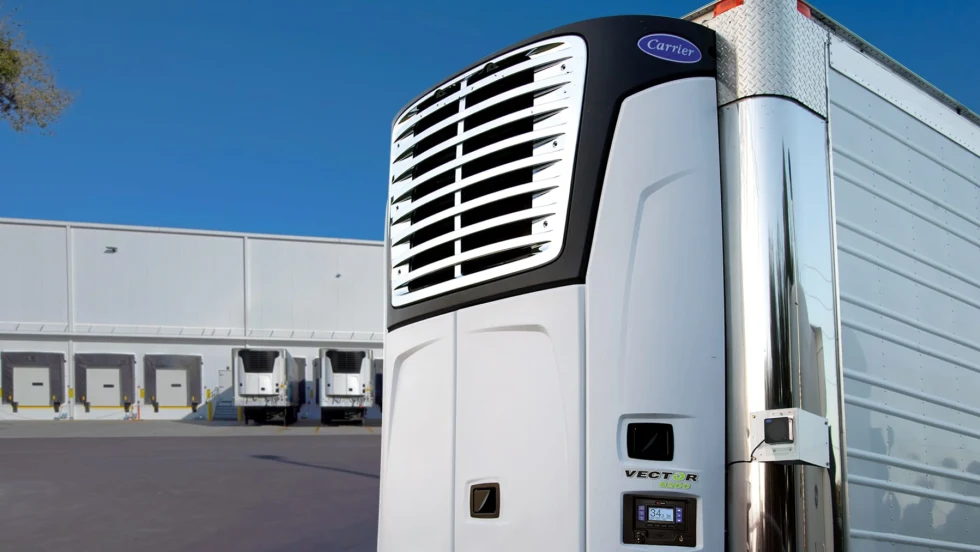
Carrier Transicold Adds All-Electric TRU for Stationary Cold Storage
Carrier Transicold’s new Vector 8200 all-electric transport refrigeration unit gives fleets a diesel-free option for temporary refrigerated and frozen trailer storage.
Read More →
A Closer Look at Kenworth’s Electric T880E Vocational Truck [Video]
Learn more about Kenworth's T880E battery-electric vocational truck at the Paccar Technical Center, including its range, applications, upfitting considerations, and PTO options, in this HDT Spotlight video.
Read More →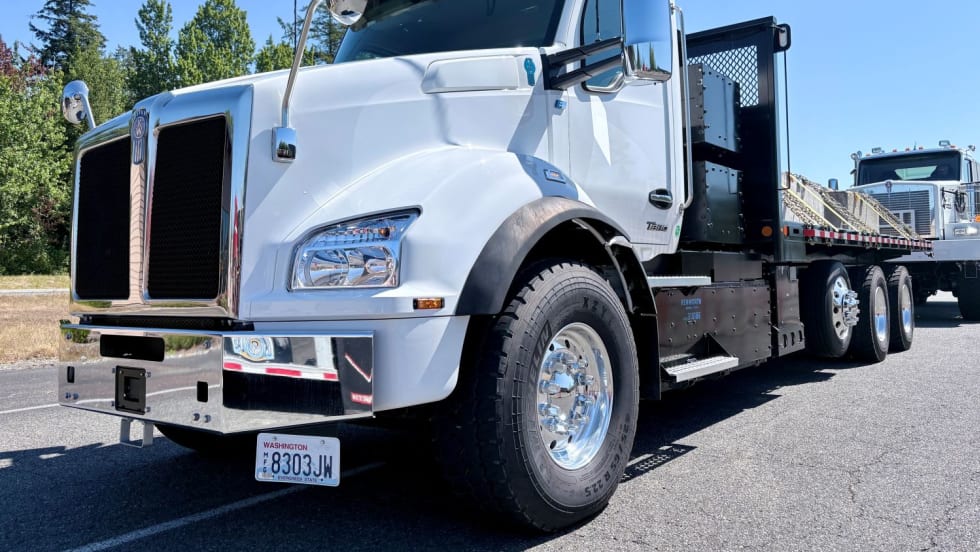
Kenworth T880E Brings EV Power to Vocational Trucks
A closer look at the Kenworth T880E’s range, charging, powertrain and upfit options — and where fleets are showing the most interest.
Read More →
What the U.S.-Canada Trade War Means for Trucking
Escalating U.S.-Canada tariffs could disrupt cross-border freight, reduce truck volumes, raise costs, and create new uncertainty for carriers on both sides of the border.
Read More →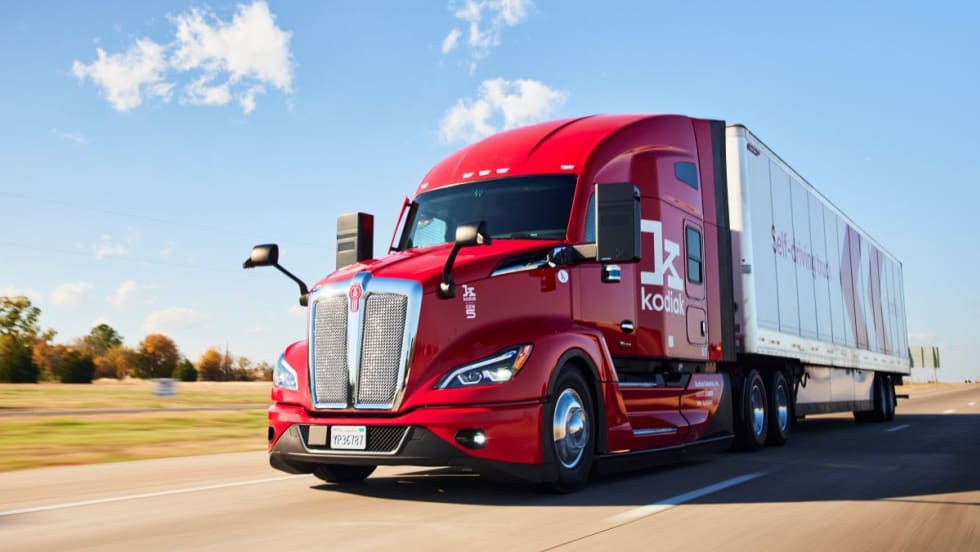
Autonomous Truck Testing Moves Ahead in California as Teamsters Challenge Rules
California has begun permitting heavy-duty autonomous truck testing, with Aurora and Kodiak among the first to receive approval, as the Teamsters sue the DMV over the new regulations.
Read More →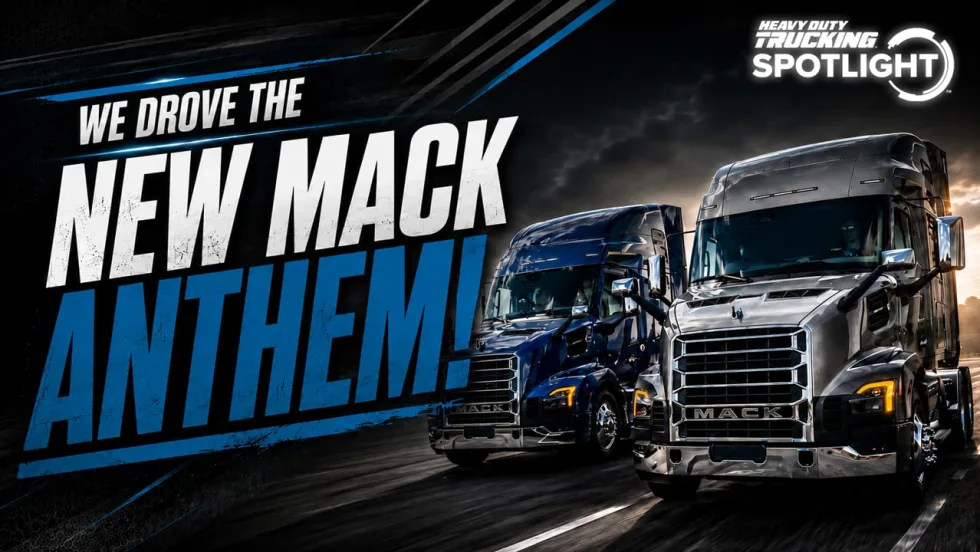
Behind the Wheel of the New Mack Anthem [Video]
HDT takes the new Mack Anthem around Mack’s Pennsylvania test track to see how its driver-focused design, technology, visibility and handling perform from behind the wheel.
Read More →
DTNA Plans New U.S. Truck Plant as Manufacturing Footprint Shifts
Daimler Truck North America is evaluating sites for a new assembly plant expected to open in 2029 while winding down operations at its longtime Portland manufacturing facility.
Read More →