




Economic Watch: Unemployment Falls, Job Growth Best Since 1999
Unemployment in the U.S. continued declining in 2014, the best year for job growth since 1999, according to new Labor Department figures. However, wages fell and more people left the labor force.



Unemployment in the U.S. continued declining in 2014, the best year for job growth since 1999, according to new Labor Department figures. However, wages fell and more people left the labor force.
Total nonfarm payrolls rose by 252,00 in December, pushing the unemployment rate down from 5.8% in November to 5.6% for last month. That's the lowest since June 2008. Employment increased in professional and business services, construction, food services and drinking places, health care, and manufacturing, according to the department.
Earlier reported numbers by the government were revised upward. It now says 353,000 new jobs were created in November, up from 321,000, while October's gain increased to 261,000 from 243,000.
In trucking, 7,300 jobs were added in December, making a total of 42,100 trucking job additions since December 2013. The numbers exclude those with private fleets or truck driving jobs in other sectors, such as construction. The wider transportation and warehousing sector added just 3,100 jobs in December, mainly due to a decline in the number of air transportation jobs. More than 139,00 of these jobs have been added over the past 12 months.
Job growth last year averaged 246,000 per month, compared with an average monthly gain of 194,000 in 2013. The total number of jobs added in 2014 was just shy of 3 million.
In December, the number of long-term unemployed (those jobless for 27 weeks or longer) was essentially unchanged at 2.8 million and accounted for 31.9% of the unemployed.
The civilian labor force participation rate edged down by 0.2 of percentage point to 62.7% in December. Since April, the participation rate has remained within a narrow range of 62.7% to 62.9%.
In December, average hourly earnings for all employees on private nonfarm payrolls decreased by 5 cents to $24.57, following an increase of 6 cents in November. Over the year, average hourly earnings have risen by 1.7%, just slightly more than the annual inflation rate of 1.3% over the past 12 months through November, the most recent month data is available. Since 2010 annual wage growth has been in a narrow rage of between 1.7% and 2.2% despite big job gains.
Sterne Agee Chief Economist Lindsey Piegza said while the latest numbers are clearly impressive, two things are clear. “Employment trends clearly lost momentum at the end of the year, with several categories falling to multi-month lows, and top-line job creation remains insufficient to spark wage pressures which continue to decline.”
She pointed out that minutes from the most recent Federal Reserve minutes show Open Market Committee members noted concerns over a lack of "clear evidence of a broad-based acceleration in wages."
“This morning's disappointing, outright decline in wage pressures only exacerbates these concerns,” Piegza said. “While some members noted a willingness to raise [interest] rates with inflation at current levels, such a scenario was conditional on expectations that inflation would reverse course back towards the Fed's 2% target. This morning's outright decline in wage pressures undermines confidence in a near-term reversal, taking a rate hike off the table at least until inflation has stabilized and committee members once again regain confidence that inflation is or will soon be on the rise.”
More Fleet Management

What the U.S.-Canada Trade War Means for Trucking
Escalating U.S.-Canada tariffs could disrupt cross-border freight, reduce truck volumes, raise costs, and create new uncertainty for carriers on both sides of the border.
Read More →
What Are Trucking’s Top Concerns for 2026?
The American Transportation Research Institute wants to know what's worrying trucking fleet managers, drivers, and other stakeholders in its annual Industry Issues survey.
Read More →
American Trucking Associations Looks for a New Leader
ATA President and CEO Chris Spear abruptly left his job at the association on August 21, at a pivotal time for the trucking industry.
Read More →
Public Wi-Fi Cybersecurity Risks: How Truck Drivers and Fleets Can Protect Their Data
Public Wi-Fi can expose truck drivers and fleets to credential theft, malware, and other cyber threats. Here’s how to reduce the risk on the road.
Read More →
For Nicky Cupp, Fleet Innovation Starts With Frustration
HDT Truck Fleet Innovator Nicky Cupp turns everyday pain points at Fraley & Schilling into opportunities for better technology and smarter processes.
Read More →
Adam Buttgenbach’s Approach to Electric Trucks: Start With Where They Fit
HDT Truck Fleet Innovator Adam Buttgenbach helped PepsiCo build one of North America’s largest EV fleets by focusing on where electric trucks make operational sense.
Read More →
Deen Albert: Let Automation Do the Math, People Make the Decisions
HDT Truck Fleet Innovator Deen Albert makes sure people are still at the heart of operations at Grand Island Express, even while adopting artificial intelligence tools. AI-assisted dispatch helped boost revenue 25% with the same number of trucks.
Read More →
Trimble’s New AI Agent Takes Aim at Fleet Back-Office Busywork
Arc Agent works across Trimble TMS products to automate repetitive tasks such as freight orders, maintenance, invoices, fuel costs and more.
Read More →
How HDT’s 2026 Truck Fleet Innovators Are Rethinking Fleet Operations
Meet five trucking leaders who are challenging assumptions, solving operational problems, and putting innovative ideas to work.
Read More →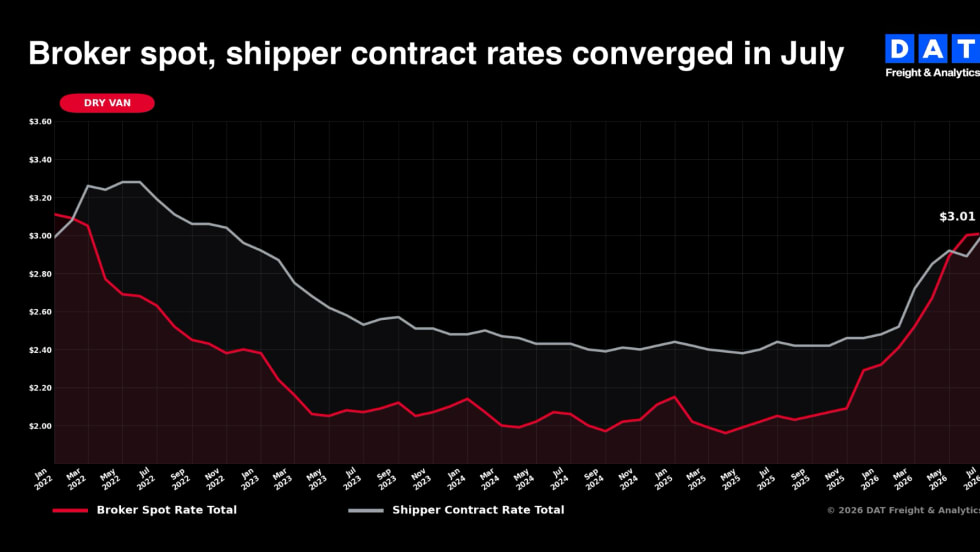
Tight Trucking Capacity Pushes Rates Higher Even as Freight Volumes Fall
“Spot rates moving ahead of contract rates have historically signaled a tightening market, but we haven’t seen a capacity-driven market quite like this one,” said DAT's Dean Croke.
Read More →