




Economic Watch: Manufacturing at 21-Month High, Other Indicators Strong
U.S. manufacturers reported a strong end to 2016, with business conditions improving at the fastest pace since March 2015. And separate reports show consumer prices are rising and housing remains strong, despite a pullback from a multi-year high.

U.S. manufacturers reported a strong end to 2016, with business conditions improving at the fastest pace since March 2015 while separate reports show consumer prices are rising and housing remains strong despite a pullback from a multi-year high.
The preliminary December Flash U.S. Manufacturing Purchasing Mangers’ Index from financial information services company IHS Market, moved up fractionally to 54.2 in December from 54.1 in November. That marks a 21- month high, and is way up from the post Great Recession low of 50.7 in May.
The survey is based on a panel of more than 600 manufacturing companies. The final report on December is due out the first of January, about the same time as the more widely anticipated report on the sector from the Institute for Supply Managment is released.
The headline PMI signaled a robust improvement in manufacturing sector business conditions, with faster job creation and stock building offsetting slight moderations in output and new order growth since November.
Additionally, the latest rise in pre- production inventories was the strongest recorded since the survey began in May 2007. Manufacturers noted that greater stock accumulation reflected stronger optimism towards the demand outlook, alongside faster-than-expected new order growth in recent months.
Manufacturing output expanded for the seventh consecutive month in December, indicating a sustained rebound from the soft patch seen in the second quarter of 2016. The rate of production growth nonetheless eased from October’s 20-month peak.
This latest report puts the manufacturing sector on the starting blocks for a further upturn as we move into 2017, according to Chris Williamson, chief business economist at IHS Markit.
“The fourth quarter has seen the strongest PMI readings for one-and-a-half years, suggesting the goods-producing sector is growing at an annualized rate of 2% to 2.5%,” he said. “A buoyant domestic market, reflecting a combination of rising consumer demand and inventory building, is helping offset export woes caused by the strong dollar.”
He said companies are gearing up for further growth in coming months with employment rising at the fastest rate for 18 months and purchasing activity been ramped up in preparation for higher production. Confidence among producers has also clearly improved, setting the scene for a good start to 2017.
On a related note, a Commerce Department report released a couple of days earlier that showed the total manufacturing and trade inventories to sales ratio moved lower in October to 1.37. That means it would take about one and a third months for businesses to clear their stockpiles That’s down from 1.39 in October 2015 and even higher levels earlier in 2016, which were blamed for some of the slowdown in manufacturing output at the time.
Overall business inventories in October posted their biggest decline in nearly a year after being unchanged in September.
Consumer Prices Increasing Close to Fed Target
Meantime, a report from the Labor Department showed consumer prices in November increased 0.2% from the month before, the fourth consecutive monthly gain.
Prices for shelter and gasoline were the main reasons for the overall hike in the Consumer Price Index, increasing 0.3% and 2.7%, respectively. When volatile food and energy prices are stripped away, the CPI increase last month was 2%, with this gauge and the overall one matching a consensus estimate by analysts.
Overall, this largest measure of retail prices is up 1.7% over the past 12 months, close to what the Federal Reserve said it was eyeing.
Wednesday’s decision by the Fed to raise interest rates was largely based on indications of tightening labor markets and economic growth strengthening from a disappointing sub-potential pace over the first half of this year, according to Paul Ferley, assistant chief economist at RBC Economics.
“The central bank also expressed the view that inflation was ‘expected to rise to 2%’ over the medium term as the transitory effects of past declines in energy and import prices dissipate and the labor market strengthens further,” he said. “Today’s report provides confirmation that this process was in train in November. An expected further strengthening in growth and attendant tightening in labor markets will contribute to inflation continuing to converge closer to the 2% objective.”
Ferley said confirmation of such increases in inflation is expected to result in the Fed tightening further through 2017 with the fed funds range expected to rise an additional 50 basis points ending 2017 at 1.00% to 1.25%.
Housing Remains Strong Following November Drop
In the housing sector, two new reports show there is optimism and evidence the recent strong performance is continuing, despite a drop in new home starts.
Builder confidence in the market for newly built single-family homes jumped seven points to a level of 70 on the National Association of Home Builders/Wells Fargo Housing Market Index (HMI). This is the highest reading since July 2005.
“This notable rise in builder sentiment is largely attributable to a post-election bounce, as builders are hopeful that President-elect Trump will follow through on his pledge to cut burdensome regulations that are harming small businesses and housing affordability,” said NAHB Chairman Ed Brady.
The component gauging current sales conditions increased seven points to 76 while the index charting sales expectations in the next six months jumped nine points to 78. Meanwhile, the component measuring buyer traffic rose six points to 53, marking the first time this gauge has topped 50 since October 2005.
“Though this significant increase in builder confidence could be considered an outlier, the fact remains that the economic fundamentals continue to look good for housing,” said NAHB Chief Economist Robert Dietz. “The rise in the HMI is consistent with recent gains for the stock market and consumer confidence. At the same time, builders remain sensitive to rising mortgage rates and continue to deal with shortages of lots and labor.”
However, when it comes to new housing starts in November a Commerce Department report showed an 18.7% decline from the October level, which was revised upward and was at its highest rate since July 2007.
While the decline was expected, according to a consensus estimate from analysts, it was larger than forecast.
Starts on the building of single-family homes, the largest share of the market, fell 4.1% in November from October’s nine-year high. The volatile multi-home market saw starts decline a whopping 45.1% in November.
The number of new home building permits issued in November fell 4.7% from the month before and came in 6.6% lower than the same time a year ago.
Despite this drop in new home construction, the November level is up 6% from the third quarter average with the typically more stable single-unit component up a more substantial 11.5% over the period, according to Nathan Janzen, senior economist at RBC Economics.
“Looking through monthly volatility, particularly the large swings in the multiple-unit starts component over October/November, the data remains consistent with our expectation that residential investment rose by close to 10% annual rate in the fourth quarter following two consecutive declines in the second and third quarters,” he said.
This and other factors has led RBC to conclude overall U.S. gross domestic product growth moderated to a 2.1% annual rate in the quarter from the 3.2% jump in the third quarter, however, “there remains a pace of growth likely strong enough to continue absorbing remaining slack in labor markets and the composition largely reflects an expected pull-back in net trade and smaller inventory accumulation offsetting continued strong growth in household spending and a modest pickup in business investment.”
More Fleet Management

How Innovative Trucking Leaders Turn Change Into an Advantage
As the pace of change accelerates in trucking, the fleets that adapt best have more than the latest technology. They have cultures that embrace improvement.
Read More →
Freight Broker Bonds Just Got Harder to Get. Here's What That Means for Your Fleet.
When it gets harder for a freight broker to prove they are financially sound, the ones who cannot clear that bar get pushed out of the market. And those are exactly the brokers who used to leave motor carriers holding the bag.
Read More →
Long-Awaited Canadian Border Bridge to Open in Detroit
For trucking, the bridge opening should offer immediate improvements in efficiency and reliability, with new customs facilities, expanded inspection capacity, and direct freeway-to-freeway connections.
Read More →
Aurora Rolls Out Next Generation of Driverless Trucks for Commercial Freight
Aurora's latest autonomous trucks it's rolling out with International feature lower-cost hardware designed for a million miles as the company expands commercial driverless freight operations across the U.S. Sun Belt.
Read More →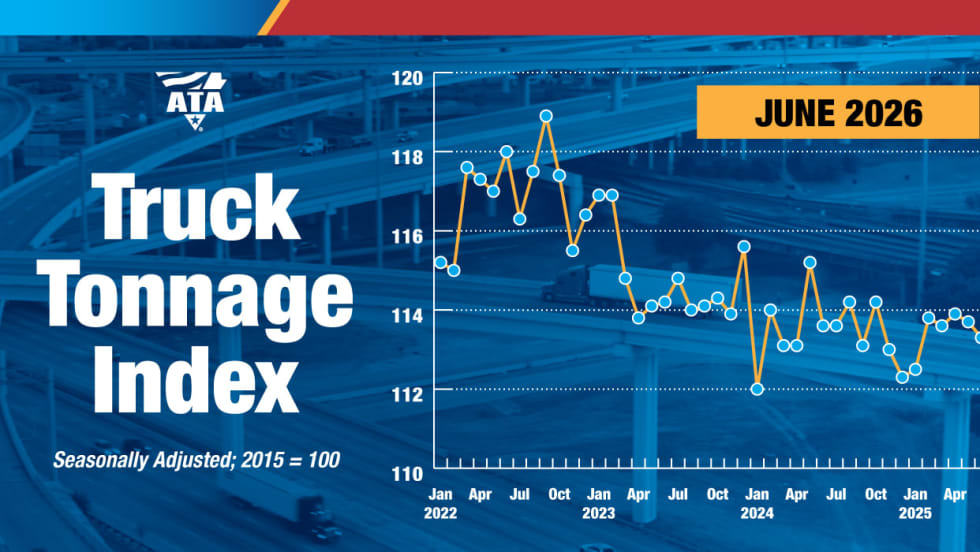
Freight Tonnage Down, Rates up, as Lower Capacity Powers Trucking Recovery
The recovery from the freight recession continues to be driven by reduction in capacity rather than by increased demand.
Read More →
Think Your Trucking Fleet Isn't Using Much AI? Think Again
Shadow AI — the use of unauthorized artificial intelligence tools at work — is becoming increasingly common, putting sensitive company data at risk. Learn how trucking fleets can protect sensitive data while embracing AI.
Read More →
ArcBest Consolidates Brands, Cuts Workforce
The company will bring three business units under the ArcBest brand, eliminate about 2% of positions, and expects the changes to generate $40 million in annual savings.
Read More →
Trucking Fleets Faced Record Operating Costs During Third Year of Freight Recession
ATRI's annual operational cost report shows carriers trimmed fleets, delayed equipment purchases, and ran older trucks as expenses continued to outpace freight rates.
Read More →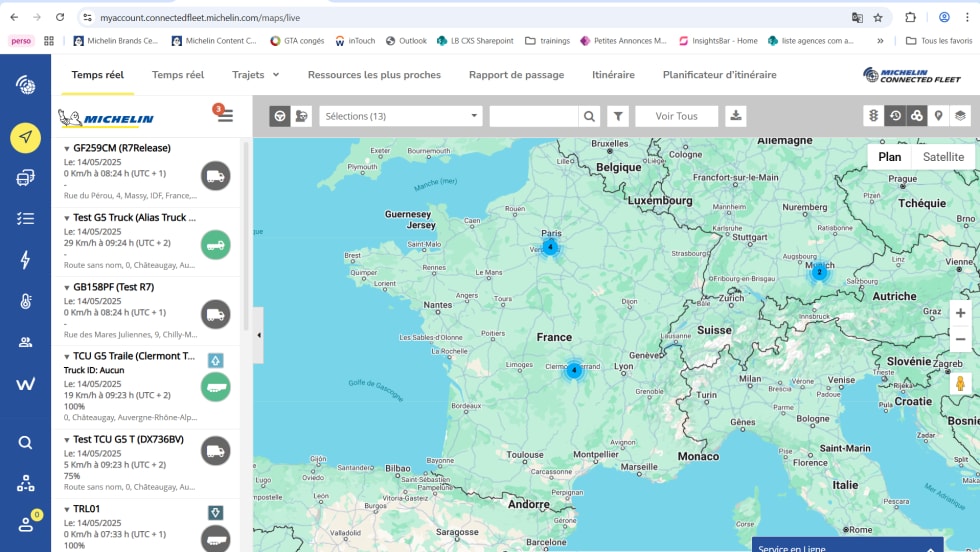
Michelin Adds AI Assistant to MyConnectedFleet Platform
Michelin’s new generative AI tool delivers instant fleet insights, helping managers analyze fuel use, tire maintenance, vehicle status, and operational performance without manually creating reports.
Read More →
LytxOne Platform Now Features AI, Compliance, and Asset Tracking Tools
New enhancements add AI-powered insights, asset tracking, compliance automation, and configurable privacy controls to Lytx's all-in-one fleet management platform.
Read More →