




DOT Makes Effort to Address Lack of Truck Parking
The Federal Highway Administration detailed its strategies for developing truck parking and best practices on designing and constructing new truck parking.

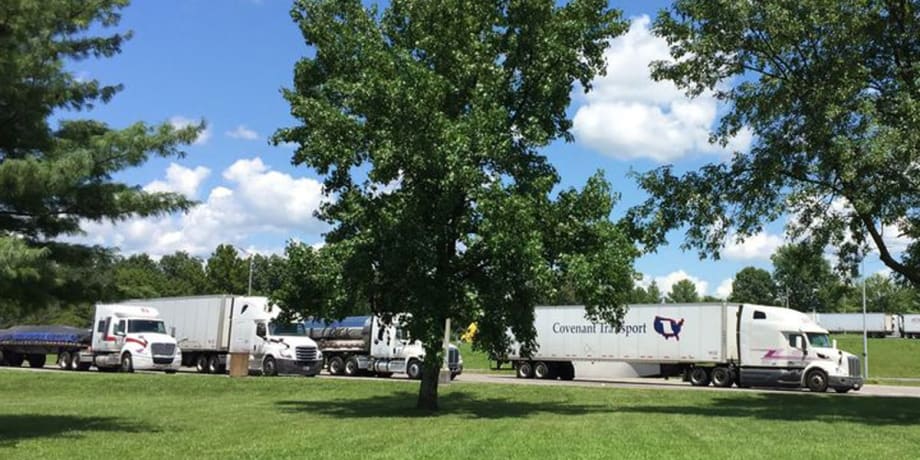
Photo: Deborah Lockridge
In September, the Federal Highway Administration detailed its strategies for developing truck parking and best practices on designing and constructing new truck parking to state, industry and federal leaders at a meeting of the National Coalition of Trucking Parking.
Department of Transportation officials also discussed the new and expanded funding resources that are eligible for truck parking projects through the Bipartisan Infrastructure Law.
The meeting builds on the commitments of the Trucking Action Plan, an effort focused on creating a stable and safe trucking workforce for truck drivers.
Need for Truck Parking
The American Trucking Associations and Owner-Operator Independent Drivers Association wrote a letter to DOT earlier this year citing that most truck drivers, 98%, reported problems finding safe parking. It costs drivers more than 56 minutes of drive-time to find parking, wasted time that is estimated to cause a $5,500 loss in annual compensation, association officials cited.
“I’ve heard from countless truckers across the country about how the shortage of truck parking costs them time and money—not to mention making our roads less safe and weakening our supply chains,” said Transportation Secretary Pete Buttigieg. The DOT says expanding truck parking is a priority for the agency.
Investment in Truck Parking Capacity Improvements
In September, the DOT announced significant investments to expand truck parking capacity on the interstate system through the INFRA program. These first-of-its-kind investments included $15 million to add approximately 120 new truck parking spaces along the Interstate 4 corridor in Florida between Tampa and Orlando and a $22.6 million investment to add approximately 125 spaces along I-40 east of Nashville, Tennessee.
“This issue is of particular importance for women drivers, who repeatedly cite the lack of safe parking options as a deterrent to more women entering the field,” ATA President and CEO Chris Spear said in a press releae. “Investing in these projects and ensuring all drivers have ready access to safe and well-lit parking facilities is an important step in shifting our industry’s workforce demographics and empowering more women across the country to pursue the rewarding career opportunities that trucking has to offer.”
The Federal Motor Carrier Safety Administration also awarded $1.4 million in grant funding to Montana and Kentucky to improve truck parking through its High Priority Innovative Technology Deployment grants.
“One of the leading causes of truck crashes is driver fatigue. It is clear that adequate rest for drivers is foundational for safe operations. We have heard loud and clear from drivers – they need more places to rest and they need to be safe and secure while doing so,” said FMCSA Administrator Robin Hutcheson. “We are proactively working at the local and regional level to point to the numerous resources across DOT for truck parking construction, expansion, and technology solutions, and we will continue to work collaboratively with agencies within DOT and with all of our partners in the industry.”
Additionally, DOT has updated guidance on the sources of federal funding that are eligible for states interested in making further investments in truck parking. States and other government entities can apply for grants or prioritize formula funding for capacity projects from over $47.4 billion in eight programs.
“Truck parking is a safety issue – both for truck drivers and all other road users, which is why FHWA has updated our guidance to ensure there is no question about eligibility for truck parking projects in new formula and discretionary grant programs authorized under the Bipartisan Infrastructure Law,” said FHWA Acting Administrator Stephanie Pollack.“This new information will help states, localities and other eligible entities identify eligible formula funding sources and apply for discretionary grants to fund truck parking projects that not only support the increased demand for truck deliveries and strengthen our supply chains, but also provide safe truck parking, which is critical to protect the truck drivers we rely on, as well as the traveling public.”
More Fleet Management

Why Private Fleets Are Taking More Freight
Private fleets are putting their own trucks on demanding customers and high-cost lanes as companies seek greater control over service, costs, and capacity.
Read More →
Color Match Smarter: Tools That Restore & Perform
For fleet managers and collision repair professionals keeping heavy-duty trucks on the road, getting the color right the first time isn't just about appearance — it's about efficiency, turnaround time, and bottom-line results. Discover how today's digital color tools are transforming the repair process from guesswork to precision.
Read More →
FMCSA Pauses Biennial-Update Enforcement Amid Motus Transition
Carriers whose updates were due on or after June 1 have more time, while FMCSA works to stabilize its new registration system and warns of phishing sites impersonating its new carrier registration system, Motus.
Read More →


2026 Blueprint for Countering Smarter Supply Chain Theft
Cargo theft is no longer just the cost of doing business. It's a multi-billion-dollar criminal enterprise exploiting vulnerabilities across your fleet, drivers, and supply chain.
Read More →
How Telematics Improves Visibility, Control, and Performance in Refrigerated Fleets
Explore how telematics help refrigerated fleets improve visibility, uptime, efficiency, compliance, and cargo protection across connected cold chain operations.
Read More →
What the U.S.-Canada Trade War Means for Trucking
Escalating U.S.-Canada tariffs could disrupt cross-border freight, reduce truck volumes, raise costs, and create new uncertainty for carriers on both sides of the border.
Read More →
What Are Trucking’s Top Concerns for 2026?
The American Transportation Research Institute wants to know what's worrying trucking fleet managers, drivers, and other stakeholders in its annual Industry Issues survey.
Read More →
American Trucking Associations Looks for a New Leader
ATA President and CEO Chris Spear abruptly left his job at the association on August 21, at a pivotal time for the trucking industry.
Read More →
Public Wi-Fi Cybersecurity Risks: How Truck Drivers and Fleets Can Protect Their Data
Public Wi-Fi can expose truck drivers and fleets to credential theft, malware, and other cyber threats. Here’s how to reduce the risk on the road.
Read More →
For Nicky Cupp, Fleet Innovation Starts With Frustration
HDT Truck Fleet Innovator Nicky Cupp turns everyday pain points at Fraley & Schilling into opportunities for better technology and smarter processes.
Read More →