




Daimler Aims for Level 4 Automated Trucks
Daimler Trucks says it’s targeting Level 4 automated driving technology – essentially skipping Level 3 because it believes it’s a safer way to go.


At its Portland, Ore., headquarters Daimler laid out plans for Level 2 and Level 4 automated truck technology.
Photo: Deborah Lockridge
PORTLAND, OREGON - Daimler Trucks says it’s targeting Level 4 automated driving technology – essentially skipping Level 3 because it believes it’s a safer way to go.
During Daimler Trucks’ 2018 Capital Market & Technology Day here on June 6, Peter Vaughan Schmidt, head of Daimler Trucks strategy, said Level 2 automated technology is coming soon and will be launched globally. Level 2 automated technology may help with things like lane-keeping, active steering, keeping the proper distance from vehicles ahead — but the driver still takes an active role in controlling the truck.
Next up for Daimler, however, is Level 4, Schmidt said.
Level 4 automated technologies allow the truck to take total control of the vehicle, including acceleration and braking, steering, and the ability to pull the vehicle off the road and stop if needed, all without driver assistance — but only on certain stretches of road well-suited for safe automated operation. Schmidt said this differs from Level 5 autonomous vehicles, which would be “truly driverless,” and from Level 3, which allows the driver to remove his or her hands from the wheel but still requires him to be in the seat and monitor the situation so he can take control at a moment’s notice in case of a problem.
“The value to our customer is much larger at Level 4,” Schmidt said, and even more important is the safety aspect. At Level 3, he said, the driver needs to take over within seconds, set aside his iPad, and make the fast mental switch. “So we aimed directly for Level 4.”
Daimler, he said, thinks automation can help address the driver shortage by making the work less taxing and more enjoyable, but it doesn’t believe it can solve the issue or even result in a surplus of drivers put out of work by autonomous vehicles.
“Building a real autonomous trucking product is a tough game and there’s no cutting corners. It needs to be a 100% reliable solution, not 99.5%.” It needs to work in the demanding real world of trucking, including in bad weather. The technology needs to meet customers’ needs, not just technology for the sake of “disruption,” he said.
“You want flexibility as a fleet,” he said. "You want to run all highways, not just 400 miles in the desert.”
And there’s the need to work with society for the legal framework for operational and liability issues.
Many of these challenges are similar for other levels of automation. And even lower-level automated truck operation will likely be first seen in gated areas and on rural highways, rather than in more complex city operations.
“It is a long way from a demo to a customer-viable product,” Schmidt said. Doing a demo, as some other autonomous truck companies have done, and as Daimler Trucks has done both in Europe and North America, is one thing, he said. “It’s just a demo. It’s not super difficult.
“In the end, to reach the overarching goal of improving safety, being better than a human driver, it means you need to master all situations, including fielding the unknown,” he continued.
“It’s a really tough game to come from a scientific thing to make it work in a trucking world.”
Stay tuned for more reports from HDT Editor in Chief Deborah Lockridge, who is in Portland covering this special event.
Related: Daimler Announces Automated Truck R&D Center
More Safety & Compliance

FMCSA Pauses Biennial-Update Enforcement Amid Motus Transition
Carriers whose updates were due on or after June 1 have more time, while FMCSA works to stabilize its new registration system and warns of phishing sites impersonating its new carrier registration system, Motus.
Read More →
ZF Expands Commercial Vehicle Push in North America
ZF is expanding its North American commercial-vehicle presence with new transmission applications, electrification, trailer technology and autonomous-driving systems.
Read More →
Truck Drivers Need More Than Another Alert
Fleets have more visibility into truck health, safety events, and driver activity than ever. The next challenge is turning all that information into useful guidance for the person who has to decide what to do next.
Read More →
Tesla Wants a Self-Driving Semi. Are Cameras Enough?
Could Tesla’s camera-only autonomous driving technology work on an 80,000-pound Semi? In this commentary, HDT's Deborah Lockridge takes a look at Tesla, Cybercab, and how autonomous trucks see the road.
Read More →
What DOT’s Automated Vehicle Strategy Means for Trucking
The U.S. Department of Transportation issued a new automated-vehicle strategy that outlines plans for driverless-truck regulations, cross-state freight corridors, and federal safety standards.
Read More →
NYC Expands Speed, Pedestrian Safety Tech Across Fleet
New York City is expanding intelligent speed assistance and pedestrian-alert systems across its municipal fleet, moving the technologies from pilot programs into vehicle procurement and retrofit requirements.
Read More →
FMCSA Removes 110 Truck Driver Training Schools from Certified ELDT List
Federal regulators also are targeting more than 160 additional training providers and launching a nationwide audit of third-party CDL skills testers as part of a broader crackdown on trucking fraud.
Read More →
Beyond DOT Compliance: What Makes a Trucking Fleet Truly Safe?
A trucking fleet can follow every rule and still make unsafe decisions. The real test comes when safety conflicts with freight, productivity, or cost.
Read More →
Hours of Service Pilot Programs: FMCSA Readies for 2027 Rollout
Two pilot programs could eventually reshape hours-of-service rules, giving truck drivers options to pause their 14-hour clock or use longer split sleeper rest periods.
Read More →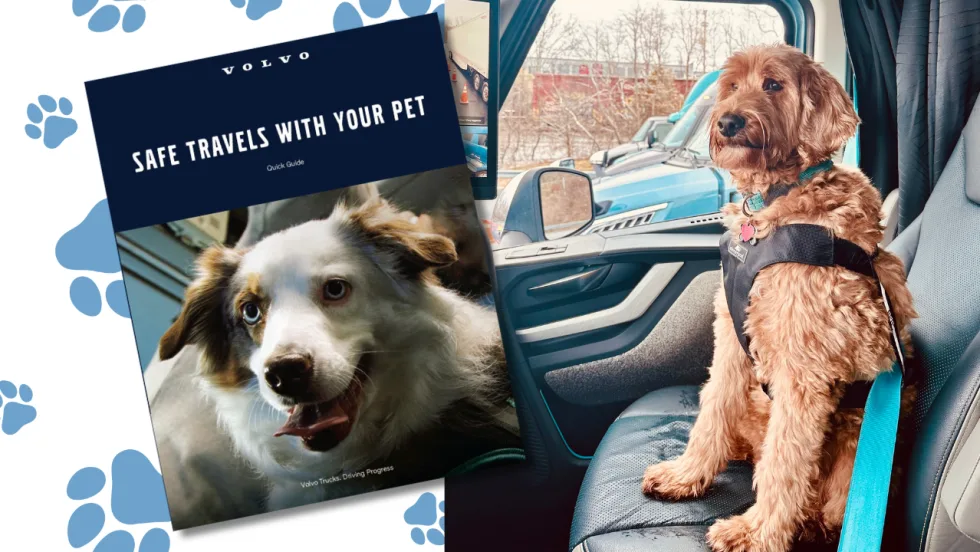
New Guide Offers Pet Safety Tips for Truck Drivers
Hundreds of thousands of pets travel in truck cabs. A new safety guide from Volvo Trucks and the Center for Pet Safety offers practical advice for truck drivers who bring dogs and cats along for the ride.
Read More →