




CVSA Hazmat Inspection Blitz Nets 2,578 Violations
Inspectors discovered 2,578 hazardous materials/dangerous goods violations, of which 701 were hazardous materials/dangerous goods out-of-service violations, during the Commercial Vehicle Safety Alliance’s annual five-day unannounced HM/DG Road Blitz.

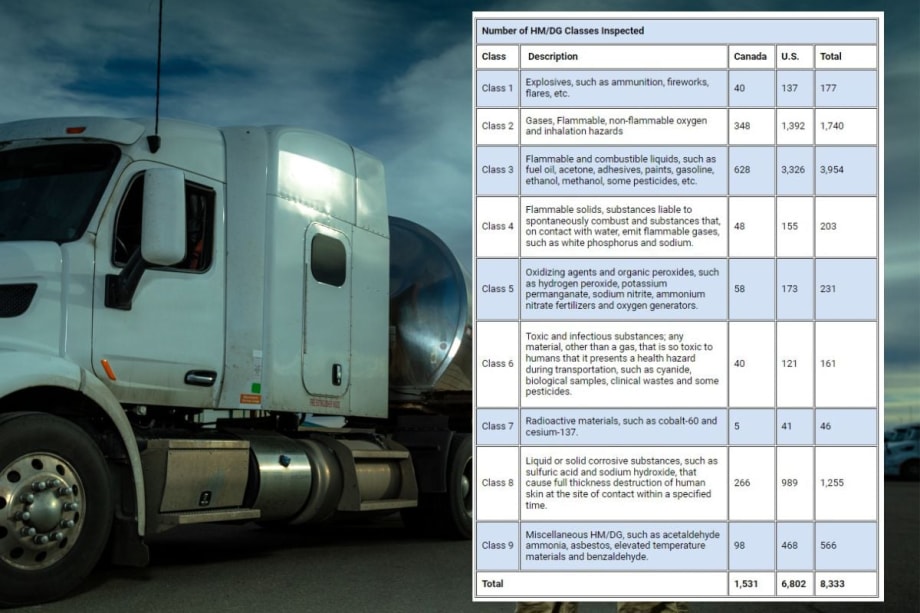
During this year's CVSA HM/DG Road Blitz, inspectors found 2,576 violations.
Source: CVSA/CAnva/HDT Illustration
Inspectors discovered 2,578 hazardous materials/dangerous goods violations, of which 701 were hazardous materials/dangerous goods out-of-service violations, during the Commercial Vehicle Safety Alliance’s annual five-day unannounced HM/DG Road Blitz.
This year marked a substantial increase in the number of violations over last year’s Road Blitz, in which 1,117 violations were found.
Inspectors in Canada and the U.S. inspected 7,572 commercial motor vehicles transporting hazardous materials/dangerous goods during the initiative. Thirty-seven jurisdictions participated in this year’s HM/DG Road Blitz, which was June 12-16. A total of 8,395 packages were inspected.
Vehicles with out-of-service HM/DG violations were removed from roadways until those violations could be corrected.
Vehicles that passed a North American Standard Level I Inspection without any critical inspection violations or specification cargo tank vehicle violations were eligible to receive a CVSA decal and permitted to continue to their destination.
What Was the Key Focus of the Hazmat Road Blitz?
The purpose of the annual unannounced HM/DG Road Blitz is to:
Spotlight the importance of the programs, processes, and regulations associated with the safe transportation of HM/DG.
Recognize safety-compliant HM/DG drivers, motor carriers, manufacturers, shippers, etc.
Highlight the specially trained inspectors who prioritize transportation safety by inspecting vehicles transporting HM/DG and enforcing strict compliance regulations.
Identify all shipping paper, placarding, marking, labeling, packaging, and loading compliance violations.
Remove vehicles with HM/DG out-of-service violations from roadways.
There are nine recognized classes of HM/DG. These classes designate HM/DG into categories, based on the materials’ specific chemical and physical properties, and describe the different types of risks associated with those materials.
U.S. Hazmat Inspection Results
In the U.S., 6,123 vehicles and 6,722 HM packages were inspected during the five days of the HM/DG Road Blitz (2,658 non-bulk packages, 3,256 cargo tank packaging, and 808 other bulk packaging). Inspectors identified 2,096 hazardous materials violations, of which 538 were out-of-service HM violations.
Inspectors also discovered eight undeclared packages.
According to the Environmental Protection Agency, a hazardous material has properties that make it dangerous or capable of having a harmful effect on human health or the environment. Commercial motor vehicles transported the largest volume of hazardous materials through the U.S. transportation system, moving 1.2 out of 2.2 billion tons of hazardous materials.
To minimize the risks associated with transporting hazardous materials, anyone involved in HM transportation is required to comply with the federal Hazardous Materials Regulations (HMRs). The HMRs govern the transportation of hazardous materials in interstate, intrastate, and foreign commerce.
According to the Pipeline and Hazardous Materials Safety Administration, each year, approximately 1,500 transportation incidents occur when undeclared hazardous materials are shipped.
Hazardous materials must always be properly classified, packaged, labeled, handled, and stowed for transportation. This protects workers, emergency responders, and the general public from the risks associated with HM transportation.
Canadian Results
In Canada, 1,449 vehicles and 1,673 DG packages were inspected during the five days of the HM/DG Road Blitz (799 small means of containment, 690 highway tank packaging, and 184 other large means of containment). Inspectors discovered 482 DG violations, of which 163 were out-of-service DG violations.
In Canada, a dangerous good is defined as any substance or material capable of posing an unreasonable risk to health, safety, and property when transported in commerce.
Shipments of dangerous goods number in the multi-millions annually. The federal, provincial, and territorial governments enacted legislation to regulate the transportation of dangerous goods via the Transportation of Dangerous Goods (TDG) Regulations.
Canada’s TDG Regulations prescribe safety standards and shipping requirements for dangerous goods and communicate the nature and level of hazard and risk associated with those dangerous goods.
About HM/DG Road Blitz
The HM/DG Road Blitz is an annual unannounced HM/DG inspection and enforcement initiative with participation from CVSA member jurisdictions in North America.
It is supported by the U.S. Pipeline and Hazardous Materials Safety Administration, the Federal Motor Carrier Safety Administration, and Transport Canada.
The initiative was adopted by the CVSA Hazardous Materials Committee, which provides technical HM/DG guidance and assistance to government and industry in an effort to reduce HM/DG incidents and encourage uniformity and consistency in the application of the regulations.
More Safety & Compliance

FMCSA Pauses Biennial-Update Enforcement Amid Motus Transition
Carriers whose updates were due on or after June 1 have more time, while FMCSA works to stabilize its new registration system and warns of phishing sites impersonating its new carrier registration system, Motus.
Read More →
ZF Expands Commercial Vehicle Push in North America
ZF is expanding its North American commercial-vehicle presence with new transmission applications, electrification, trailer technology and autonomous-driving systems.
Read More →
Truck Drivers Need More Than Another Alert
Fleets have more visibility into truck health, safety events, and driver activity than ever. The next challenge is turning all that information into useful guidance for the person who has to decide what to do next.
Read More →
Tesla Wants a Self-Driving Semi. Are Cameras Enough?
Could Tesla’s camera-only autonomous driving technology work on an 80,000-pound Semi? In this commentary, HDT's Deborah Lockridge takes a look at Tesla, Cybercab, and how autonomous trucks see the road.
Read More →
What DOT’s Automated Vehicle Strategy Means for Trucking
The U.S. Department of Transportation issued a new automated-vehicle strategy that outlines plans for driverless-truck regulations, cross-state freight corridors, and federal safety standards.
Read More →
NYC Expands Speed, Pedestrian Safety Tech Across Fleet
New York City is expanding intelligent speed assistance and pedestrian-alert systems across its municipal fleet, moving the technologies from pilot programs into vehicle procurement and retrofit requirements.
Read More →
FMCSA Removes 110 Truck Driver Training Schools from Certified ELDT List
Federal regulators also are targeting more than 160 additional training providers and launching a nationwide audit of third-party CDL skills testers as part of a broader crackdown on trucking fraud.
Read More →
Beyond DOT Compliance: What Makes a Trucking Fleet Truly Safe?
A trucking fleet can follow every rule and still make unsafe decisions. The real test comes when safety conflicts with freight, productivity, or cost.
Read More →
Hours of Service Pilot Programs: FMCSA Readies for 2027 Rollout
Two pilot programs could eventually reshape hours-of-service rules, giving truck drivers options to pause their 14-hour clock or use longer split sleeper rest periods.
Read More →
New Guide Offers Pet Safety Tips for Truck Drivers
Hundreds of thousands of pets travel in truck cabs. A new safety guide from Volvo Trucks and the Center for Pet Safety offers practical advice for truck drivers who bring dogs and cats along for the ride.
Read More →