




Related: ELDs So Far - Stories From the Road
CVSA Director Talks ELDs, Enforcement, and the Future
In a wide ranging interview, CVSA executive director Collin Mooney spoke about the ELD Mandate, out of service violations and the future of commercial safety enforcement.
by Staff
February 7, 2018
Mooney spoke about the disconnect between how trucking companies view some of the Alliance’s enforcement and what the CVSA is actually trying to accomplish. Photo: CVSA
2 min to read
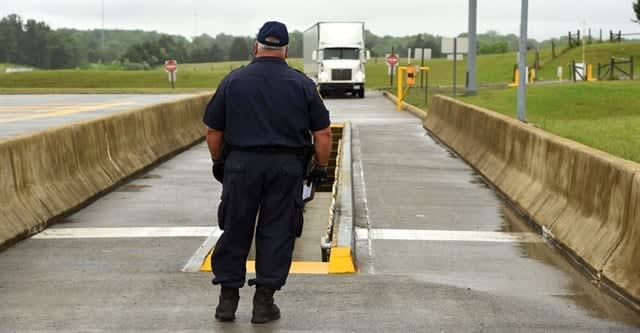
Mooney spoke about the disconnect between how trucking companies view some of the Alliance’s enforcement and what the CVSA is actually trying to accomplish. Photo: CVSA
Commercial Vehicle Safety Alliance Executive Director Collin Mooney gave a wide-ranging interview to Canadian trucking publication Today’s Trucking, talking about how he views the organization's role in improving safety on our roads.
Mooney spoke about the disconnect between how trucking companies view some of the Alliance’s enforcement and what the CVSA is actually trying to accomplish. He found that the rollout of the ELD mandate in December from an enforcement perspective has not gone completely according to plan.
“We are disappointed that our implementation process — our delay in implementing Out-of-Service conditions until April 1 — has been taken by many in the industry as the new implementation date. That wasn’t the intent,” said Mooney. “I’m disappointed in the handful of people electing to install their ELDs so they meet the regulatory definition, but then still using paper. It’s not meeting the regulatory intent.”

Commercial Vehicle Safety Alliance executive director Collin Mooney.Photo: CVSA
On the subject of Out of Service violations, Mooney reflected on how the kinds of violations found during inspections often point to larger problems with carriers and how they might be failing to enforce their own safety rules.
“If we’re finding violations and documenting them at roadside, you have a failure within your annual inspection program, your preventive maintenance program, your driver trip inspection program,” he said. “Sometimes [truckers] rely on the roadside inspection program as their preventive maintenance program. We see that a lot, and that’s not right. The carriers that invest in a preventive maintenance program are at a competitive disadvantage when you have motor carriers that do not.”
Mooney also discussed the influx of new technologies such as weigh station bypass and ELDs and how increasing connectivity could help the CVSA cast a wider net when targeting unsafe carriers.
“The more we can leverage technologies such as weigh-in-motion, bypass systems — any sort of advancement in technology to help us target unsafe carriers — the better,” said Mooney. “We conduct 4 million roadside inspections annually in the United States and Canada. The goal under our electronic inspection program is 400 million a year.”
In the rest of the interview Mooney also speaks about CSA, the annual Roadcheck blitz, improving compliance, and what violations say about a trucking company.
Read the full interview here at Today's Trucking.
More Safety & Compliance

FMCSA Pauses Biennial-Update Enforcement Amid Motus Transition
Carriers whose updates were due on or after June 1 have more time, while FMCSA works to stabilize its new registration system and warns of phishing sites impersonating its new carrier registration system, Motus.
Read More →
ZF Expands Commercial Vehicle Push in North America
ZF is expanding its North American commercial-vehicle presence with new transmission applications, electrification, trailer technology and autonomous-driving systems.
Read More →
Truck Drivers Need More Than Another Alert
Fleets have more visibility into truck health, safety events, and driver activity than ever. The next challenge is turning all that information into useful guidance for the person who has to decide what to do next.
Read More →
Tesla Wants a Self-Driving Semi. Are Cameras Enough?
Could Tesla’s camera-only autonomous driving technology work on an 80,000-pound Semi? In this commentary, HDT's Deborah Lockridge takes a look at Tesla, Cybercab, and how autonomous trucks see the road.
Read More →
What DOT’s Automated Vehicle Strategy Means for Trucking
The U.S. Department of Transportation issued a new automated-vehicle strategy that outlines plans for driverless-truck regulations, cross-state freight corridors, and federal safety standards.
Read More →
NYC Expands Speed, Pedestrian Safety Tech Across Fleet
New York City is expanding intelligent speed assistance and pedestrian-alert systems across its municipal fleet, moving the technologies from pilot programs into vehicle procurement and retrofit requirements.
Read More →
FMCSA Removes 110 Truck Driver Training Schools from Certified ELDT List
Federal regulators also are targeting more than 160 additional training providers and launching a nationwide audit of third-party CDL skills testers as part of a broader crackdown on trucking fraud.
Read More →
Beyond DOT Compliance: What Makes a Trucking Fleet Truly Safe?
A trucking fleet can follow every rule and still make unsafe decisions. The real test comes when safety conflicts with freight, productivity, or cost.
Read More →
Hours of Service Pilot Programs: FMCSA Readies for 2027 Rollout
Two pilot programs could eventually reshape hours-of-service rules, giving truck drivers options to pause their 14-hour clock or use longer split sleeper rest periods.
Read More →
New Guide Offers Pet Safety Tips for Truck Drivers
Hundreds of thousands of pets travel in truck cabs. A new safety guide from Volvo Trucks and the Center for Pet Safety offers practical advice for truck drivers who bring dogs and cats along for the ride.
Read More →