




Related: Are Your Brakes up to Snuff?
CVSA Brake Safety Day Scheduled for September
The Commercial Vehicle Safety Alliance announced that Brake Safety Day is taking place on Sept. 7 this year across North America.
by Staff
June 20, 2017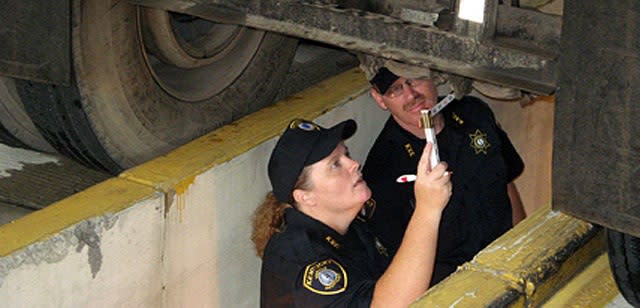
2 min to read
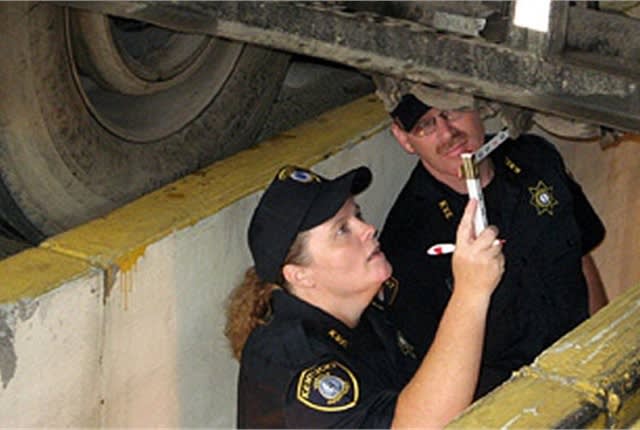
The Commercial Vehicle Safety Alliance announced that its Brake Safety Day is taking place on Sept. 7 this year across North America.
Law enforcement agencies will conduct inspections on large trucks and buses to identify out-of-adjustment brakes, and brake system and antilock braking system violations, as part of the CVSA’s Operation Airbrake Program. This year’s Sept. 7 Brake Safety Day follows up on CVSA’s May 3 unannounced Brake Safety Day and replaces the seven-day Brake Safety Week campaign from previous years.
The goal of Brake Safety Day is to reduce the number of accidents caused by poorly maintained brakes on commercial vehicles by conducting roadside mechanical fitness inspections and identifying and removing vehicles with critical brake violations from the road.
The event will also feature outreach and educational efforts by inspectors, carriers, and others. Brake Safety Day activities seek to educate drivers, mechanics, owner-operators, and others on the importance of proper brake maintenance, operation, and performance.
On Brake Safety Day, inspectors will primarily conduct the North American Standard Level I Inspection, which is a 37-step procedure that includes an examination of both driver operating requirements and vehicle mechanical fitness. Inspections conducted will include inspection of brake system components to identify loose or missing parts, air or hydraulic fluid leaks, worn linings, pads, drums or rotors, and other faulty brake system components. ABS malfunction indicator lamps are also checked. Inspectors will measure pushrod stroke, where applicable. Vehicles with defective or out-of-adjustment brakes will be placed out of service
In the 10 jurisdictions using performance-based brake testing equipment, vehicle braking efficiency will be measured. PBBT systems include a slow speed roller dynamometer that measures total vehicle weight and total brake force from which braking efficiency is determined. The minimum braking efficiency for trucks is 43.5%, required by U.S. federal regulation and the CVSA out-of-service criteria.
Brake-related violations made up 47.5% of all out-of-service violations during the International Roadcheck in 2016.
During 216’s Brake Safety Week, enforcement agencies conducted 18,385 vehicle and brake system inspections, resulting in brake-related out-of-service violations in 13.2% of vehicles.
Of those inspected, 8.8% of all ABS-required trucks were found with ABS violations while 15.8% of all trailers requiring ABS were found with ABS violations.
More Safety & Compliance
Sponsored•October 6, 2026
A Camera Isn't a Safety Program. Here's What Brokers Are Screening for Now
Footage alone may not be enough to pass broker vetting processes. Here's what counts as a defensible safety program now.
Read More →
Marijuana and Trucking’s Drug-Testing Dilemma
Marijuana is getting stronger, laws are changing, and drug tests still can’t reliably establish impairment. What does that mean for truck drivers and the fleets that employ them?
Read More →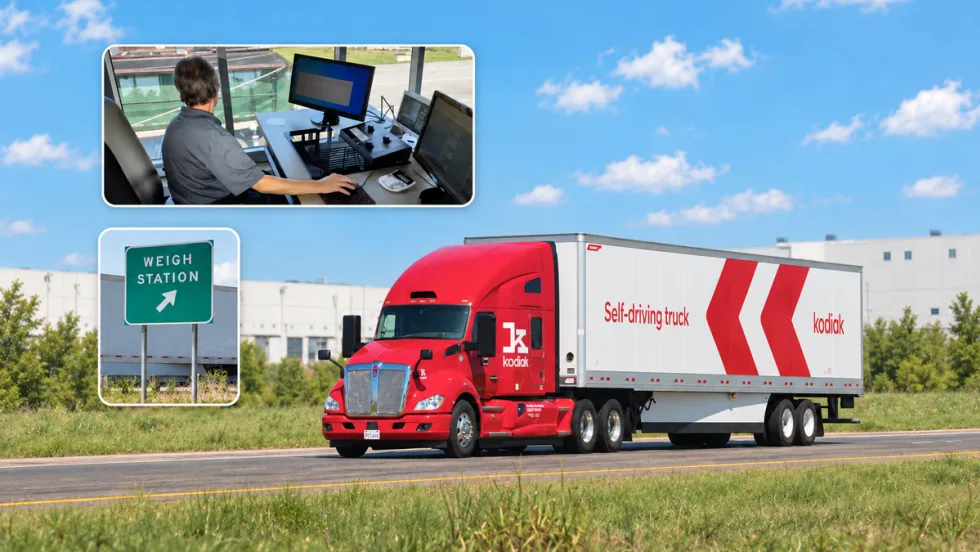
PrePass, Kodiak Connect Driverless Trucks to Roadside Enforcement
The system will allow enforcement agencies to verify Enhanced Inspection information and decide whether Kodiak’s autonomous trucks can bypass roadside screening sites.
Read More →

From One Generation to the Next: How Mentorship Builds Safer Truck Drivers
After three decades in trucking, Harold Perry shares what he's learned about driver safety, mentorship, and helping the next generation build confidence behind the wheel.
Read More →
FMCSA Pauses Biennial-Update Enforcement Amid Motus Transition
Carriers whose updates were due on or after June 1 have more time, while FMCSA works to stabilize its new registration system and warns of phishing sites impersonating its new carrier registration system, Motus.
Read More →
ZF Expands Commercial Vehicle Push in North America
ZF is expanding its North American commercial-vehicle presence with new transmission applications, electrification, trailer technology and autonomous-driving systems.
Read More →
Truck Drivers Need More Than Another Alert
Fleets have more visibility into truck health, safety events, and driver activity than ever. The next challenge is turning all that information into useful guidance for the person who has to decide what to do next.
Read More →
Tesla Wants a Self-Driving Semi. Are Cameras Enough?
Could Tesla’s camera-only autonomous driving technology work on an 80,000-pound Semi? In this commentary, HDT's Deborah Lockridge takes a look at Tesla, Cybercab, and how autonomous trucks see the road.
Read More →
What DOT’s Automated Vehicle Strategy Means for Trucking
The U.S. Department of Transportation issued a new automated-vehicle strategy that outlines plans for driverless-truck regulations, cross-state freight corridors, and federal safety standards.
Read More →
NYC Expands Speed, Pedestrian Safety Tech Across Fleet
New York City is expanding intelligent speed assistance and pedestrian-alert systems across its municipal fleet, moving the technologies from pilot programs into vehicle procurement and retrofit requirements.
Read More →