




CV Parts Aftermarket Leading Indicator Increases in January
A new industry index that tracks aftermarket parts rose slightly in January. Commercial Motor Vehicle Consulting's new CV Aftermarket Parts Leading Indicator increased 0.03% in January to 104.70 (January 2001=100) following a 0.01% decrease in December (104.67) and a 0.61% increase in November (104.68)
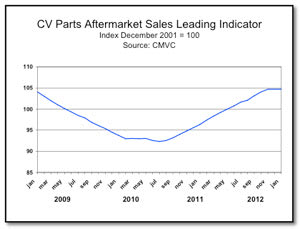
A new industry index that tracks aftermarket parts rose slightly in January. Commercial Motor Vehicle Consulting's new CV Aftermarket Parts Leading Indicator increased 0.03% in January to 104.70 (January 2001=100) following a 0.01% decrease in December (104.67) and a 0.61% increase in November (104.68).
The upward slope in the indicator has flattened out over the past few months.
PLI is signaling the growth rate of commercial vehicle parts aftermarket sales will decelerate in the near term, says Commercial Motor Vehicle Consulting. Aftermarket sales will continue to expand, but the rate of growth is decelerating in comparison to growth rates in 2011.
The component series that make up the composite index, PLI, continue to improve, signaling higher CV parts aftermarket sales, but the rates at which these component series are improving are moderating. The commercial vehicle population continues to operate at high utilization rates, implying truck depreciation will continue to stimulate parts consumption.
Industrial production, a measurement of freight growth, is expanding, so fleet capacity utilization will remain at high levels in the near future, say CMVC analysts. The Dow Jones Transportation Index and For-Hire Trucking Producer Price Index imply expectations of higher profits for the trucking industry, so rising diesel fuel prices in the near term should not alter truck operators' preventive maintenance programs.
Commercial Motor Vehicle Consulting developed the commercial vehicle Parts Aftermarket Leading Indicator using parts aftermarket sales from a commercial vehicle supplier with a product line that expands across several component groups.
PLI was designed to be a short-term forecasting indicator of U.S. commercial vehicle parts aftermarket sales by signaling peaks/troughs and inflection/turning points in parts sales due to changes in fleets' business environments as a result of cyclical change in the business cycle - expansion, recession and recovery.
PLI does not measure changes in trend factors, such as vehicle demographics, that have a medium and/or long-term influence on parts aftermarket sales, because changes in trend factor variables lag the fluctuation and turning points in parts sales related to changes in the business cycle when cyclical factors overwhelm trend factors. Trend factor variables are not good predictors of changes in parts aftermarket sales related to changes in fleets' business environments.
A composite index was constructed to signal fluctuations in CV parts aftermarket sales, because the contribution of one data series over time differs from parts sales, so a composite index comprised of multiple data series is a better predictor of fluctuations/turning points in parts sales as the composite index gains better predictive powers from diversification.
More Fleet Management

Nomination Deadline Extended for HDT Emerging Leaders
Just a few more days to nominate accomplished trucking fleet professionals under 40 who are making an impact and helping lead the industry forward for the HDT Emerging Leaders award. Deadline extended to October 20!
Read More →
What Will ATA’s New Leader Bring to Trucking's Table?
Incoming President and CEO Mark Colson’s record in Alabama offers clues about his priorities and approach following Chris Spear’s abrupt departure as the head of the American Trucking Associations.
Read More →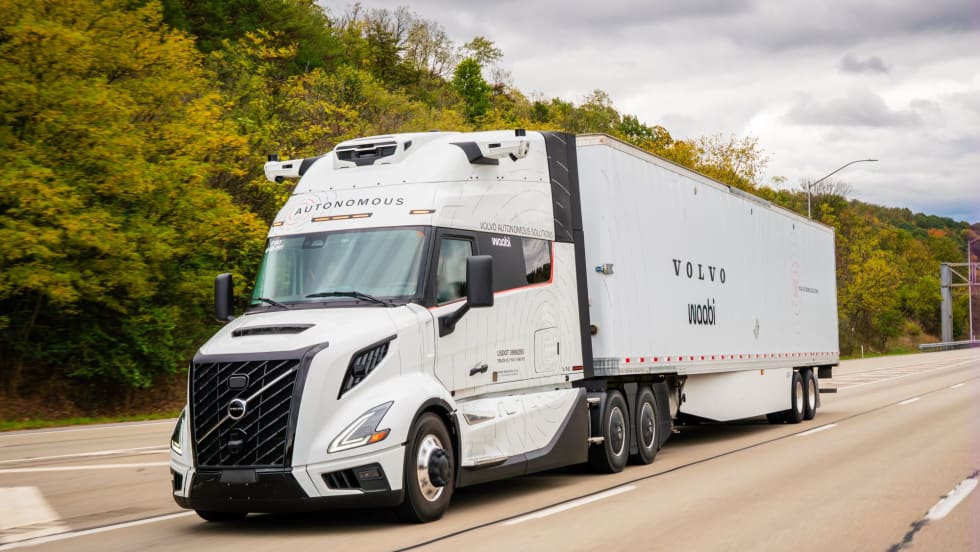
Volvo, Waabi Start Commercial Autonomous Operations in Texas
Volvo VNL Autonomous trucks, powered by the Waabi Driver, are hauling freight directly to third-party facilities for a customer in Texas.
Read More →
Samsara Launches Custom AI Agent Builder
Agent Studio lets fleets create AI tools for hours-of-service monitoring, reporting and driver support, including agents that communicate by phone.
Read More →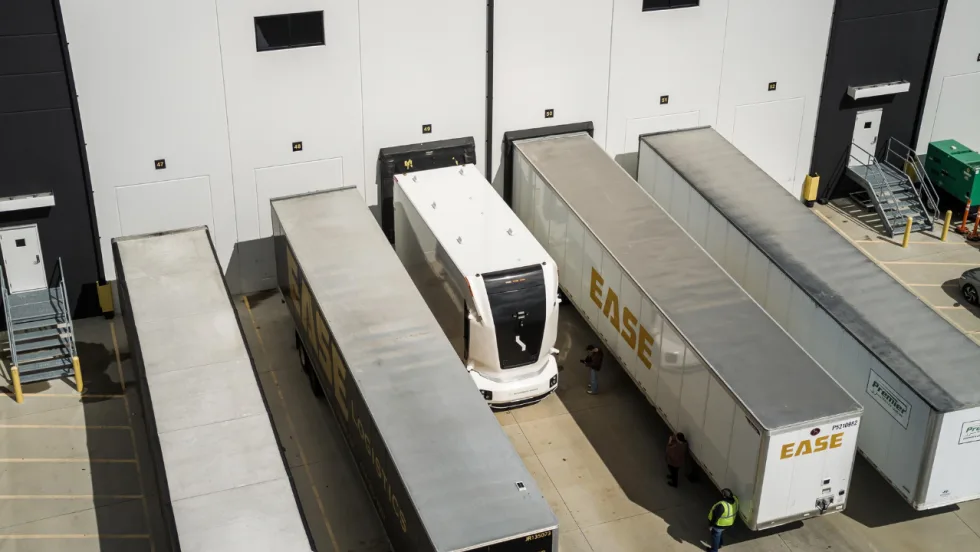
Einride Driverless Electric Trucks Begin Daily Freight Operations in Ohio
Two cabless electric trucks are hauling freight between EASE Logistics facilities in Marysville, Ohio, as part of a multi-state truck automation project.
Read More →
Geotab Links Fleet Card to Vehicle Data
The new card combines fuel discounts with telematics-based purchase controls. Geotab’s analysis also points to potential savings from choosing lower-priced fuel stops.
Read More →
How MFA Helps Protect Trucking Fleets
Multi-factor authentication adds protection when passwords are stolen. Here’s how it works and where fleets should start.
Read More →
How Better Freight Data Helps Trucking Teams Get Ahead of Disruption
Trucking and logistics teams have plenty of data. The problem is getting the right information in front of the right people soon enough to act. Better-connected data can help teams spot trouble earlier and make smarter decisions before small problems become big ones.
Read More →
Trimble: Taking Artificial Intelligence in Trucking Beyond Faster Tasks
At Insight 2026, Trimble executives argued that fleets may need to redesign workflows to get more from AI as it introduced new products and enhancements. AI’s value will depend on how fleets combine automation with their people's knowledge.
Read More →
Build a bulletproof fleet: Uniting ELDs and dash cams for total compliance
An ELD can prove compliance, but it cannot always prove what happened on the road. Discover how uniting accurate ELD data with AI-powered dash cam video can help your fleet strengthen compliance, defend against liability, protect drivers and reduce operational costs.
Read More →