





Related: Tech Startups Match Retailers, Final-Mile Drivers During Pandemic
COVID-19 Strains Last-Mile Delivery Logistics
The latest news from Amazon that it is pausing a test of a service that would compete with UPS and FedEx reflects the strain that the COVID-19 pandemic is placing on last-mile delivery logistics.
April 8, 2020
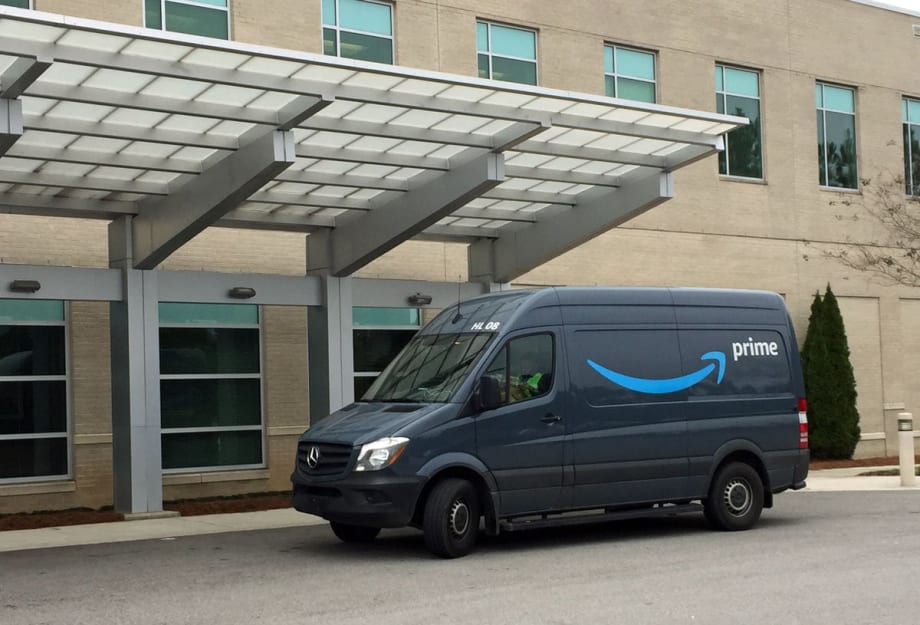
Amazon has taken steps to focus on getting essential supplies delivered.
Photo: Deborah Lockridge/HDT file photo
3 min to read
As the demand for local delivery has spiked due to stay-at-home orders and social distancing during the COVID-19 pandemic caused by the novel coronavirus, the system is feeling the strain.
On April 8, the Wall Street Journal reported that Amazon Shipping, which the ecommerce giant was testing to compete with the likes of UPS and FedEx, has been put on pause as Amazon focuses on meeting its own shipping needs. Citing people familiar with the matter, the journal reported that Amazon told shippers that the service will be paused starting in June.
Available in “just a handful of U.S. cities,” WSJ explained, “under the program, Amazon drivers would pick up packages from businesses and deliver them to consumers, rather than ship orders from Amazon warehouses.”
The journal noted that Amazon is suspending the service because it needs its people and capacity to handle a surge in its own customers’ orders.
Amazon has, as the Wall Street Journal put it in a late-March article, “struggled to find its coronavirus footing.” Amazon order volumes have been hitting levels normally seen only during the peak holiday season – but without the months the company usually has to prepare for that kind of volume. “The strain is showing in shortages, delays, and worker unrest, including some walkouts, no-shows, and COVID-related sickness," the WSJ reported.
The company in mid-March put a halt on incoming shipments of non-essential supplies to its warehouses so it could focus on critical supplies, and announced it was hiring 100,000 more workers. As it has prioritized those essential shipments, delivery times for other items have stretched to weeks rather than days, according to published reports.
Amazon isn't the only company struggling to meet the increased e-commerce demand during the pandemic. UPS and FedEx both suspended service guarantees, citing the impact of COVID-19.
Meanwhile, as the go-to last-mile delivery companies struggle under the load, logistics-tech companies are stepping up to help small businesses roll out delivery options quickly.
OneRail, an Orlando-based “final mile delivery orchestration and fulfillment platform,” launched QuickStart, a new service available to retailers needing to immediately find more final mile delivery capacity to support the eCommerce demand spike caused by COVID-19. “OneRail’s clients have seen over a 700% increase in delivery fulfillment volume over the past two weeks,” said Jeff Flowers, OneRail COO, in a release in late March.
Once a delivery order is received by OneRail, it is sized and automatically dispatched to one of more than 75,000 couriers. The platform provides delivery tracking and data for retail clients and consumers.
Cincinnati-based Frayt, which provides instant scheduling of deliveries to businesses and consumers, is scaling up its delivery network to provide same-hour services of goods in the Midwest. Founded in 2018, Frayt offers an on-demand shipping and delivery platform that connects shippers directly with drivers to get purchased goods delivered on the same day. It has more than 3,000 professional drivers spanning 13 U.S. markets.
“Instacart waits in some markets can be days, but we can get a driver in an hour in most cases,” explained CEO Lawrence McCord. “Our website visits have increased 250% as businesses and consumers look for other options.”
More Fleet Management

Sponsored•September 16, 2026
Color Match Smarter: Tools That Restore & Perform
For fleet managers and collision repair professionals keeping heavy-duty trucks on the road, getting the color right the first time isn't just about appearance — it's about efficiency, turnaround time, and bottom-line results. Discover how today's digital color tools are transforming the repair process from guesswork to precision.
Read More →
FMCSA Pauses Biennial-Update Enforcement Amid Motus Transition
Carriers whose updates were due on or after June 1 have more time, while FMCSA works to stabilize its new registration system and warns of phishing sites impersonating its new carrier registration system, Motus.
Read More →
Sponsored•September 14, 2026
2026 Blueprint for Countering Smarter Supply Chain Theft
Cargo theft is no longer just the cost of doing business. It's a multi-billion-dollar criminal enterprise exploiting vulnerabilities across your fleet, drivers, and supply chain.
Read More →


Sponsored•September 1, 2026
How Telematics Improves Visibility, Control, and Performance in Refrigerated Fleets
Explore how telematics help refrigerated fleets improve visibility, uptime, efficiency, compliance, and cargo protection across connected cold chain operations.
Read More →
What the U.S.-Canada Trade War Means for Trucking
Escalating U.S.-Canada tariffs could disrupt cross-border freight, reduce truck volumes, raise costs, and create new uncertainty for carriers on both sides of the border.
Read More →
What Are Trucking’s Top Concerns for 2026?
The American Transportation Research Institute wants to know what's worrying trucking fleet managers, drivers, and other stakeholders in its annual Industry Issues survey.
Read More →
American Trucking Associations Looks for a New Leader
ATA President and CEO Chris Spear abruptly left his job at the association on August 21, at a pivotal time for the trucking industry.
Read More →
Public Wi-Fi Cybersecurity Risks: How Truck Drivers and Fleets Can Protect Their Data
Public Wi-Fi can expose truck drivers and fleets to credential theft, malware, and other cyber threats. Here’s how to reduce the risk on the road.
Read More →
For Nicky Cupp, Fleet Innovation Starts With Frustration
HDT Truck Fleet Innovator Nicky Cupp turns everyday pain points at Fraley & Schilling into opportunities for better technology and smarter processes.
Read More →
Adam Buttgenbach’s Approach to Electric Trucks: Start With Where They Fit
HDT Truck Fleet Innovator Adam Buttgenbach helped PepsiCo build one of North America’s largest EV fleets by focusing on where electric trucks make operational sense.
Read More →