




Concerns about CSA Aired at House Hearing
Opponents of the Federal Motor Carrier Safety Administration's CSA enforcement program took their case to Congress yesterday, charging in a hearing that the program is being misused and harms small carriers
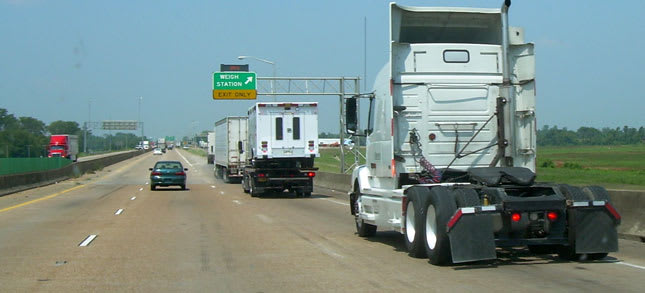
Opponents of the Federal Motor Carrier Safety Administration's CSA enforcement program took their case to Congress yesterday, charging in a hearing that the program is being misused and harms small carriers.
Republicans on the House Small Business Committee also used the occasion to bash the Obama administration and FMCSA for the pending electronic onboard recorder mandate.
The Alliance for Safe, Efficient and Competitive Truck Transportation, a group representing brokers, shippers and small carriers, claims credit for getting the committee interested in CSA (the common nickname for the Compliance, Safety, Accountability program).
"ASECTT has been intimately involved with this committee's staff, educating them on CSA and its problems, providing many supporting materials ... and guiding their research and preparation," the group says in a description of its legislative program posted on its website.
The group's concern is that the agency is administering CSA in a way that "(deputizes) the shipper and broker community with the responsibility of making self-enforced safety fitness determinations under penalty of vicarious liability," said chairman Tom Sanderson in a July 2 letter to the group's members.
The group is raising money to sue FMCSA over the program. Its aim is to force the agency to determine which carriers are safe to operate, and to remove Safety Management System data from public view.
At the hearing yesterday, transportation broker Jeffrey Tucker, CEO of Tucker Company Worldwide, Cherry Hill, N.J., said CSA is helping the agency but should not be used by shippers as a tool for selecting carriers.
"How are companies like mine supposed to determine which carriers are safe to operate on our nation's highways when over 80% of carriers are unrated?" he asked in his testimony.
"FMCSA needs to get back to addressing their primary mission of safety by providing industry with accurate and reliable data, and from this data telling the public who is safe to operate and who is not. It is not the responsibility of industry to make the safety fitness determination of motor carriers."
The system has "given accident lawyers jet fuel for lawsuits," he said.
Owner-operator Daniel Miranda, representing the Owner-Operator Independent Drivers Association, said CSA is not structured to handle smaller carriers that do not get frequent inspections.
"Once a small carrier gets into the system, the only way they stay relevant is by receiving 100% clean inspections, but this is not a real world scenario," he said in his testimony.
"As a small carrier, and I have seen this first-hand, just a few minor violations can send a score skyrocketing, putting the carrier nearly out of business as it becomes evident no one will employ your services because the system shows you are a risk, even though you operate safely."
Anthony Gallo, a securities analyst with Wells Fargo Securities, discussed research his company has done indicating that CSA scores may not reflect either the carrier's risk or the likelihood of a crash.
One Wells Fargo analysis of 200 of the largest carriers found no meaningful statistical relationship between accident frequency and CSA scores for Unsafe Driving, Fatigued Driving or Driver Fitness.
FMCSA responded to that study last March, saying that it has much larger studies showing that there is strong relationship between Unsafe Driving and Fatigued Driving and risk.
Gallo told the committee that Wells Fargo has since redone its study, using 4,600 carriers, and still finds no statistical relation between CSA scores and safety.
By way of explanation, he said that there are wide variances in the way states report inspections and crashes into the CSA system. "Small carriers are likely to frequent a fewer number of states than larger carriers, thereby increasing their exposure to the vagaries of any one state," he said.
He also echoed the message of the broker community.
"The customer base of the trucking industry appears to be struggling with the ambiguity inherent in the CSA BASIC percentile methodologies," he said.
He said large carriers are using their favorable CSA scores to solicit business, pointing out deficiencies at other carriers.
"It is not clear at this point the degree to which this will impact the small carrier community," he said. "However, it seems plausible to us that a logistics manager's self interest would prompt him to select a large carrier that is within each BASIC threshold, as opposed to the risk of choosing a smaller carrier that may be outside of any one BASIC threshold at a particular point in time."
FMCSA Deputy Administrator Bill Bronrott defended the program. "CSA is showing great progress without any new regulation," he said.
He said the agency takes care to ensure that it protects safety while minimizing its impact on small carriers.
Some 85% of the registered carriers in the agency's database have five or fewer power units, and 93% of those small carriers do not exceed the intervention threshold in any of the CSA safety categories, he said.
Bronrott confirmed that the agency is going to announce a research schedule for determining crash accountability in CSA this month. He also said work on that project will not be done until this time next year.
One member of the committee, Rep. Jeff Landry, R-La., jumped on Bronrott for the agency's pending electronic onboard recorder mandate.
Landry demanded a commitment from Bronrott that FMCSA will not move forward with the rule, a commitment the agency official was unable to make.
Landry said the rule will cost $2 billion. Bronrott replied that it will save at least that much, but Landry suggested that instead of requiring carriers to get recorders "maybe we should just pay those people not to get on the road."
Related Stories:
7/11/2012 FMCSA Schedule for Crash Accountability Research Due This Month
5/5/2012 CSA Data May Indicate Move by Drivers to Independent Owner-Operators
6/18/2012 FMCSA to Post CSA Study in Response to ATA Request
3/12/2012 FMCSA Stops Plan to Determine Accountability in CSA Crash Data
More Drivers

From One Generation to the Next: How Mentorship Builds Safer Truck Drivers
After three decades in trucking, Harold Perry shares what he's learned about driver safety, mentorship, and helping the next generation build confidence behind the wheel.
Read More →
Truck Drivers Need More Than Another Alert
Fleets have more visibility into truck health, safety events, and driver activity than ever. The next challenge is turning all that information into useful guidance for the person who has to decide what to do next.
Read More →
FMCSA Removes 110 Truck Driver Training Schools from Certified ELDT List
Federal regulators also are targeting more than 160 additional training providers and launching a nationwide audit of third-party CDL skills testers as part of a broader crackdown on trucking fraud.
Read More →
Hours of Service Pilot Programs: FMCSA Readies for 2027 Rollout
Two pilot programs could eventually reshape hours-of-service rules, giving truck drivers options to pause their 14-hour clock or use longer split sleeper rest periods.
Read More →
Medical Cards, English Proficiency Reshape Roadcheck Violations
Medical-card violations jumped to the top of the driver out-of-service list during CVSA’s 2026 International Roadcheck, while English-language proficiency violations appeared among the leading violations for the first time.
Read More →
Driver Trust Can Make or Break the Success of Fleet Safety Technology
New Teletrac Navman research suggests that onboarding, transparency about driver data, and positive feedback can play a significant role in how commercial drivers respond to safety and coaching technology.
Read More →
EEOC Sues KLLM Over Alleged Sex Discrimination in Driver Training
KLLM is facing a federal sex-discrimination lawsuit over policies the EEOC alleges put female truck driver trainees at a disadvantage.
Read More →
FMCSA Moves to Codify English Language Requirements for Commercial Drivers
By changing regulations on English-language proficiency requirements for commercial drivers, rather than relying on a guidance memo, the FMCSA said future administrations won't be able to walk back the Trump administration's stricter enforcement with just a memo.
Read More →
Drivers Put Western Star Trucks to the Test at Star Nation Experience
Watch to get an inside look at the Western Star trucks, technology, and community behind the Star Nation Experience 2026!
Read More →
Trump Administration Looks to Put More Veterans Behind the Wheel
The Freedom Haulers program pulls together existing and expanded programs at several federal agencies to recruit veterans to drive commercial heavy-duty trucks and cut the red tape for them to get a CDL, training, and employment.
Read More →