




Con-way Introduces New DoubleStack Loading System
Con-way Truckload has converted 100 of its 53-foot truckload trailers to the DoubleStack system, a new cargo loading and capacity management system that allows shippers to more efficiently utilize space while securing freight
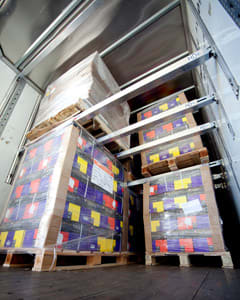
Con-way Truckload has converted 100 of its 53-foot truckload trailers to the DoubleStack system, a new cargo loading and capacity management system that allows shippers to more efficiently utilize space while securing freight.
Con-way plans additional unit conversions later this year, depending on customer demand. The racking system allows for loading of cargoes on two separate, adjustable levels throughout the length of the trailer. Custom-designed strapping mechanisms enable shipments to be securely tied down to prevent movement during transit and provide added protection against damage.
"We are continually exploring ways to bring our customers advantages that enable them to obtain the highest value for the transportation dollar," said Herb Schmidt, president, Con-way Truckload. "With DoubleStack trailers, we're maximizing the available capacity customers can use and adding better protection systems to reduce claims, while driving benefits to our operations through more effective asset utilization."
The DoubleStack trailers feature thick aluminum tracks attached to supporting vertical posts every 16 inches along the trailer walls, with adjustable bars, or cross beams, that clamp securely into each track. The metal cross beams are height-adjustable and can be set in a variety of horizontal track positions to accommodate freight pallets of different sizes, while maximizing the stability of loaded freight at any point in the trailer and optimizing capacity use. The DoubleStack system can be used for a variety of customer goods, including fragile products that must be segregated, or pallets with products of varying height dimensions and stability.
For more information, visit www.con-way.com/DoubleStack.
More Drivers

Why Hiring Truck Drivers Is Getting Harder
Higher recruiting costs, a shrinking driver pool, and renewed pay competition are raising the stakes for fleets heading into 2027.
Read More →
Roehl Offers Truck Drivers $10,000 Retention Incentive
Payments begin after the first load and continue in mileage-based installments for eligible experienced drivers joining the fleet.
Read More →
Platform Science Adds Dispatch and Safety Tools
Four additions to PS Fleet help fleets monitor loads, manage driver coaching, share truck locations and adjust video system settings.
Read More →
When Language Stops the Truck: The Return of ELP Out-of-Service Orders
English language proficiency rules for commercial drivers aren’t new, but renewed out-of-service enforcement has raised the stakes. Here’s what carriers need to know before a driver reaches a roadside inspection.
Read More →
Samsara Launches Custom AI Agent Builder
Agent Studio lets fleets create AI tools for hours-of-service monitoring, reporting and driver support, including agents that communicate by phone.
Read More →
Trucker Path Expands Reserved Parking Network
Trucker Path has added close to 6,000 more truck parking spaces to its Trucker Path Reserved Parking Network with the addition of Safe Truck Parking.
Read More →
EEOC Sues Texas Trucking Company Over Driver Age Limits
The agency says Trancasa USA rejected applicants over 65 and applied tougher driving-record standards to those over 60.
Read More →
Nussbaum, Roehl Announce Second Driver Pay Increase This Year
This year has seen a swath of major truck driver pay increases as freight capacity has tightened.
Read More →
From One Generation to the Next: How Mentorship Builds Safer Truck Drivers
After three decades in trucking, Harold Perry shares what he's learned about driver safety, mentorship, and helping the next generation build confidence behind the wheel.
Read More →
Truck Drivers Need More Than Another Alert
Fleets have more visibility into truck health, safety events, and driver activity than ever. The next challenge is turning all that information into useful guidance for the person who has to decide what to do next.
Read More →