





Related: Electric Trucks Dominate Future-Tech Panel at Aftermarket Meeting
ChargePoint and Natso Collaborate to Expand EV Charging
ChargePoint and Natso have announced a partnership to create a National Highway Charging Collaborative to extend EV charging across the country.
February 6, 2020
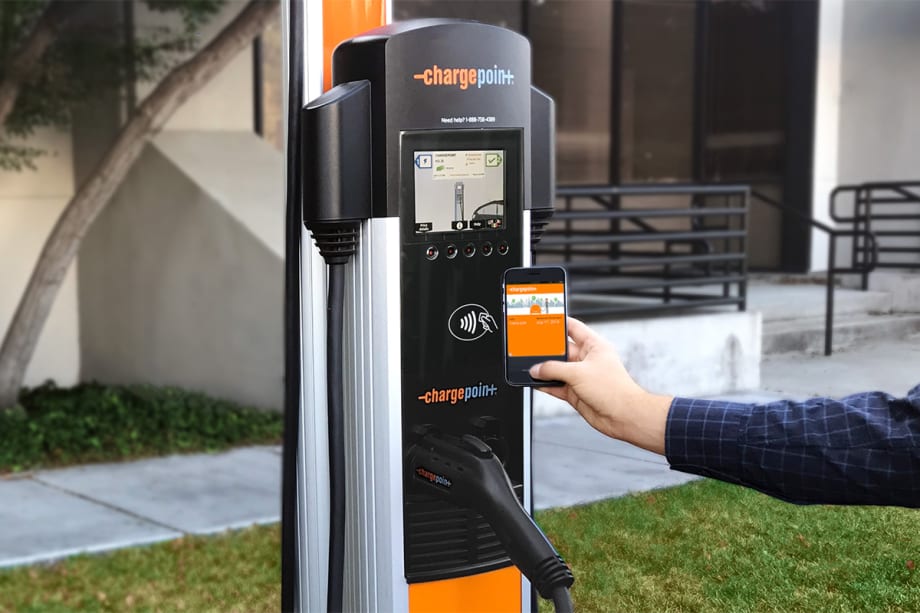
ChargePoint and Natso will leverage $1 billion in capital to deploy charging at more than 4,000 travel plazas and fuel stops across the country.
Photo: ChargePoint
2 min to read
ChargePoint and Natso have announced a partnership to create a National Highway Charging Collaborative to extend EV charging across the country. Over the next decade, the Collaborative will leverage $1 billion in capital to deploy charging at more than 4,000 travel plazas and fuel stops that serve highway travelers and rural communities.
“We are embarking on a major shift in transportation, with electrification poised to fundamentally transform mobility," said Pasquale Romano, president and CEO of ChargePoint. "Collaborations like this are vital for the rapid expansion of charging around the country and will ensure that the United States remains at the forefront of the EV revolution.".
The partners said the project will link motorists to a growing charging network in all 50 states and the District of Columbia, enabling long distance electric travel along major routes and providing access to charging in rural communities.
“Range anxiety continues to rank as one of the biggest concerns among consumers who are considering purchasing an electric vehicle," said Natso President and CEO Lisa Mullings. "The MOU will help to establish public-private partnerships at off-highway fuel retailers across the nation, which will help to mitigate range anxiety and expand the Interstate network of charging facilities under the current program."
As part of the partnership, the organizations agreed that the National Highway Charging Collaborative will, by 2030:
Deploy charging infrastructure at 4,000 travel centers and fuel stops, leveraging $1 billion in capital.
Provide charging infrastructure at fueling locations across the United States with a focus on connecting rural communities.
Expand availability of charging infrastructure and connect existing Federal Highway Administration-designated FAST Act corridors.
Work together to achieve policy outcomes to support each of these objectives.
The partners will identify public and private funding sources that may be available to support the expansion of EV charging at strategically determined locations, including Volkswagen Settlement Appendix D Funds and other dedicated resources available to Natso members.
More Fuel Smarts

How Volvo Updated Its D13 for EPA 2027 [Watch]
Volvo’s updated D13 promises lower emissions without sacrificing performance or fuel economy. Take a closer look at what changed inside the engine in this HDT Spotlight video.
Read More →
Diesel Price Spike Shortens Payback for Natural Gas Trucks, Report Says
Energy Vision estimates fleets could recover the higher purchase price of an RNG-fueled Class 8 tractor in 1.3 to 2.8 years under current fuel-price scenarios.
Read More →
Calstart Becomes Catalyst Mobility, Reflecting Broader Focus
Calstart is now Catalyst Mobility, reflecting the nonprofit’s growing national role in clean transportation, including zero-emission trucks, infrastructure and incentive programs.
Read More →

Record Diesel Prices Squeeze Trucking Fleets
Average U.S. diesel prices have climbed to nearly $6 a gallon, surpassing the 2022 record as tight refinery capacity and Middle East disruptions keep fuel costs elevated.
Read More →
Sponsored•September 9, 2026
How Fuel Delivery Shapes Engine Performance
Fuel delivery depends on more than what happens at the injector. For fleet, maintenance and technical professionals, looking at the full path from pump to injector can provide useful context for understanding engine performance.
Read More →
East Coast Port Launches $45M Electric Truck Push
The Port Authority of New York and New Jersey announced millions in incentives for zero-emission drayage trucks, yard tractors, and new charging hubs near the port.
Read More →
California Bill Could Shed Light on Electric Truck Prices
Why do battery-electric Class 8 trucks remain so expensive? A California bill headed to Gov. Gavin Newsom would give fleets and state agencies more visibility into what manufacturers charge.
Read More →
Detroit Opens Orders for EPA 2027 Engines
Detroit isn’t starting from scratch to meet EPA 2027 diesel emissions standards. Its Gen 6 DD13 and DD15 engines keep much of today’s platform while updating the fuel and aftertreatment systems.
Read More →
Zero-Emission Truck Corridor Planned for West Coast
California, Oregon, Washington, British Columbia and Baja California are coordinating plans for truck charging and hydrogen fueling from Canada to Mexico.
Read More →
A Closer Look at Kenworth’s Electric T880E Vocational Truck [Video]
Learn more about Kenworth's T880E battery-electric vocational truck at the Paccar Technical Center, including its range, applications, upfitting considerations, and PTO options, in this HDT Spotlight video.
Read More →