




Canadian Government Legislates End to Canadian Pacific Strike
As the labor dispute at Canadian Pacific Railway enters its eighth day, Canadian federal labor minister, Lisa Raitt has tabled back-to-work legislation that could force striking workers back to their jobs as early as Thursday
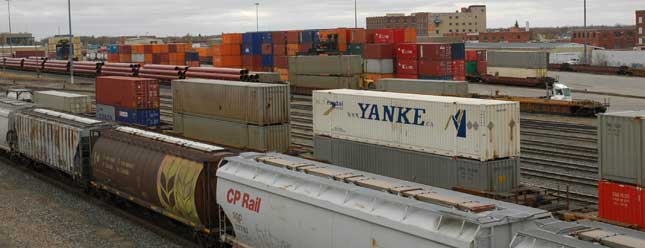
CP yards, like Regina Sask., could begin emptying out as early as the weekend, but resumption of full service could take several weeks. Photo by Jim Park
As the labor dispute at Canadian Pacific Railway enters its eighth day, Canadian federal labor minister, Lisa Raitt has tabled back-to-work legislation that could force striking workers back to their jobs as early as Thursday.
Raitt says the legislation and the speedy passage of the bill are becoming increasingly necessary as the ripple effect of the job action is already spreading to other sectors. Canadian lawmakers are expected to debate the motion and legislation in the House of Commons on Tuesday.
The federal government says the strike has already cost the Canadian economy more than $540 million as auto, grain, coal, potash and other shipments have come to a stop.
"The issue causes a ripple far beyond the bargaining table," Raitt said to the Canadian Press on Monday. "The time for us to act is now."
The bill would see workers return to the job immediately and the parties submit to an interest-based binding arbitration process that must be completed within 90 days.
Pensions, Retirement Benefits are Main Sticking Points
Workers walked off the job last Wednesday after they were unable to negotiate a new labor deal. Talks between Canadian Pacific and the Teamsters Canada Rail Conference representing the 4,800 striking engineers, conductors and traffic controllers broke off completely Sunday afternoon.
The previous five-year collective agreement expired Dec. 31, 2011.
TCRC says Calgary-based CP is unfairly seeking to slash employees' retirement benefits. Non-unionized Canadian employees at CP hired after July 1, 2010, have already been placed into defined-contribution pensions.
CP spokesman Ed Greenberg told the Canadian Press that the railway would cooperate with any decision by Parliament. He says he doesn't know how long it would take the railway to ramp up its operations after the strike.
"It is far too soon to speculate on the time frame to 'catch-up' any backlog," he said "In saying that though, because we are well prepared for a resumption of operations, the careful ramp-up will be in line with our approach to safe and efficient train operations."
Rail's Loss, Trucking's Gain
Although switching freight from rails to roads is anything but a slam-dunk, truckers have seen some increase in business resulting from of the strike.
"We're near a decent balance of supply and demand, but we can find ways to help our clients -- at the right price, obviously," noted Dan Eienwechter, president and CEO of Challenger Motor Freight in Cambridge, Ontario, located about 40 miles west of Toronto. Einwechter was interviewed by Toronto's Globe and Mail, which you can view here.
"If this goes on for an extended period of time, we'd have more and more clients asking for help in this rail diversion. That would become a bit of a challenge if this continued for three or four weeks," he added.
The proposed back-to-work legislation came under immediate attack by the opposition parties, which accused the Conservative government of Stephen Harper of putting the interests of the company ahead of its workers.
Raitt took similar action in two previous large scale strikes, one involving pilots with Air Canada and the other with workers from Canada Post, Canada's postal system.
More Fleet Management

What the U.S.-Canada Trade War Means for Trucking
Escalating U.S.-Canada tariffs could disrupt cross-border freight, reduce truck volumes, raise costs, and create new uncertainty for carriers on both sides of the border.
Read More →
What Are Trucking’s Top Concerns for 2026?
The American Transportation Research Institute wants to know what's worrying trucking fleet managers, drivers, and other stakeholders in its annual Industry Issues survey.
Read More →
American Trucking Associations Looks for a New Leader
ATA President and CEO Chris Spear abruptly left his job at the association on August 21, at a pivotal time for the trucking industry.
Read More →
Public Wi-Fi Cybersecurity Risks: How Truck Drivers and Fleets Can Protect Their Data
Public Wi-Fi can expose truck drivers and fleets to credential theft, malware, and other cyber threats. Here’s how to reduce the risk on the road.
Read More →
For Nicky Cupp, Fleet Innovation Starts With Frustration
HDT Truck Fleet Innovator Nicky Cupp turns everyday pain points at Fraley & Schilling into opportunities for better technology and smarter processes.
Read More →
Adam Buttgenbach’s Approach to Electric Trucks: Start With Where They Fit
HDT Truck Fleet Innovator Adam Buttgenbach helped PepsiCo build one of North America’s largest EV fleets by focusing on where electric trucks make operational sense.
Read More →
Deen Albert: Let Automation Do the Math, People Make the Decisions
HDT Truck Fleet Innovator Deen Albert makes sure people are still at the heart of operations at Grand Island Express, even while adopting artificial intelligence tools. AI-assisted dispatch helped boost revenue 25% with the same number of trucks.
Read More →
Trimble’s New AI Agent Takes Aim at Fleet Back-Office Busywork
Arc Agent works across Trimble TMS products to automate repetitive tasks such as freight orders, maintenance, invoices, fuel costs and more.
Read More →
How HDT’s 2026 Truck Fleet Innovators Are Rethinking Fleet Operations
Meet five trucking leaders who are challenging assumptions, solving operational problems, and putting innovative ideas to work.
Read More →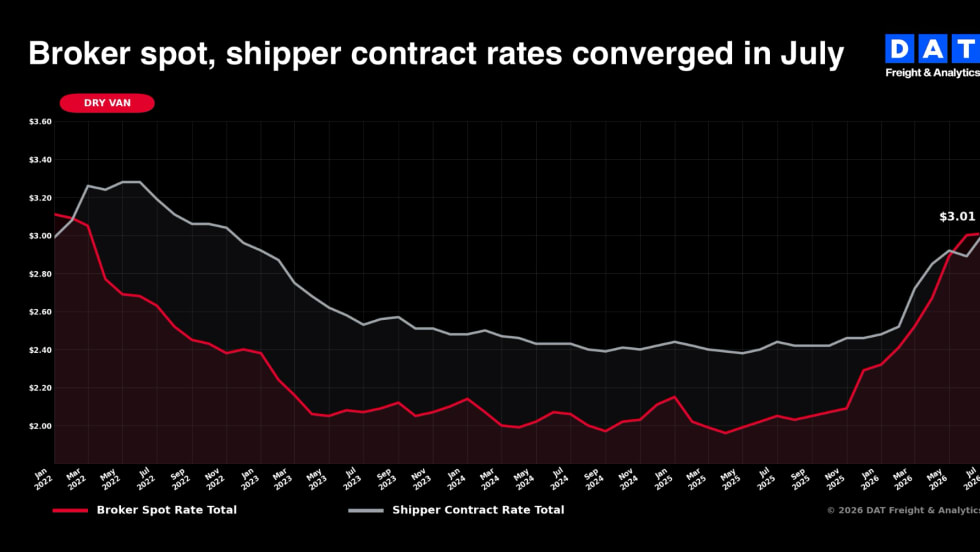
Tight Trucking Capacity Pushes Rates Higher Even as Freight Volumes Fall
“Spot rates moving ahead of contract rates have historically signaled a tightening market, but we haven’t seen a capacity-driven market quite like this one,” said DAT's Dean Croke.
Read More →