





Dig Deeper: How to Measure and Improve Your Truck Brake Maintenance Program
CVSA Brake Safety Week is Underway
During Brake Safety Week Aug. 20-26, commercial vehicle inspectors will focus on brake lining/pad violations.
June 13, 2023
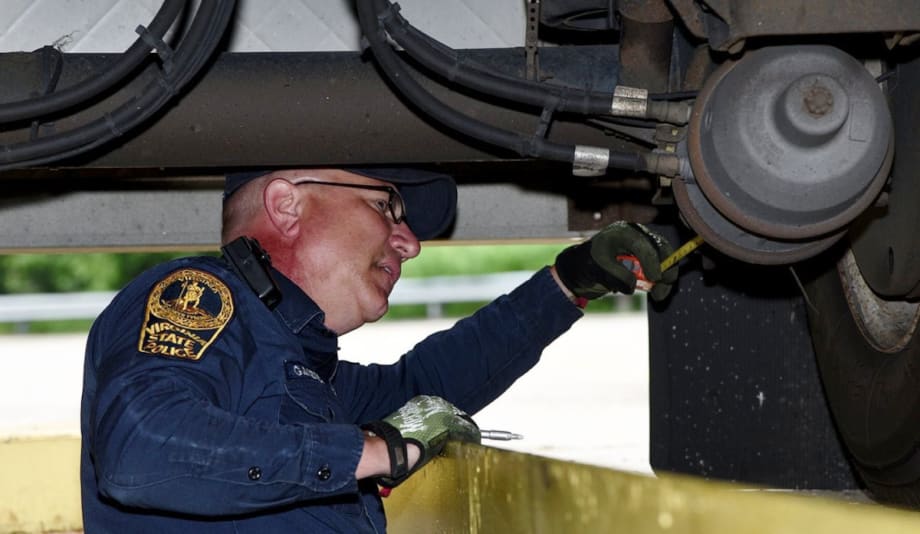
Brake Safety Week is set for Aug. 20-26, however CVSA provides information that can help drivers and fleets prepare and know what issues should be addressed in advance.
Photo: CVSA
3 min to read
The Commercial Vehicle Safety Alliance Brake Safety Week will focus on brake lining/pad violations and is set for Aug. 20-26.
During Brake Safety Week, commercial motor vehicle inspectors highlight the importance of brake systems by conducting inspections of their components and removing trucks with brake-related out-of-service violations from roadways until those violations are corrected.
Throughout Brake Safety Week, CVSA-certified inspectors will conduct their usual inspections. In addition, they will be reporting brake-related inspection and violation data to CVSA. That data will be compiled and published this fall.
Brake System Inspections
“The focus of this year’s Brake Safety Week is on the condition of the brake lining and pad,” said CVSA President Chris Nordloh of the Texas Department of Public Safety. “Brake lining and pad issues may result in vehicle violations and could affect a motor carrier’s safety rating.”
When inspectors conduct the brake portion of a Level I or Level V Inspection, they will:
Check for missing, non-functioning, loose, or cracked parts.
Check for contaminated, worn, cracked, and missing linings or pads.
Check for S-cam flipover.
Listen for audible air leaks around brake components and lines.
Check that slack adjusters are the same length (from center of S-cam to center of clevis pin) and the air chambers on each axle are the same size.
Ensure the brake system maintains air pressure between 90-100 psi (620-690 kPa) and measure pushrod travel.
Inspect for non-manufactured holes (e.g., rust holes, holes created by rubbing or friction, etc.) and broken springs in the spring brake housing section of the parking brake.
Inspect required brake system warning devices, such as anti-lock braking system (ABS) malfunction lamp(s) and low air-pressure warning devices.
Inspect the tractor protection system, including the bleedback system on the trailer.
Ensure the breakaway system is operable on the trailer.
Brake Safety Week Education
Brake safety awareness, education, and outreach are major elements of the Brake Safety Week campaign. CVSA has outlined the brake-system inspection procedure above so drivers and motor carriers know exactly what inspectors will be checking during roadside inspections. This transparency aims to remind drivers and motor carriers to take proactive steps to ensure their trucks are safe and compliant with Federal Motor Carrier Safety Regulations.
Improperly installed or poorly maintained brake systems can reduce the braking capacity and stopping distance of trucks or buses, which poses a serious safety risk, CVSA stressed.
For more information, CVSA recommends:
Check CVSA's vehicle inspection checklist for details on the brake portion of a Level I and Level V Inspection.
Download the 2023 Brake Safety Week flyer for 10 tips on keeping your brake lining/pad healthy.
View the inspection procedures.
View previous brake-safety campaign results.
Check the latest inspection bulletins. Currently, there are eight in the brakes category. Inspection bulletins provide important information to augment the existing inspection program.
Operation Airbrake
Brake Safety Week is part of CVSA's Operation Airbrake Program. The goal is to reduce the number of highway crashes caused by faulty braking systems on commercial motor vehicles by conducting roadside inspections and educating drivers, mechanics, owner-operators, and others on the importance of proper brake inspection, maintenance, and operation.
More Safety & Compliance

FMCSA Pauses Biennial-Update Enforcement Amid Motus Transition
Carriers whose updates were due on or after June 1 have more time, while FMCSA works to stabilize its new registration system and warns of phishing sites impersonating its new carrier registration system, Motus.
Read More →
ZF Expands Commercial Vehicle Push in North America
ZF is expanding its North American commercial-vehicle presence with new transmission applications, electrification, trailer technology and autonomous-driving systems.
Read More →
Truck Drivers Need More Than Another Alert
Fleets have more visibility into truck health, safety events, and driver activity than ever. The next challenge is turning all that information into useful guidance for the person who has to decide what to do next.
Read More →
Tesla Wants a Self-Driving Semi. Are Cameras Enough?
Could Tesla’s camera-only autonomous driving technology work on an 80,000-pound Semi? In this commentary, HDT's Deborah Lockridge takes a look at Tesla, Cybercab, and how autonomous trucks see the road.
Read More →
What DOT’s Automated Vehicle Strategy Means for Trucking
The U.S. Department of Transportation issued a new automated-vehicle strategy that outlines plans for driverless-truck regulations, cross-state freight corridors, and federal safety standards.
Read More →
NYC Expands Speed, Pedestrian Safety Tech Across Fleet
New York City is expanding intelligent speed assistance and pedestrian-alert systems across its municipal fleet, moving the technologies from pilot programs into vehicle procurement and retrofit requirements.
Read More →
FMCSA Removes 110 Truck Driver Training Schools from Certified ELDT List
Federal regulators also are targeting more than 160 additional training providers and launching a nationwide audit of third-party CDL skills testers as part of a broader crackdown on trucking fraud.
Read More →
Beyond DOT Compliance: What Makes a Trucking Fleet Truly Safe?
A trucking fleet can follow every rule and still make unsafe decisions. The real test comes when safety conflicts with freight, productivity, or cost.
Read More →
Hours of Service Pilot Programs: FMCSA Readies for 2027 Rollout
Two pilot programs could eventually reshape hours-of-service rules, giving truck drivers options to pause their 14-hour clock or use longer split sleeper rest periods.
Read More →
New Guide Offers Pet Safety Tips for Truck Drivers
Hundreds of thousands of pets travel in truck cabs. A new safety guide from Volvo Trucks and the Center for Pet Safety offers practical advice for truck drivers who bring dogs and cats along for the ride.
Read More →