




Aviation Bill Harbors Pro-Trucking Reform
Intended to keep states from preempting federal motor-carriage regulations, a proposal that that did not make it into the highway bill has resurfaced in reauthorization legislation for the Federal Aviation Administration.


Language in a new House aviation bill aims to prevent states from enacting their own meal and rest break rules for CDL drivers. Image: Penske Logistics

Language in a new House bill aims to prevent states from enacting their own meal and rest break rules for CDL drivers. Image: Penske Logistics
Intended to keep states from preempting federal motor-carriage regulations, a proposal that that did not make it into the highway bill has resurfaced in reauthorization legislation for the Federal Aviation Administration, which has begun wending its way through Congress.
Proponents have been pushing hard for Congress to more directly address state preemption ever since a Supreme Court ruling last May upheld a California statute requiring a paid 10-minute rest break every four hours and a paid 30-minute meal period every five hours for truck drivers.
Buried deep within the Aviation Innovation, Reform, and Reauthorization (AIRR) Act, just introduced in the House, the language aims to prevent states from enacting their own meal and rest break rules for CDL drivers. It would also prohibit states from requiring that those drivers be paid certain types of added compensation, such as detention pay.
The reforms sought are stated in Section 611 of the bill:
“A State… may not enact or enforce a law, regulation, or other provision…prohibiting employees whose hours of service are subject to [federal] regulation…
“A State… may not enact or enforce a law, regulation, or other provision…that requires a motor carrier that compensates employees on a piece-rate basis to pay those employees separate or additional compensation, provided that the motor carrier pays the employee a total sum that when divided by the total number of hours worked during the corresponding work period is equal to or greater than the applicable hourly minimum wage of the State…”
The language is identical to that of an amendment proposed for inclusion in the highway bill by Rep. Jeff Denham (R-CA). It did not survive the conferencing process that finalized that legislation.
The language landed in the AIRR bill because its supporters in the trucking, railroad, intermodal, logistics, manufacturing and retailing industries are committed to keep fighting for it and because a “preemption provision” to address the issue of states attempting to override federal regulation of interstate commerce had been included in the FAA Authorization Act(FAAAA)of 1994.
Indeed, the 2014 ruling by the Ninth Circuit Court of Appeals, the one that the Supreme Court upheld, found that the California law requiring trucker rest and meal breaks did not violate the 1994 act.
A Feb. 1 letter sent to the House Committee on Transportation and Infrastructure by an array of 80 stakeholder organizations argues that it is necessary “to clarify the preemption provision of the FAA Authorization Act of 1994 to restore the goals Congress intended when it sought national uniformity for motor carriers in the transportation of property.”
The signatories include the American Trucking Associations, the 50 ATA-affiliated state trucking associations, the National Private Truck Council, the Truckload Carriers Association and the Truck Renting and Leasing Association. Also signed on are the Association of American Railroads, the Intermodal Association of North America, the National Association of Manufacturers, the National Retail Federation and the U.S. Chamber of Commerce.
The letter contends that Congress needs to be express the preemption provision more explicitly because “The Supreme Court has repeatedly explained that the language chosen by Congress reflects a very broad preemptive purpose, regardless of whether the effect on carrier prices, routes or services is direct or indirect, as long as the effect is more than tenuous or remote.
“However, some courts— particularly the Ninth Circuit— have consistently failed to faithfully implement Congress’ goals. The upshot is serious inefficiencies that harm not just motor carriers, but the shippers and consumers who rely on trucks to move their goods, and, by extension, the national economy.”
But not every trucking stakeholder is on board with the push for a more precise preemption provision. Both the International Brotherhood of Teamsters and the Owner Operator Independent Driver Association oppose including the language in the new FAA bill.
“The Teamsters raised the warning flag late last year when some in Congress tried to include language in a long-term transportation funding bill that would have overridden the decision of 22 states to require truckers to take meal and rest breaks,” said James P. Hoffa, the union’s general president in a Feb. 4 statement. “Now lawmakers are at it again, using the FAA bill to endanger motorists all across the country.
“These elected officials are doing the bidding of the American Trucking Association, which wants drivers on the clock as much as possible for time behind the wheel,” he continued. “In fact, the provision would also limit how a truck driver could be paid and not even compensate them for safety procedures like performing pre-trip inspections. In addition to robbing drivers of pay, the language could prevent drivers from collecting workers compensation and sick leave benefits, among other worker benefits. In short, it overrules the fundamental principle that all workers should be paid for the time they work.”
In a “call to action” issued to its members, OOIDA stressed its opposition to the preemption proposal for its inclusion of what it termed “an ambitious overreach that would limit the states’ ability to address pay issues. Section 611 contains the exact same provisions regarding fair-pay that our opponents unsuccessfully tried to include in the highway bill.”
The association also stated that Section 611 “could unravel mandated fair pay for drivers and would empower large carriers to further reduce driver wages. It would also gut the ability for states to address critical items like payment for detention time.”
However, ATA spokesperson Sean McNally told HDT that “contrary to what some are saying, nothing in Section 611 eliminates breaks for truckers. In fact, federal law not only requires a break to split up driving time, but also authorizes drivers to take a break whenever they are tired or fatigued.
"Nor does anything in Section 611 allow carriers to pay drivers less," he continued. "On the contrary, it expressly requires that carriers paying drivers by the mile or by the load [must] ensure that drivers receive as much or more than they would have been entitled to had they been paid by the hour.”
“The language in H.R. 4441 [the AIRR Act] does nothing more than tell states they have no right to regulate the HOS of interstate truck drivers,” Joe Rajkovacz, director of governmental affairs and communications for the Western States Trucking Association told HDT. “It changes nothing for purely intrastate drivers.”
He said that the additional compensation aspect of the proposed language is “also being purposely spun as somehow an attack on drivers themselves. Actually, it is lawyers convincing some drivers that an employer didn’t properly pay them – even though the driver made significantly more than minimum wage.”
The issue stems from “using a particular state law related to compensation and applying it to employees engaged in interstate operations,” Rajkovacz added.
More Fleet Management

Public Wi-Fi Cybersecurity Risks: How Truck Drivers and Fleets Can Protect Their Data
Public Wi-Fi can expose truck drivers and fleets to credential theft, malware, and other cyber threats. Here’s how to reduce the risk on the road.
Read More →
For Nicky Cupp, Fleet Innovation Starts With Frustration
HDT Truck Fleet Innovator Nicky Cupp turns everyday pain points at Fraley & Schilling into opportunities for better technology and smarter processes.
Read More →
Adam Buttgenbach’s Approach to Electric Trucks: Start With Where They Fit
HDT Truck Fleet Innovator Adam Buttgenbach helped PepsiCo build one of North America’s largest EV fleets by focusing on where electric trucks make operational sense.
Read More →
Deen Albert: Let Automation Do the Math, People Make the Decisions
HDT Truck Fleet Innovator Deen Albert makes sure people are still at the heart of operations at Grand Island Express, even while adopting artificial intelligence tools. AI-assisted dispatch helped boost revenue 25% with the same number of trucks.
Read More →
Trimble’s New AI Agent Takes Aim at Fleet Back-Office Busywork
Arc Agent works across Trimble TMS products to automate repetitive tasks such as freight orders, maintenance, invoices, fuel costs and more.
Read More →
How HDT’s 2026 Truck Fleet Innovators Are Rethinking Fleet Operations
Meet five trucking leaders who are challenging assumptions, solving operational problems, and putting innovative ideas to work.
Read More →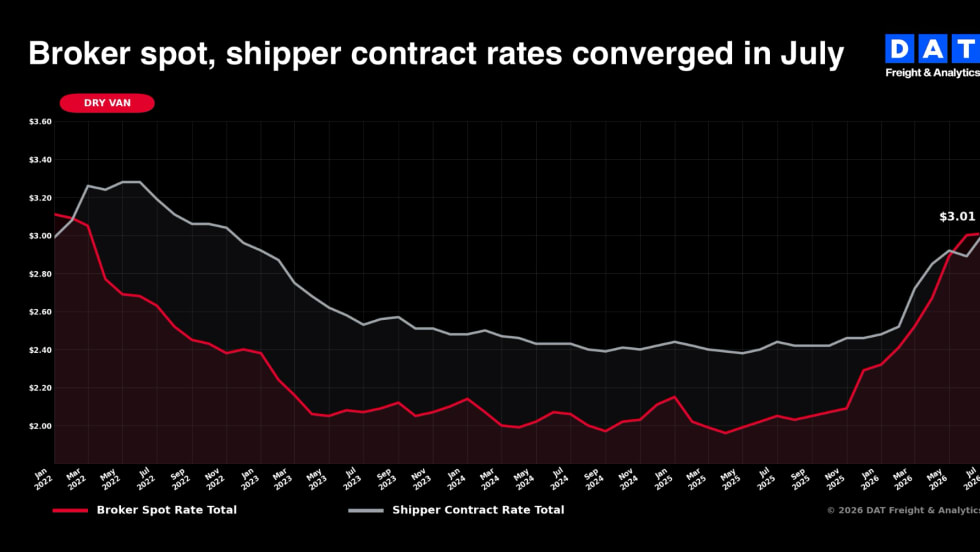
Tight Trucking Capacity Pushes Rates Higher Even as Freight Volumes Fall
“Spot rates moving ahead of contract rates have historically signaled a tightening market, but we haven’t seen a capacity-driven market quite like this one,” said DAT's Dean Croke.
Read More →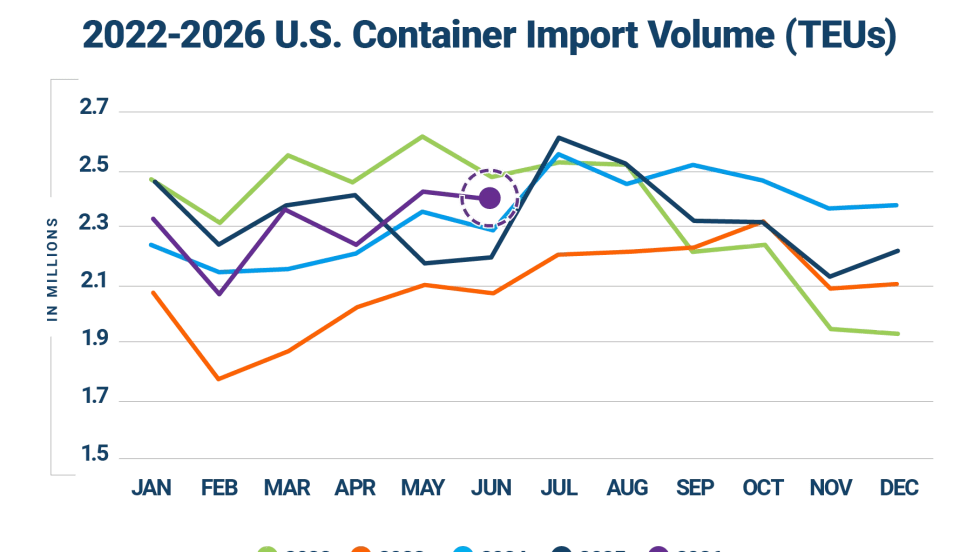
Import Cargo’s Early Peak Season is Winding Down
There was an early start to peak season this year at the nation's gateway ports, as retailers brought in merchandise ahead of tariff changes in late July and responded to other supply chain uncertainties,
Read More →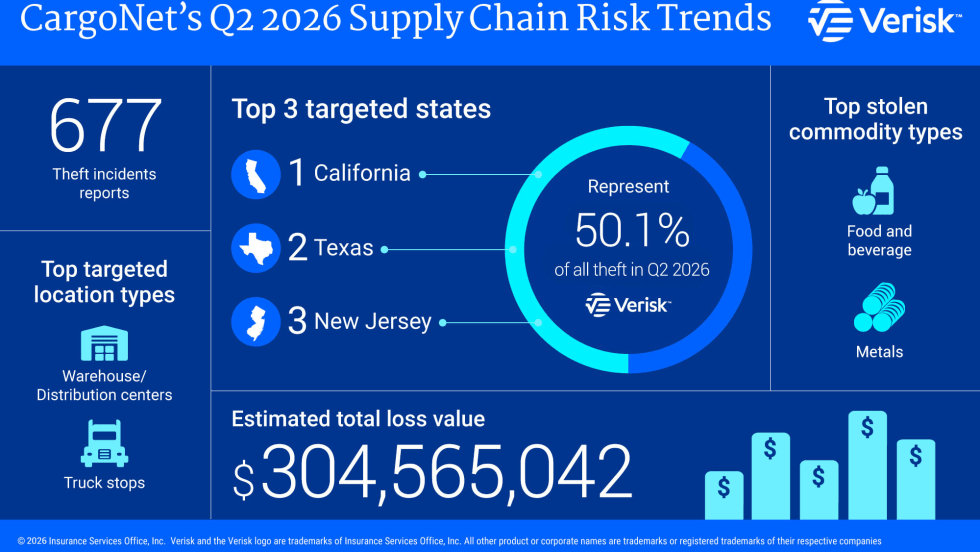
Fewer Cargo Thefts, Bigger Losses: Criminals Target Higher-Value Loads
CargoNet says organized theft rings are stealing fewer shipments but choosing more valuable freight, including metals and technology, resulting in record losses.
Read More →
How Innovative Trucking Leaders Turn Change Into an Advantage
As the pace of change accelerates in trucking, the fleets that adapt best have more than the latest technology. They have cultures that embrace improvement.
Read More →