




Auto Production Woes Cast Shadow on Economic Indicators
Automakers' challenges getting semiconductor chips and other supply-chain issues has a ripple effect for trucking beyond fleets that specifically serve the industry.
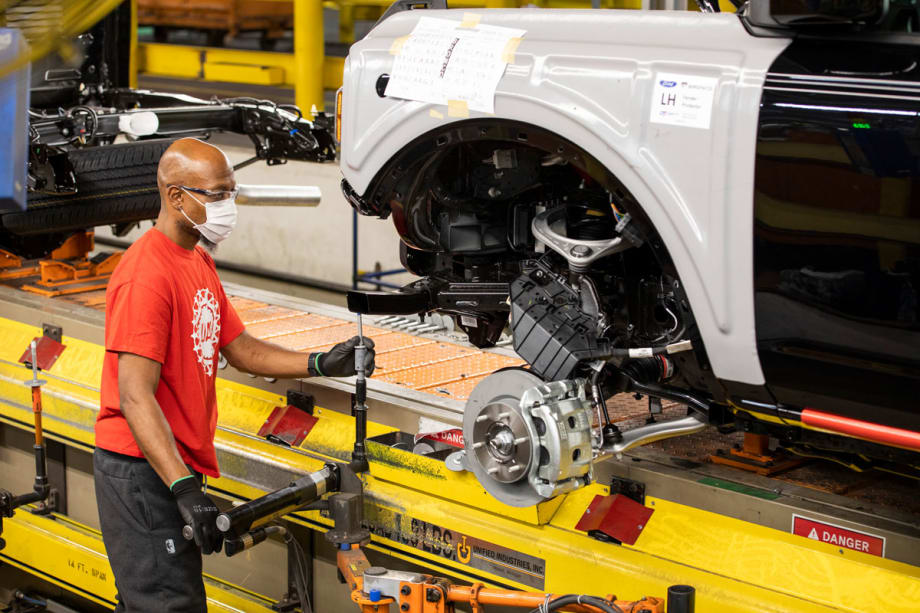
Ford this summer had to temporarily stop production of its new Bronco SUV due to the global semiconductor shortage.
Photo: Ford
Everyone knows that the automotive industry — both production and sales — is a huge part of the U.S. economy. But the industry’s outsize importance truly becomes obvious when that industry is under stress.
For months, the ongoing shortage of semiconductors has curtailed production drastically, just as the trillions of dollars in stimulus has led to a surge in demand. The resulting inventory crunch for automobiles and light trucks is solely responsible for tightness in overall retail inventories, as we discussed in the May 2021 issue.
Over the past several months, however, the direct and indirect effects of the semiconductor shortage have become issues not only for production and inventories, but also for inflation at the consumer and producer level. Economic indicators released during a single week in July show how broadly the auto industry’s woes are affecting the economy.
Manufacturing and Consumer Spending
Let’s start with the most direct impact. Total U.S. manufacturing output in June was nearly flat compared to May, easing 0.1%. However, production of motor vehicles and parts was down 6.6%. Excluding motor vehicles and parts, factory output rose 0.4%. Excluding automotive, manufacturing output is ahead of February 2020, but total output is down 0.8%. Motor vehicle and parts output in June was 13.8% below February 2020.
Automotive was a drag on consumer spending as well. Retail and food service sales rose 0.6% month over month in June, but if you take out motor vehicles and parts, they rose 1.3%. Motor vehicle and parts dealer sales fell 2% in June, while most other sectors posted solid gains.
The link between a shortage of semiconductors and reduced retail sales might not be immediately obvious, but it goes to the severe depletion of inventories. As availability of desirable makes and models becomes scarce, many would‐be vehicle buyers are choosing to wait rather than buy a vehicle they do not really want.
Auto Production and Inflation
Another impact of depleted inventories and high demand has been inflation. The Consumer Price Index for all items increased 0.9% in June on a seasonally adjusted basis — the largest one‐month change since June 2008 when the index rose 1%. The CPI has been very high for the past three months, and the CPI specifically for used cars and trucks has contributed to about a third of the gain in each of those months. The June increase in the used cars and trucks CPI was an astounding 10.5%.
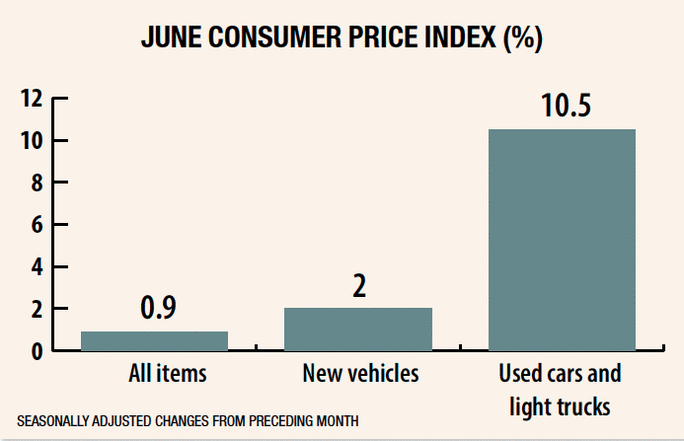
Used-car prices have been a major driver of inflation..
HDT graphic
Inflation at the producer level also was strongly affective by automotive. The Producer Price Index for final demand rose 1.0% in June, driven mostly by an increase in final demand services, the Bureau of Labor Statistics said. It noted that 20% of the increase in final demand services can be traced to margins for automobiles and automobile parts retailing.
The Good News
There is some upside in all this stress: Production levels should remain robust for months to come just to replenish depleted inventories, regardless of what happens with sales. That production will translate into freight demand and demand for drivers, which also should keep rates and margins healthy for trucking companies — even those whose freight is not directly tied to the automotive industry.
Avery Vise is vice president of trucking for FTR Transportation Intelligence.
More Fleet Management

How Telematics Improves Visibility, Control, and Performance in Refrigerated Fleets
Explore how telematics help refrigerated fleets improve visibility, uptime, efficiency, compliance, and cargo protection across connected cold chain operations.
Read More →
What the U.S.-Canada Trade War Means for Trucking
Escalating U.S.-Canada tariffs could disrupt cross-border freight, reduce truck volumes, raise costs, and create new uncertainty for carriers on both sides of the border.
Read More →
What Are Trucking’s Top Concerns for 2026?
The American Transportation Research Institute wants to know what's worrying trucking fleet managers, drivers, and other stakeholders in its annual Industry Issues survey.
Read More →

American Trucking Associations Looks for a New Leader
ATA President and CEO Chris Spear abruptly left his job at the association on August 21, at a pivotal time for the trucking industry.
Read More →
Public Wi-Fi Cybersecurity Risks: How Truck Drivers and Fleets Can Protect Their Data
Public Wi-Fi can expose truck drivers and fleets to credential theft, malware, and other cyber threats. Here’s how to reduce the risk on the road.
Read More →
For Nicky Cupp, Fleet Innovation Starts With Frustration
HDT Truck Fleet Innovator Nicky Cupp turns everyday pain points at Fraley & Schilling into opportunities for better technology and smarter processes.
Read More →
Adam Buttgenbach’s Approach to Electric Trucks: Start With Where They Fit
HDT Truck Fleet Innovator Adam Buttgenbach helped PepsiCo build one of North America’s largest EV fleets by focusing on where electric trucks make operational sense.
Read More →
Deen Albert: Let Automation Do the Math, People Make the Decisions
HDT Truck Fleet Innovator Deen Albert makes sure people are still at the heart of operations at Grand Island Express, even while adopting artificial intelligence tools. AI-assisted dispatch helped boost revenue 25% with the same number of trucks.
Read More →
Trimble’s New AI Agent Takes Aim at Fleet Back-Office Busywork
Arc Agent works across Trimble TMS products to automate repetitive tasks such as freight orders, maintenance, invoices, fuel costs and more.
Read More →
How HDT’s 2026 Truck Fleet Innovators Are Rethinking Fleet Operations
Meet five trucking leaders who are challenging assumptions, solving operational problems, and putting innovative ideas to work.
Read More →