





From the archives (2018): The Price of a Night's Rest
ATA, OOIDA Urge DOT to Address Truck Parking Shortage
Two major trucking organizations have joined up to urge the federal government to do something about the shortage of truck parking.
February 18, 2022
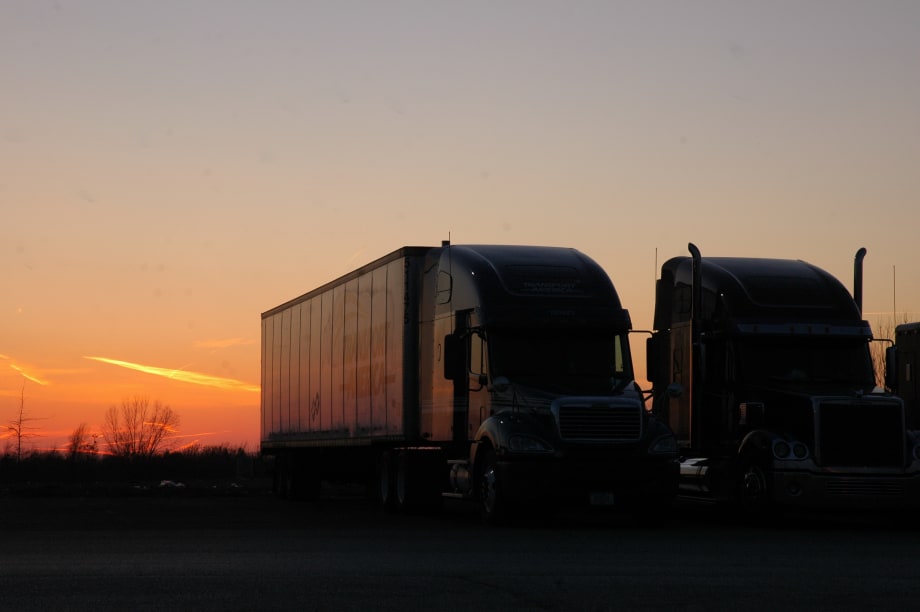
Truck parking is a top driver concern.
Photo: Jim Park
3 min to read
Two major trucking organizations have joined up to urge the federal government to do something about the shortage of truck parking.
On Feb. 18, the American Trucking Associations and the Owner-Operator Independent Drivers Association sent a letter to Secretary of Transportation Pete Buttigieg urging Infrastructure Investment and Jobs Act funds be prioritized to boost the nation’s truck parking capacity.
The groups say the nationwide shortage of truck parking has plagued America’s truckers for decades, with a wide range of consequences for highway safety, driver health and well-being, supply-chain efficiency, and the environment.
In the American Transportation Research Institute’s most recent survey on the industry’s top concerns, among drivers, truck parking tied with driver compensaion for their number one issue.
The letter cites the 2019 Jason’s Law Report from the DOT and found that 98% of drivers regularly experience problems finding safe parking — a sharp uptick from the 75% figure reported just four years earlier in the 2015 report.
Those preliminary results indicated that from 2014-19, the number of truck parking spaces nationwide increased 6% in public areas and 11% in private areas, according to the Federal Highway Administration. The survey concluded that about 313,000 truck parking spaces were available nationally — 40,000 at public rest areas and 273,000 at private truck stops. It also found that 79% of 524 truck stop owners and operators indicated they do not plan to add more truck parking.
“Ultimately, the pervasive truck parking shortage can be explained with simple math,” says the letter. “There are about 3.5 million truck drivers in the United States and approximately 313,000 truck parking spaces nationally; for every 11 drivers, there is one truck parking space.”
The letter also notes that the full 2019 Jason’s Law Report has not been released, even though preliminary results were shared more than a year ago.
ATA and OOIDA explain how the lack of truck parking forces drivers to park in unsafe or illegal locations, as well as the impact on drivers’ health and well-being.
The associations also tie the truck parking shortage to the supply-chain crisis.
“Truck drivers often park prior to exhausting available drive time, and drivers surrender an average of 56 minutes of available drive time per day,” says the letter. “As the administration noted in its December 2021 Trucking Action Plan announcement, the economic impacts of inefficient use of a driver’s time are profound, and the practical impacts of productivity losses create issues throughout our supply chains.”
The letter notes that although the final Infrastructure Investment and Jobs Act did not include dedicated funding for truck parking, as the industry had lobbied for, the bill provided significant increases in accounts where truck parking is an eligible expenditure.
“We ask that you educate state and local partners about this eligibility and prioritize funding for grants that would increase truck parking capacity.”
In addition, they asked for support for the Truck Parking Safety Improvement Act (H.R. 2187), legislation introduced by Rep. Mike Bost (R-IL) that would establish a competitive discretionary grant program and dedicate $755 million over five years to fund truck parking projects across the country.
“Washington needs to listen to our nation’s truck drivers and respect their most serious needs,” said ATA President and CEO Chris Spear in a statement. “Not only does this add severe strain to the supply chain, but it also presents a growing safety hazard for the entire motoring public. Given the historic levels of funding provided by the Bipartisan Infrastructure Bill, we ask that DOT prioritize this urgent need for America’s truckers.”
More Safety & Compliance

FMCSA Pauses Biennial-Update Enforcement Amid Motus Transition
Carriers whose updates were due on or after June 1 have more time, while FMCSA works to stabilize its new registration system and warns of phishing sites impersonating its new carrier registration system, Motus.
Read More →
ZF Expands Commercial Vehicle Push in North America
ZF is expanding its North American commercial-vehicle presence with new transmission applications, electrification, trailer technology and autonomous-driving systems.
Read More →
Truck Drivers Need More Than Another Alert
Fleets have more visibility into truck health, safety events, and driver activity than ever. The next challenge is turning all that information into useful guidance for the person who has to decide what to do next.
Read More →
Tesla Wants a Self-Driving Semi. Are Cameras Enough?
Could Tesla’s camera-only autonomous driving technology work on an 80,000-pound Semi? In this commentary, HDT's Deborah Lockridge takes a look at Tesla, Cybercab, and how autonomous trucks see the road.
Read More →
What DOT’s Automated Vehicle Strategy Means for Trucking
The U.S. Department of Transportation issued a new automated-vehicle strategy that outlines plans for driverless-truck regulations, cross-state freight corridors, and federal safety standards.
Read More →
NYC Expands Speed, Pedestrian Safety Tech Across Fleet
New York City is expanding intelligent speed assistance and pedestrian-alert systems across its municipal fleet, moving the technologies from pilot programs into vehicle procurement and retrofit requirements.
Read More →
FMCSA Removes 110 Truck Driver Training Schools from Certified ELDT List
Federal regulators also are targeting more than 160 additional training providers and launching a nationwide audit of third-party CDL skills testers as part of a broader crackdown on trucking fraud.
Read More →
Beyond DOT Compliance: What Makes a Trucking Fleet Truly Safe?
A trucking fleet can follow every rule and still make unsafe decisions. The real test comes when safety conflicts with freight, productivity, or cost.
Read More →
Hours of Service Pilot Programs: FMCSA Readies for 2027 Rollout
Two pilot programs could eventually reshape hours-of-service rules, giving truck drivers options to pause their 14-hour clock or use longer split sleeper rest periods.
Read More →
New Guide Offers Pet Safety Tips for Truck Drivers
Hundreds of thousands of pets travel in truck cabs. A new safety guide from Volvo Trucks and the Center for Pet Safety offers practical advice for truck drivers who bring dogs and cats along for the ride.
Read More →