




ATA: Hours of Service Rule Passes Common Sense, Safety Tests
The American Trucking Assns. (ATA), the nation’s largest trucking industry trade and safety organization, says it's supporting a new federal hours of service rule.
The American Trucking Assns. (ATA), the nation’s largest trucking industry trade and safety organization, says it's supporting a new federal hours of service rule.
The proposed regulation by the Federal Motor Carrier Safety Administration (FMCSA) would set new on-duty and rest time guidelines for commercial motor vehicle operators for the first time since 1939.
"This is a package that our members can work with," said Bill Graves, ATA president and CEO. "We have worked hard all along for a rule that is a good mixture of common sense and sound science. It will allow us to meet the real world operational needs of the trucking industry and most importantly, do so safely."
The FMCSA rule has cleared a required independent comprehensive cost-benefits analysis. It reflects components of an earlier ATA proposal by increasing the amount of rest time for professional truck drivers and promotes the body’s natural 24-hour Circadian rhythms, as opposed to the current rule that is based on an 18-hour day.
"Additionally," says Graves, "the rule is easy to understand, easy to comply with, and easy to enforce—three principles that reflect ATA’s position on this important safety issue."
The new rules, which take effect in eight months, allow drivers to drive 11 hours after 10 consecutive hours off-duty. Drivers may not drive beyond the 14th hour after coming on-duty, following 10 hours off-duty. Similar to existing rules, drivers may not drive after being on-duty for 60 hours in a seven consecutive day period or 70 hours in an eight consecutive day period. This on-duty cycle may be restarted whenever a driver takes at least 34 consecutive hours off-duty.
Short-haul truck drivers may have an increased on-duty period of 16 hours once during any seven-consecutive-day period. The FMCSA estimates that without the extra two on-duty hours, the industry would be required to hire at least 48,000 new drivers, actually reducing crash-reduction benefits.
The current rule allows 10 hours of driving within a 15-hour on-duty period after eight hours of off-duty time. Also, drivers may not drive after their 15th hour on duty in a workday or after 60 hours on-duty in seven consecutive days or 70 hours on-duty in eight consecutive days.
The FMCSA claims the new rule will save up to 75 lives and prevent as many as 1,326 fatigue-related crashes annually. There were an estimated 4,902 truck-related fatalities in traffic crashes in 2002.
The rule also matches changes being considered in Canada, offering the potential to further promote highway safety and trade between the U.S. and Canada, our largest trading partner.
Gerald Detter, president and CEO of Con-Way Transportation Services and co-chair of ATA’s leadership council during its successful campaign against the 2000 hours of service reform plan, said: "This rule gives credibility to the trucking industry. We meant it when we asked for real hours of service reform to improve the safety of our workplace—the nation’s highways. We’re now on target."
More Drivers

How Fraley & Schilling Improved Logbook Compliance by Over 50%
Fraley & Schilling needed a way to close a compliance workflow gap in its ELD system without adding more work from driver training, reminders, and back-office follow-ups. It found the answer in a custom driver app.
Read More →
Volvo Goes Gaming
Volvo has roared into American Truck Simulator with two new flagship trucks.
Read More →
What the Best Fleets to Drive For Teach About Driver Retention
Survey fatigue, AI-powered routing, owner-operator expectations, and the decline of social media all emerged as themes from this year's Best Fleets to Drive For program.
Read More →
Driver Retention Lessons From the Best Fleets to Drive For
What separates trucking's best workplaces from the rest? Jane Jazrawy shares the biggest lessons from this year's Best Fleets to Drive For program on driver retention, communication, AI, and workforce trends on the HDT Talks Trucking podcast.
Read More →
Farewell, CDL: Why I'm Giving Up My Commercial Driver's License
After more than 20 years as a CDL holder, HDT Executive Editor Jack Roberts is letting his commercial license expire. Not because he wants to — but because trucking's nuclear verdict crisis has made the risks of public-road test drives too great for editors, manufacturers, and everyone involved.
Read More →
How Top Trucking Fleets Improve Driver Retention [Video]
What do healthy snacks, optimized routing, and just picking up the phone have in common? They're all strategies the Best Fleets to Drive For are using to retain truck drivers.
Read More →
Trucker Path Adds Verisk CargoNet Theft Data to Navigation Platform
Trucker Path’s new cargo theft risk overlays give drivers and fleets visibility into high-risk areas, stolen commodity trends, and theft hotspots.
Read More →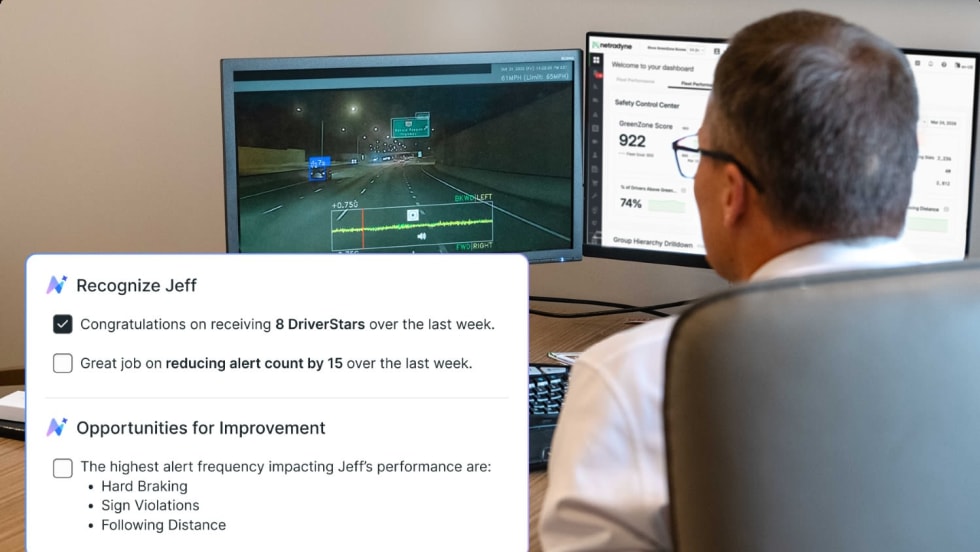
Netradyne Intelligence Uses New AI Agents to Automate Response to In-Cab Camera Data
The company called the next-generation in-cab camera safety platform "a fundamental shift from systems that report on what happened to systems that actively drive what should happen next."
Read More →
Why Truck Detention Keeps Costing Fleets Time and Money
A 2024 ATRI study found detention affects nearly 40% of truckload stops and costs the industry more than $15 billion annually. Despite the toll on drivers, fleets, and supply chains, the problem remains stubbornly persistent.
Read More →
Prime Inc. to Open $7.9M Flagship Used-Truck Dealership
A new driver-focused facility to sell Prime Inc's used trucks and trailers will be the first purpose-built location in the company's history.
Read More →