




Answers to Questions about COVID-19 Emergency Declaration for Trucking Relief Supplies
FMCSA's answers to frequently asked questions about the emergency exemption for trucks carrying relief supplies for the COVID-19 epidemic.

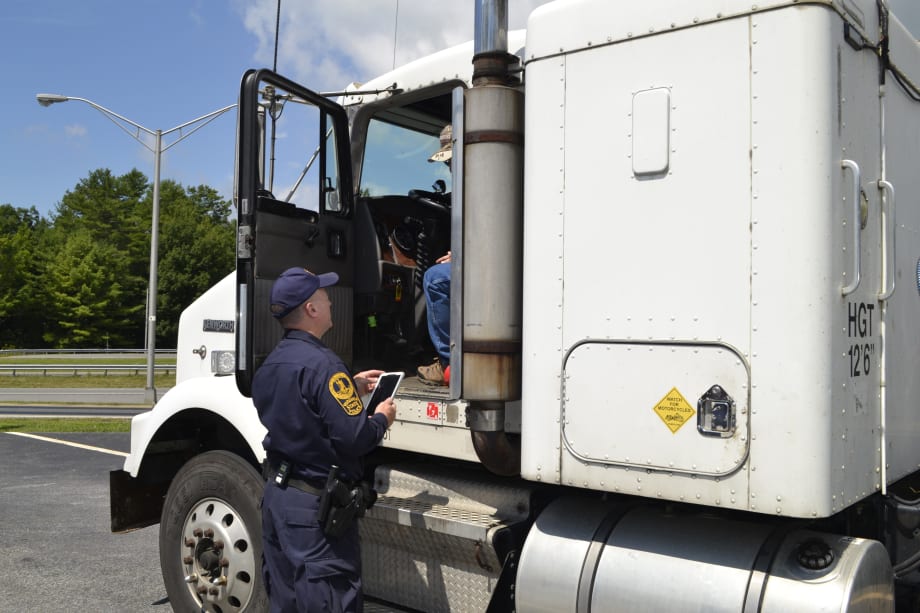
Drivers operating under the emergency declaration are not required to use a paper logbook or ELD.
The Federal Motor Carrier Safety Administration on March 18 issued an expanded national emergency declaration to provide hours-of-service regulatory relief to commercial vehicle drivers transporting emergency relief in response to the nationwide coronavirus (COVID-19) outbreak, including adding fuel and raw materials needed to manufacture essential supplies to the list of freight covered under the order.
While the order added some clarification to the first such declaration issued less than a week earlier, many questions remain, so the FMCSA has posted a frequently asked questions page on its website:
Q: Are loads that include supplies related to direct assistance under the emergency declaration mixed with other, un-related materials covered under the declaration?
A: Generally, yes, however, mixed loads with only a nominal quantity of qualifying emergency relief added to obtain the benefits of this emergency declaration are not covered.
Q: Is a driver required to take a 30-minute break?
A: No, none of the hours of service regulations apply while the driver is engaged with providing direct assistance under the emergency relief exemption.
Q: How do the hours a driver worked under the emergency exemption impact the 60/70-hour rule when the driver goes back to normal operations?
A: The hours worked providing direct assistance under the emergency relief exemption do not count toward the 60/70- hour rule.
Q: Is a 34-hour restart required after providing direct assistance under the emergency declaration?
A: No, however, upon completion of the direct assistance and prior to returning to normal operations, the driver is required to meet the requirements of §§ 395.3(a) and (c) and 395.5(a), which include, for example, the requirement to take 10 hours off duty (8 hours for passenger carriers) and to comply with the on-duty limit of 60/70 hours in 7/8 days before returning to driving.
Q: Is the driver required to use a paper logbook or ELD?
A: No, the emergency exemption includes relief from all the hours-of service regulations in 49 CFR part 395, including the recordkeeping requirements (i.e., records of duty status, or RODS).
Q: If there is an ELD in the truck, what should a driver do to account for the miles driven?
A: There are three options
Use the “authorized personal use” (personal conveyance) function of the ELD to record all of the time providing direct assistance under the exemption. Use of this function will result in the time being recorded as off duty and requires an annotation.
Use the ELD in its normal mode and annotate the ELD record to indicate they were driving under the emergency relief exemption; or
Turn off the ELD, in which case the carrier would address the unassigned miles in accordance with the current regulation.
Q: What does a driver need to do if taking a backhaul not covered by the exemption after transporting an exempt load?
A: Upon completion of the direct assistance activities and prior to returning to normal operations, the driver is required to take 10 consecutive hours off duty before driving. All the time the driver spends engaged in work-related activities that are not associated with providing direct assistance must be counted under the HOS rules.
Q: Are livestock a covered commodity under the terms of the emergency declaration?
A: Yes, Livestock are covered as a precursor to food. The emergency declaration covers “immediate precursor raw materials—such as paper, plastic or alcohol—that are required and to be used for the manufacture of items” including food needed for the emergency restocking of stores.
Q: Are haulers of household waste and medical waste covered under the terms of the declaration?
Yes, transportation for removal of both household and medical waste is covered as “supplies and equipment necessary for community safety, sanitation, and prevention of community transmission of COVID-19.”
Q: What documentation is needed to verify that the driver is operating under the exemption?
A: There is no specific documentation required for verification. Retention of ordinary business records, such as the bill of lading, may be useful later for the convenience of the motor carrier and driver, to document use of the exemption during a future inspection or enforcement action. (Editor's note: Some states are requiring documentation for intrastate exemptions, such as a copy of the state declaration.)
Q: Does FMCSA have preemptive authority over states that decide/attempt to close highway rest stops?
A: No, however FMCSA is working closely with the states to ensure adequate truck parking and facilities are available.
Last updated Thursday, March 19, 2020. Check for updates at https://www.fmcsa.dot.gov/emergency/frequently-asked-questions-related-fmcsa-emergency-declaration-03192020
More Safety & Compliance
A Camera Isn't a Safety Program. Here's What Brokers Are Screening for Now
Footage alone may not be enough to pass broker vetting processes. Here's what counts as a defensible safety program now.
Read More →
Marijuana and Trucking’s Drug-Testing Dilemma
Marijuana is getting stronger, laws are changing, and drug tests still can’t reliably establish impairment. What does that mean for truck drivers and the fleets that employ them?
Read More →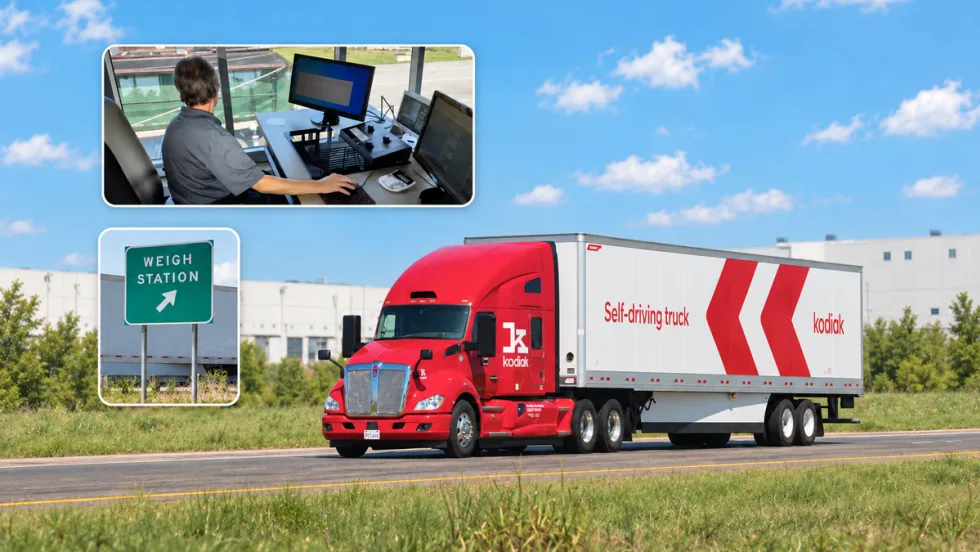
PrePass, Kodiak Connect Driverless Trucks to Roadside Enforcement
The system will allow enforcement agencies to verify Enhanced Inspection information and decide whether Kodiak’s autonomous trucks can bypass roadside screening sites.
Read More →

From One Generation to the Next: How Mentorship Builds Safer Truck Drivers
After three decades in trucking, Harold Perry shares what he's learned about driver safety, mentorship, and helping the next generation build confidence behind the wheel.
Read More →
FMCSA Pauses Biennial-Update Enforcement Amid Motus Transition
Carriers whose updates were due on or after June 1 have more time, while FMCSA works to stabilize its new registration system and warns of phishing sites impersonating its new carrier registration system, Motus.
Read More →
ZF Expands Commercial Vehicle Push in North America
ZF is expanding its North American commercial-vehicle presence with new transmission applications, electrification, trailer technology and autonomous-driving systems.
Read More →
Truck Drivers Need More Than Another Alert
Fleets have more visibility into truck health, safety events, and driver activity than ever. The next challenge is turning all that information into useful guidance for the person who has to decide what to do next.
Read More →
Tesla Wants a Self-Driving Semi. Are Cameras Enough?
Could Tesla’s camera-only autonomous driving technology work on an 80,000-pound Semi? In this commentary, HDT's Deborah Lockridge takes a look at Tesla, Cybercab, and how autonomous trucks see the road.
Read More →
What DOT’s Automated Vehicle Strategy Means for Trucking
The U.S. Department of Transportation issued a new automated-vehicle strategy that outlines plans for driverless-truck regulations, cross-state freight corridors, and federal safety standards.
Read More →
NYC Expands Speed, Pedestrian Safety Tech Across Fleet
New York City is expanding intelligent speed assistance and pedestrian-alert systems across its municipal fleet, moving the technologies from pilot programs into vehicle procurement and retrofit requirements.
Read More →