




ACT Expo Expands Focus to Include Digital Fleet Technology
In addition to its founding focus on clean transportation, ACT Expo will help fleets understand and prioritize emerging digital management technologies.

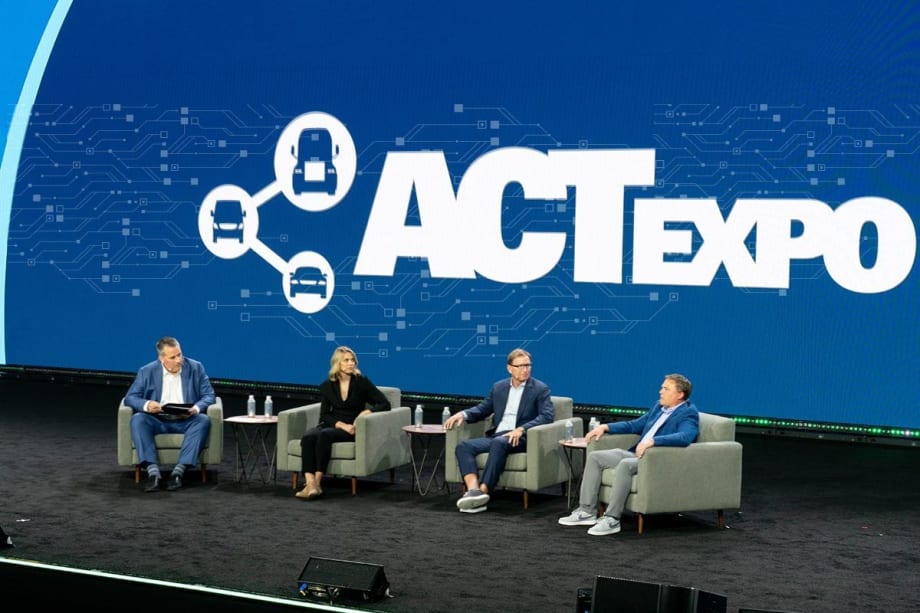
ACT Expo is broadening its scope to include emerging digital technologies and management solutions for fleets.
Photo: ACT Expo
ACT Expo, North America’s largest fleet technology conference and expo, has released its full conference agenda for 2026.
The expo will return to the Las Vegas Convention Center on May 4–7, 2026.
New Technologies and Strategies
Now in its 16th year, the event brings the entire commercial transportation ecosystem together to uncover the advanced technologies and strategies driving the next decade of fleet operations.
The 2026 program builds on ACT Expo’s long-standing leadership in clean transportation, according to a press release. The new program places an increased focus on the digital frontier, including AI, autonomy, connectivity, and software-defined vehicles that are increasingly becoming foundational to how fleets manage assets, improve performance, and achieve their economic and environmental sustainability goals.
As the commercial transportation landscape continues to evolve, ACT Expo 2026 will spotlight the full spectrum of technologies driving fleet advancement today—from digital and connected solutions to low-carbon and zero-emission vehicles and fuels.
More than 12,000 attendees, including fleet operators, shippers, OEMs, utilities, infrastructure developers, energy companies, technology providers, dealers, and policymakers, will come together for four days of peer-to-peer education, real-world case studies, and direct access to the people and solutions shaping the industry.
The 2026 agenda is developed by the Clean Transportation Solutions (CTS) team at TRC in collaboration with a High-Volume Fleet Committee, Endorsing Organization Committee, Clean Cities Planning Committee, new Advisory Committees on AI and Automation, and our event sponsors.
Together, they ensure every session reflects the most relevant trends, operational challenges, and regulatory pressures shaping commercial transportation.
Attendees will learn how to prioritize rapidly evolving technologies, evaluate proven solutions, and understand what is delivering real results across fleet segments.
Agenda Topics Include:
OEM CEO Panel: Navigating Complexity and Change Through Technology: CEO leaders share how their product offerings are incorporating increasingly advanced and connected technologies, AI, and new energy solutions.
Commercial EV Momentum: The Road Ahead for Fleets: A candid discussion about infrastructure readiness, fleet adoption trends, and the lessons learned from deploying commercial electric vehicles at scale.
Diesel and Hybridization: New Tools for Efficiency and Performance: Experts examine how fuel management technologies and hybrid systems are improving uptime and reducing costs for fleets that require diesel solutions.
Natural Gas and Propane on the Move: Technology, Infrastructure, and Fleet Uptake: Updated engine platforms, expanded renewable fuel availability, and fueling infrastructure growth are driving significant cost and emission savings, proven lower TCOs, and driving new adoption across multiple fleet segments.
Shippers and Carriers: What’s Driving Fleet Purchasing Decisions: Freight leaders discuss how customer expectations, sustainability targets, and TCO considerations are shaping truck procurement.
Hydrogen Roundtable: Converting Challenges into Opportunities: This roundtable examines how technology, policy, and industry coordination are addressing challenges to improve hydrogen’s cost, infrastructure, and readiness for commercial use.
AI Bootcamp: Practical Applications of Artificial Intelligence for Fleets: A hands-on exploration of how fleets are using AI for route optimization, predictive maintenance, charging management, and safety.
Powering Autonomy: Building the Next Generation of AV Hubs: Developers and OEMs share how they are designing the digital and physical infrastructure required to support autonomous freight.
Fleet Sector Breakfast Series: Real-World Strategies from Every Corner of the Industry: Fleet leaders from drayage and regional haul, food and beverage, work truck, government, long-haul, and last-mile delivery share practical insights on how evolving technologies, regulations, and energy solutions are shaping operations across their sectors.
The Largest Showcase of Advanced Fleet Technology
ACT Expo’s first mainstage session, “The Virtual Driver Revolutionizing Trucking and Logistics,” will feature David Liu, CEO and co-founder of PlusAI; Don Burnette, founder and CEO of Kodiak; Ossa Fisher, President of Aurora; Peter Vaughn Schmidt, CEO of Torc; and Raquel Urtasun, founder and CEO of Waabi.
These leaders will explore how autonomous freight is advancing from pilot programs to profitable operations and how fleets are preparing for a future shaped by virtual drivers. Read more about the session here.
“The accelerated development and deployment of the range of digital solutions – on top of the increasingly wide array of powertrain technologies and fuel choices available to today’s commercial customers – is truly astounding,” noted Erik Neandross, president of the Clean Transportation Solutions group at TRC, producers of ACT Expo. “It is an incredibly exciting time in our industry, but one that we also know can be dizzying for fleets to keep up with it all. As always, ACT Expo brings peer-to-peer information sharing and real-world insights to help fleets understand which technologies and fuels will work best in their own operation and help their freight customers meet growing expectations around performance, safety, cost, and sustainability.”
More than 500 exhibitors will display the advanced vehicles, charging and fueling solutions, equipment, software platforms, digital solutions, and data tools redefining commercial transportation.
Attendees can explore more than 200 low- and zero-emission vehicles in one location and connect directly with every major OEM and technology provider. The expo hall and ride-and-drive area offer the most comprehensive look at the solutions improving fleet safety, uptime, and total cost of ownership, and the sustainability of freight movement.
ACT Expo 2026 is supported by presenting sponsors Daimler Truck North America and Penske Transportation Solutions.
Together, the program and Expo Hall create a one-stop destination for understanding how emerging technologies can strengthen fleet performance and support shippers working toward more sustainable freight operations.
More Fleet Management

Color Match Smarter: Tools That Restore & Perform
For fleet managers and collision repair professionals keeping heavy-duty trucks on the road, getting the color right the first time isn't just about appearance — it's about efficiency, turnaround time, and bottom-line results. Discover how today's digital color tools are transforming the repair process from guesswork to precision.
Read More →
FMCSA Pauses Biennial-Update Enforcement Amid Motus Transition
Carriers whose updates were due on or after June 1 have more time, while FMCSA works to stabilize its new registration system and warns of phishing sites impersonating its new carrier registration system, Motus.
Read More →
2026 Blueprint for Countering Smarter Supply Chain Theft
Cargo theft is no longer just the cost of doing business. It's a multi-billion-dollar criminal enterprise exploiting vulnerabilities across your fleet, drivers, and supply chain.
Read More →


How Telematics Improves Visibility, Control, and Performance in Refrigerated Fleets
Explore how telematics help refrigerated fleets improve visibility, uptime, efficiency, compliance, and cargo protection across connected cold chain operations.
Read More →
What the U.S.-Canada Trade War Means for Trucking
Escalating U.S.-Canada tariffs could disrupt cross-border freight, reduce truck volumes, raise costs, and create new uncertainty for carriers on both sides of the border.
Read More →
What Are Trucking’s Top Concerns for 2026?
The American Transportation Research Institute wants to know what's worrying trucking fleet managers, drivers, and other stakeholders in its annual Industry Issues survey.
Read More →
American Trucking Associations Looks for a New Leader
ATA President and CEO Chris Spear abruptly left his job at the association on August 21, at a pivotal time for the trucking industry.
Read More →
Public Wi-Fi Cybersecurity Risks: How Truck Drivers and Fleets Can Protect Their Data
Public Wi-Fi can expose truck drivers and fleets to credential theft, malware, and other cyber threats. Here’s how to reduce the risk on the road.
Read More →
For Nicky Cupp, Fleet Innovation Starts With Frustration
HDT Truck Fleet Innovator Nicky Cupp turns everyday pain points at Fraley & Schilling into opportunities for better technology and smarter processes.
Read More →
Adam Buttgenbach’s Approach to Electric Trucks: Start With Where They Fit
HDT Truck Fleet Innovator Adam Buttgenbach helped PepsiCo build one of North America’s largest EV fleets by focusing on where electric trucks make operational sense.
Read More →