




"A high-revenue load isn’t automatically a high-value one, and a modest load that drops the truck into strong forward demand can be worth more than its rate suggests."
Your Trucks Are Busy. That Doesn’t Mean They’re Winning.
High utilization doesn’t always mean strong margins. Looking beyond the current load can help fleets make better dispatch decisions and get more value from each truck’s time.
by Jake Dettmer, Optimal Dynamics
October 27, 2026
The goal is to understand how today’s assignment affects the truck’s earning potential beyond the current load.
Credit:
Deborah Lockridge
5 min to read
- The trucking industry has long focused on maximizing driving time to improve earnings, but this approach only solves part of the efficiency problem.
- In a tightening market, success hinges not on truck activity levels but on the productive outcomes of that activity.
- Traditional metrics like utilization and loaded miles may not fully capture what distinguishes a good operation from a great one.
*Summarized by AI
For the better part of a decade, most of us in trucking have agreed on one thing: Time is the resource that matters. A truck only earns when the wheels are turning, so the playbook has been to cut whatever eats a driver’s day, from detention to slow loading to another hour hunting for parking.
That instinct was right, but it only answered half the question. It told us to win back hours — but it never told us what those hours should be doing.
A tightening market is forcing us to answer the second half of the question. As capacity rationalizes and carriers regain pricing power, what separates a good operation from a great one is less about how busy the trucks are than about what all that activity produces. And the dashboard many fleets are watching is quietly steering decisions the wrong way.
What Traditional Trucking Metrics Can Miss
Think about the numbers most fleets live by: utilization percentage, loaded miles, cost per mile, empty mile reduction. They all treat a moving truck as a winning truck, and few of them ask whether the move you just took made the next one better or worse.
A truck can run hard all week and still chip away at its own earning power by ending each load somewhere that leaves the rest of the network worse off.
The point is honesty about what “busy” is producing. A full schedule built on loads that strand your equipment is a slow leak. But you may not see it until a month later when you have softer revenue and thinner margins that nobody can trace to a single decision.
A Better Idea, Borrowed From Wall Street
In financial markets, a liquid asset is one you can convert to cash quickly, at scale, without a price hit. What makes that valuable is optionality: you hold it, and you can still act.
Apply the same test to a fleet. In a liquid network, a truck finishing a load quickly turns into its next paying move, without economic concession. In an illiquid one, your equipment keeps landing where the next move is unavailable or unprofitable, and you are stuck choosing between a bad load and an empty repositioning.
The good news is that liquidity is measurable with data you already have. Two fleets can post identical utilization and answer those questions very differently. The difference tends to show up in the P&L long before it shows up on the dashboard.
One number worth adding to the board
If liquidity describes the whole network, the question for any single load is simpler. What does this load on this truck right now add compared with everything else those hours could be doing, including waiting?
A high-revenue load isn’t automatically a high-value one, and a modest load that drops the truck into strong forward demand can be worth more than its rate suggests.
That points to a number worth tracking alongside your existing metrics: revenue per truck per hour, evaluated across a sequence of moves rather than one load at a time. Include the time spent loading, unloading, waiting, and repositioning. Revenue alone doesn’t show which option is more profitable, so compare operating costs as well.
The goal is to understand how today’s assignment affects the truck’s earning potential beyond the current load.
Measured greedily, revenue per hour rewards cherry-picking, which earned it a bad reputation. Measured forward, however, it rewards good positioning.
What To Do Next
None of this stays theoretical for long. It changes what you measure and how you decide. A few practical places to start:
- Audit your scorecard. Utilization, loaded-mile percentage, and empty-mile reduction are useful as diagnostics and risky as standalone goals. When one of them is driving a load decision on its own, treat that as your cue to ask what the next move looks like.
- Start measuring reload time. For each major lane or region, look at how quickly trucks get reloaded after delivery and how profitable that next move tends to be. Rank your destinations by reload speed and the availability of suitable outbound loads. Look for places where equipment consistently gets stuck, and use that information to help explain gaps between utilization and financial performance.
- Price the empty move honestly. Before you take a load purely to avoid deadhead, ask where it leaves the truck and what comes next from there. A short empty repositioning into a strong market often beats a loaded move into a weak one. Give your planners explicit permission to make that call when the math supports it.
- Shift the question from “what does this load pay?” to “what are the next several hours of this truck worth?” Track revenue per truck per hour alongside your existing metrics, across a sequence of moves rather than one load at a time. Compare costs over the same period to see whether a high-paying load still looks attractive after the wait or repositioning that follows.
- Be honest about your data. Whether you do this by hand or with software, the math is only as good as the forecasts behind it. Reload probability and forward demand are estimates with real error bars, so ground them in your own history and check them against what actually happened. A confident decision built on a bad forecast is still a bad decision.
Where Does AI Come In?
One related trap is worth naming as more fleets look at artificial intelligence for these calls. Some AI tools basically learn what experienced dispatchers do, then do it faster.
Ask vendors how their systems compare alternatives, account for operating costs and constraints, and check forecasts against actual results. And ask them how their system produces a better decision, not just a faster one.
The fleets that come out ahead will be the ones that keep their networks liquid and can prove it, valuing not just the hours but what those hours produce. We spent a decade learning to win back time. Now the work is figuring out what to do with it.

Jake Dettmer
Credit:
Optimal Dynamics
About the author: Jake Dettmer is SVP of Product at Optimal Dynamics, where he leads the development of decision optimization technology for trucking and logistics. He works with carriers on how to measure and improve network performance beyond traditional utilization metrics.
This article was authored and edited according to Heavy Duty Trucking’s editorial standards and style to provide useful information to our readers. Opinions expressed may not reflect those of HDT.
Subscribe to Our Newsletter
More Fleet Management

Could Your Truck's Connected Devices Be a Cybersecurity Risk?
ELDs, telematics systems and driver tablets help fleets operate more efficiently. But every connected device needs protection against cyberattacks.
Read More →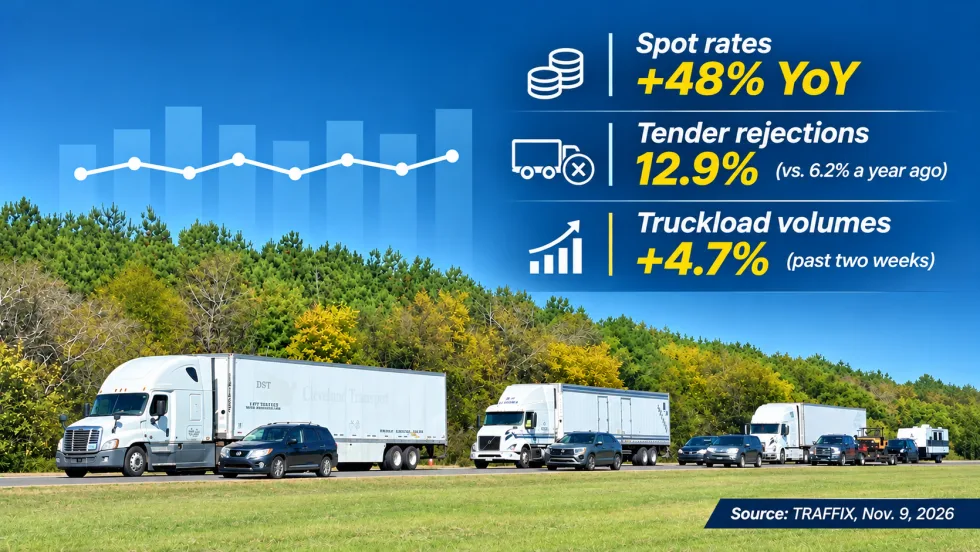
Holiday Freight Meets a Tight Trucking Market
There's no freight boom, but truckload carriers are finding themselves in a stronger position to negotiate rates. And holiday shipping demand could tighten the market further.
Read More →
What Trucking Events are Happening in 2027?
Looking for trucking-related conventions, expos, and other events? Heavy Duty Trucking has developed this list of national and larger regional trucking shows and events.
Read More →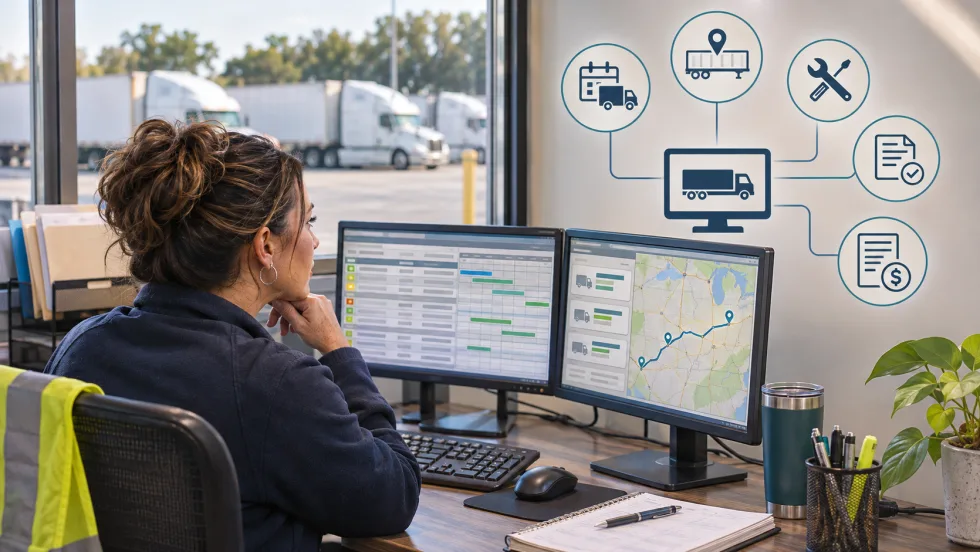
Does Your Trucking Fleet Need a New TMS?
Artificial intelligence and better integrations promise less busywork and more useful data. Can your TMS help your company solve problems? Do you need additional vendors or an upgrade? Or is it time to look for a new platform?
Read More →
Fleet Costs Shape ACT Expo 2027 Agenda
With diesel prices high and operating expenses under pressure, ACT Expo's 2027 agenda emphasizes fuel efficiency, AI, safety and the return on fleet technology investments.
Read More →
Does Your Trucking Fleet Need a New TMS? [Video]
Cloud technology, AI and new integrations are changing what transportation management systems can do. But does taking advantage of those advances mean replacing your existing TMS?
Read More →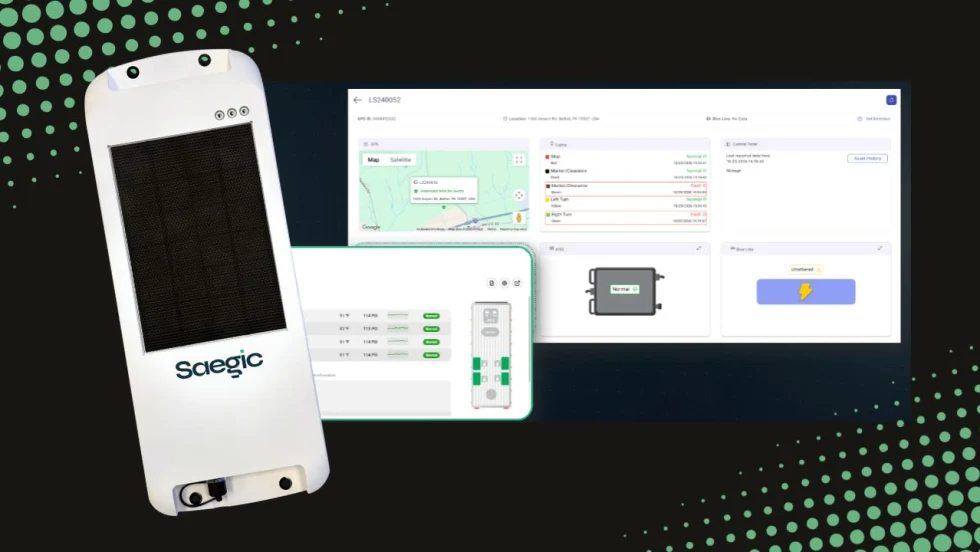
Road Ready Becomes Saegic, Launches New Trailer Telematics Gateway
Clarience Technologies is rolling out new hardware and expanding its plans for connecting trailer telematics, maintenance data, and video.
Read More →
Give Your Trucking Fleet a Cybersecurity Walkaround
Your fleet's cybersecurity policies may look good on paper. These seven checks can help you find out whether they’re working.
Read More →
Kodiak Lines Up Fleets for Driverless Trucking
An agreement for 75 trucks, a new Texas freight lane, and progress on safety validation move Kodiak closer to its planned driverless highway launch.
Read More →
ITS Logistics Settles Religious Harassment Case
The Nevada-based logistics firm agreed to pay more than $396,000 to settle a religious harassment charge involving an employee's Jewish identity.
Read More →