




Why Insurance Costs are Sky-High
A perfect storm of business conditions has whipped up insurance costs, but applying technology and managing people can help calm the tempest.


Adopting more technological advances is the most likely route to cut back insurance costs, including leveraging solutions to curb distracted driving and other unsafe behaviors. Photos: iStockPhoto
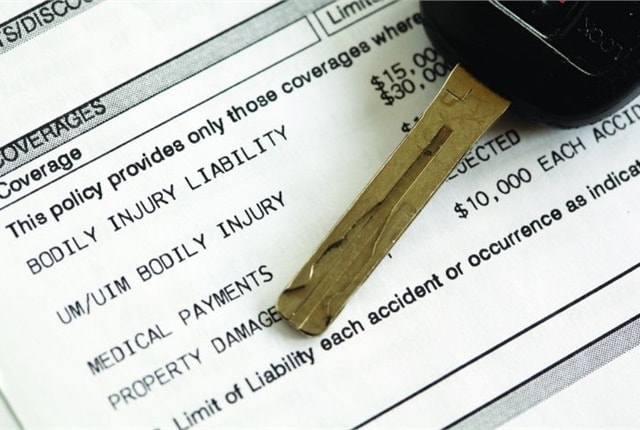
Adopting more technological advances is the most likely route to cut back insurance costs, including leveraging solutions to curb distracted driving and other unsafe behaviors.Photos: iStockPhoto
With all the standard and optional safety technology that trucks and their drivers fairly bristle with these days, no one could fault a fleet manager for thinking their commercial insurance costs should be going only one way… down. But instead, they’re going up and up.
The problem is affecting everyone from owner-operators to the biggest players in the business. Even a powerhouse like regional/interregional LTL and 3PL provider Saia is feeling the pinch.
Discussing key cost trends in the firm’s 2016 earnings release, Saia President and CEO Rick O’Dell said one significant expense item was its claims and insurance line, which increased by more than $4 million in the fourth quarter versus the prior year. “The increase was not the result of one or two major accidents; rather it reflects the general inflationary trends in the costs of settlement and litigation in the trucking industry.”
Last year, more than $700 million in claims were recorded against trucks and other commercial vehicles, according to a recent Marketplace report by American Public Media, which points out the obvious: “Those losses are translating to higher premiums for businesses.”
San Diego-based Storrs Insurance Group, which does business as The Insurance Store, walks through why insurance costs are spiking in a detailed post on its blog. It reports seeing in the last few years “nothing but rate increases from most of our [insurance] carriers, both in small business auto insurance and commercial truck insurance.”
The increases have hit truck fleets of all types, from local to long-haul, from general freight to reefer goods, to dirt sand and gravel haulers — even operators of small service trucks. “Some have experienced even more rapid rate increases in segments such as towing and hotshots,” stated the blog.
A perfect storm
A “perfect storm” of factors has brewed up to bedevil the market, explains The Insurance Store blog. To grasp why this is happening, start with understanding how the insurance market works. Insurance carriers actually make money in two very different ways, the brokerage explains. They make money first off their underwriting profits. Secondly, by investing customers’ paid premiums. Since it can take almost seven years to close some claims, insurance will sometimes have up to seven years to make money on investments with premiums paid until they have to settle the claim. “This means if they don’t make money on underwriting, they must make money on their investments, and if they are not making money on their investments, they must make money on their underwriting.” Margins are generally pretty low on both, contends the company.
So the first reason insurance rates have been going up is that returns on investments have been low, forcing them to make money on — yes — underwriting insurance policies. The second cause? The cost for insurance carriers to cover accident claims has skyrocketed.
Boiling down how Storrs/TIS lays it out, here’s what happened: The economic recovery hitting high gear meant more traffic on the roads and therefore more accidents.
This happened after a decade of declining highway fatalities thanks largely to safety advances, from mandatory seat-belt laws and antilock brakes to airbags and collision-mitigation systems. But in recent years, fatalities have again been rising.
“Many experts believe the rise in fatalities and frequency to be more related to distracted driving as the rise of smartphones and the use of these devices while driving. The number of fatalities or severe injuries is known in the insurance industry as severity, which refers to how bad the claims or losses were. Since 2010, both severity and frequency have increased,” says the Storrs/TIS blog.
Layer on top of that the rising cost to repair damages from accidents to property and to human bodies. Newer, technologically advanced, and more expensive vehicles are also more expensive for insurers to fix or replace. As for the human toll, it’s no secret that the cost of medical care has skyrocketed.

That driver shortage
Insurance costs are also being boosted by the unending driver shortage, as trucking companies hire younger, less-experienced drivers. “Drivers that are between the ages of 21 to 24 get into accidents more than twice as often as drivers over the age of 30,” says the company, and that is reflected in premium rates.
“With safe haven investment rates low and frequency and severity of losses continuing to increase, the perfect storm for increasing truck insurance rates has taken hold of the truck insurance marketplace,” Storrs/TIS states. “To get a break from increasing truck insurance rates, one or more of these factors has to change or rates will likely continue to climb.
“Until we see insurance carriers posting profits in the truck insurance segment for several quarters, we are not going to see any new players in the industry to help drive down rates.”
In addition, the brokerage contends that just as the root of the problem is multifaceted, there is no one way to make it go away. Storrs/TIS sees adopting more technological advances as the way out, noting that solutions to reduce everything from the level of distracted driving to the cost of healthcare to even the cost of personal-injury litigation would help.
Distracted driving is the only one of those fleets can whittle down themselves. This can be done through setting and enforcing no phoning/texting while driving rules and even installing apps that shut a phone down when a vehicle is in motion.
Speeding is another issue that can be addressed with technology, whether that’s speed-limiting trucks, or using telematics and driver monitoring systems to identify drivers who habitually drive faster than they should.
Chris Tanke, transportation practice leader of risk advisory HNI, says there’s a tendency to figure most crashes are the handiwork of novice truckers. “But,” he asks in a recent blog post, “what about our drivers who have been with us for the long haul? You may think ‘He’s been around for over 20 years — just leave him be and let him drive.’ You’re wrong.”
The longer that experienced drivers get away with having only “near-miss accidents,” he says, the more confident and complacent they become in their bad driving behaviors, until the result is a critical crash.
Tanke advises combatting complacency with awareness training. “Driver training that appeals to drivers’ values and priorities will guide their protective driving technique as a professional truck driver,” he says “Hone in on driver values to demonstrate the impact they have while on the road.”
Safety equipment
Fleets can also opt for other safety technologies to help mitigate risks, which always helps bring down insurance costs. Here, the talk turns to such solutions as using video-based monitoring and training of drivers to improve their safe driving behaviors and, similarly, leveraging telematics data from vehicles (such as evidence of speeding and hard braking) to spot unsafe driving practices that should be addressed.
And, of course, there is the option of spec’ing or installing various levels of active safety solutions on board trucks that warn of unsafe situations on the road or even step in for the truck driver automatically to prevent accidents when absolutely necessary.
Tanke lists what he calls “the big eight technologies in the safety realm of trucking” as antilock braking systems, stability control, lane-departure warnings, collision-avoidance systems, blind-spot warning devices, interior [driver-facing] cameras, rear-view cameras, and side-mounted cameras/sensors.
Another type of technology that can help cut insurance costs is GPS tracking technology, says Telogis. Recovering a stolen fleet vehicle or trailer is difficult. Law enforcement often gives these cases low priority, so fleet operators write off their losses and file an insurance claim. The insurance company has to pay for the loss and the fleet is now faced with a potential premium increase.
Because GPS tracking has made it easier to recover stolen equipment, Telogis says on its website, many insurance companies offer discounts to fleet owners who use these systems, which can be classified as anti-theft devices. In fact, in some states it is actually compulsory for insurers to offer such discounts.
More Fleet Management

Color Match Smarter: Tools That Restore & Perform
For fleet managers and collision repair professionals keeping heavy-duty trucks on the road, getting the color right the first time isn't just about appearance — it's about efficiency, turnaround time, and bottom-line results. Discover how today's digital color tools are transforming the repair process from guesswork to precision.
Read More →
FMCSA Pauses Biennial-Update Enforcement Amid Motus Transition
Carriers whose updates were due on or after June 1 have more time, while FMCSA works to stabilize its new registration system and warns of phishing sites impersonating its new carrier registration system, Motus.
Read More →
2026 Blueprint for Countering Smarter Supply Chain Theft
Cargo theft is no longer just the cost of doing business. It's a multi-billion-dollar criminal enterprise exploiting vulnerabilities across your fleet, drivers, and supply chain.
Read More →


How Telematics Improves Visibility, Control, and Performance in Refrigerated Fleets
Explore how telematics help refrigerated fleets improve visibility, uptime, efficiency, compliance, and cargo protection across connected cold chain operations.
Read More →
What the U.S.-Canada Trade War Means for Trucking
Escalating U.S.-Canada tariffs could disrupt cross-border freight, reduce truck volumes, raise costs, and create new uncertainty for carriers on both sides of the border.
Read More →
What Are Trucking’s Top Concerns for 2026?
The American Transportation Research Institute wants to know what's worrying trucking fleet managers, drivers, and other stakeholders in its annual Industry Issues survey.
Read More →
American Trucking Associations Looks for a New Leader
ATA President and CEO Chris Spear abruptly left his job at the association on August 21, at a pivotal time for the trucking industry.
Read More →
Public Wi-Fi Cybersecurity Risks: How Truck Drivers and Fleets Can Protect Their Data
Public Wi-Fi can expose truck drivers and fleets to credential theft, malware, and other cyber threats. Here’s how to reduce the risk on the road.
Read More →
For Nicky Cupp, Fleet Innovation Starts With Frustration
HDT Truck Fleet Innovator Nicky Cupp turns everyday pain points at Fraley & Schilling into opportunities for better technology and smarter processes.
Read More →
Adam Buttgenbach’s Approach to Electric Trucks: Start With Where They Fit
HDT Truck Fleet Innovator Adam Buttgenbach helped PepsiCo build one of North America’s largest EV fleets by focusing on where electric trucks make operational sense.
Read More →