




Why Can't We Treat Marijuana Use Like Alcohol?
Marijuana legalization proponents often argue that cannabis should be treated like alcohol – legal to use, but illegal to drive while impaired. But how do you enforce that?
September 25, 2019

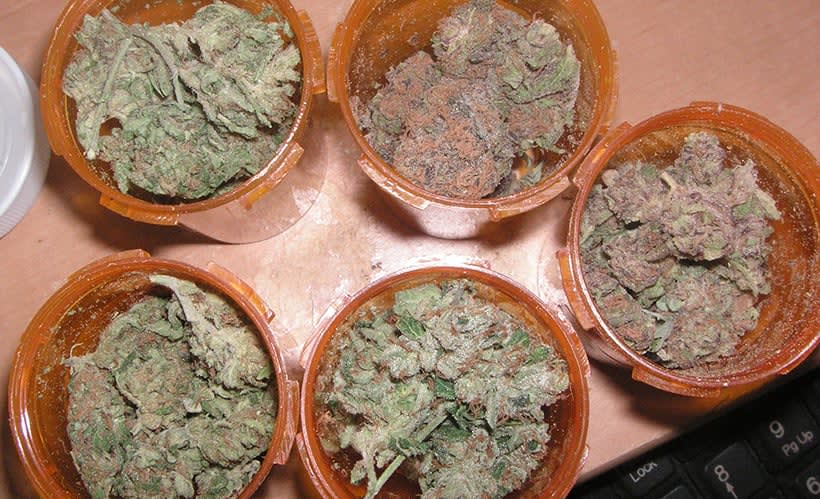
Marijuana legalization proponents often argue that cannabis should be treated like alcohol – legal to use, but illegal to drive while impaired. But how do you enforce that?
Photo: Wikimedia Commons
4 min to read
Marijuana legalization proponents often argue that cannabis should be treated like alcohol – legal to use, but illegal to drive while impaired. But how do you enforce that? With alcohol, decades of science have given us procedures and tests to determine the blood-alcohol level at which a driver is impaired with reasonable accuracy. With marijuana, that’s not the case.
“We’re nowhere near being able to have a device that measures impairment,” says Gina Kesler, CEO of Impact Employee Solutions, a third-party drug testing administrator serving primarily transportation.
Not that there aren’t plenty of companies trying. In fact, there already are devices available, but the accuracy has been questioned.
In a new study reported from Australia, researchers from the University of Sydney found that two devices used by police in New South Wales were found to have produced inaccurate results when testing for cannabis, according to the Sydney Morning Herald.
Researchers found the devices products false positive readings when THC concentrations in the saliva were very low or negligible 5% to 10% of the time, but also frequently failed to detect high amounts of cannabis use, showing false negative results 9% to 16% of the time.
“We know from over 50 years of alcohol that a certain amount of alcohol, no matter the person’s size, they are impaired after reaching certain blood alcohol levels,” says Matt Goledzinowski, research scientist with Alcohol Countermeasure Systems, a manufacturer of alcohol screening devices and ignition interlock systems. But with many drugs, including marijuana, he says, there’s not a direct correlation between the amount of the drug in the blood and the level of impairment.
“Most legislators want to have a number,” as there is for alcohol, Goledzinowski says. “But this is not scientific.”
“From plant to plant and leaf to leaf you can get different potency rates,” Kesler says. “There’s no scientific rate to measure that. And it’s also highly based on the frequency you smoke or ingest it, and how you metabolize it.”
In addition, unlike other drugs and alcohol, marijuana is fat soluble. “Everything else will be out of your system within 96 hours, because you’ll sweat it out, pee it out, cry it out,” Kesler says. “But that’s not the case with marijuana.”
That means the impairing effects of marijuana dissipate far sooner than it disappears from your system.
Goledzinowski says habitual or medical users of marijuana will have THC in their bodies, in the fat, in the brain, at a low level all the time – but the person might not be impaired at all, even though it’s showing up in their blood. “On the other hand, if someone’s a first time user, taking a moderate dose of marijuana, he might be very impaired – yet the blood content might be low.”
Marijuana is metabolized very quickly, he explains, reaching its maximum concentration in the blood only a few minutes after smoking – but it still stays in the fat and in the brain. So THC levels in the blood tend to spike shortly after smoking, meaning a novice user could be more impaired than their blood levels may suggest. On the other hand, regular users may have high THC levels in their blood over 12 hours after consuming.
That’s why proper training of law enforcement on how to detect marijuana impairment is so important, looking for signs such as pupil dilation, bloodshot eyes, a white-coated or green-coated tongue, poor balance during roadside testing, a high pulse, and an inability of person’s eyes to converge as he or she tries to focus on a stimulus like a finger or a pen.
In Colorado, for instance, the law specifies that drivers with five nanograms of active tetrahydrocannabinol (THC) in their whole blood can be prosecuted for driving under the influence. “However, no matter the level of THC, law enforcement officers base arrests on observed impairment,” according to a FAQ on the Colorado DOT’s website. Many Colorado Law Enforcement Officer have received advanced training in Advanced Roadside Impaired Driving Enforcement, and law enforcement agencies have specially trained Drug Recognition Experts on staff that can detect impairment from a variety of substances.
Goledzinowski says another problem with blood levels for drug impairment is that in countries that have enacted such limits, people will do a “cocktail” and be impaired while staying under the blood limits for each specific substance. “Even if you establish a legal limit for every drug like they did in Norway, if you have a little bit of everything, you are still not being charged because you’re below the legal limit. This is a growing trend. That’s why in my opinion it’s very important to check the impairment on the roadside first.”
Subscribe to Our Newsletter
More Safety & Compliance

FMCSA Pauses Biennial-Update Enforcement Amid Motus Transition
Carriers whose updates were due on or after June 1 have more time, while FMCSA works to stabilize its new registration system and warns of phishing sites impersonating its new carrier registration system, Motus.
Read More →
ZF Expands Commercial Vehicle Push in North America
ZF is expanding its North American commercial-vehicle presence with new transmission applications, electrification, trailer technology and autonomous-driving systems.
Read More →
Truck Drivers Need More Than Another Alert
Fleets have more visibility into truck health, safety events, and driver activity than ever. The next challenge is turning all that information into useful guidance for the person who has to decide what to do next.
Read More →
Tesla Wants a Self-Driving Semi. Are Cameras Enough?
Could Tesla’s camera-only autonomous driving technology work on an 80,000-pound Semi? In this commentary, HDT's Deborah Lockridge takes a look at Tesla, Cybercab, and how autonomous trucks see the road.
Read More →
What DOT’s Automated Vehicle Strategy Means for Trucking
The U.S. Department of Transportation issued a new automated-vehicle strategy that outlines plans for driverless-truck regulations, cross-state freight corridors, and federal safety standards.
Read More →
NYC Expands Speed, Pedestrian Safety Tech Across Fleet
New York City is expanding intelligent speed assistance and pedestrian-alert systems across its municipal fleet, moving the technologies from pilot programs into vehicle procurement and retrofit requirements.
Read More →
FMCSA Removes 110 Truck Driver Training Schools from Certified ELDT List
Federal regulators also are targeting more than 160 additional training providers and launching a nationwide audit of third-party CDL skills testers as part of a broader crackdown on trucking fraud.
Read More →
Beyond DOT Compliance: What Makes a Trucking Fleet Truly Safe?
A trucking fleet can follow every rule and still make unsafe decisions. The real test comes when safety conflicts with freight, productivity, or cost.
Read More →
Hours of Service Pilot Programs: FMCSA Readies for 2027 Rollout
Two pilot programs could eventually reshape hours-of-service rules, giving truck drivers options to pause their 14-hour clock or use longer split sleeper rest periods.
Read More →
New Guide Offers Pet Safety Tips for Truck Drivers
Hundreds of thousands of pets travel in truck cabs. A new safety guide from Volvo Trucks and the Center for Pet Safety offers practical advice for truck drivers who bring dogs and cats along for the ride.
Read More →