




What's Killing Your Tires?
Tires are under constant attack, from the normal dynamic forces acting on the tread rubber, to a barrage of scrubbing and scraping actions caused by misaligned axles, unbalanced rotation, loose wheel bearings, and more

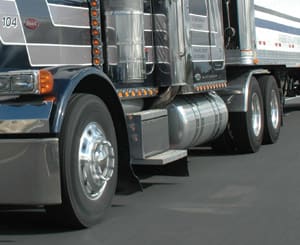
Look after your tires; your tires will look after you. Photo by Jim Park
Tires are under constant attack, from the normal dynamic forces acting on the tread rubber, to a barrage of scrubbing and scraping actions caused by misaligned axles, unbalanced rotation, loose wheel bearings, and more.
Left unchecked, these will strip miles and months from the tire's normal service life.
Simply replacing an ill-wearing tire won't solve the real problem - the source of the wear. Examine the tire carefully or have the wear patterns analyzed to determine the likely cause, and then address that problem. Fortunately, dead and dying tires tell tales. Pay attention to what they are saying.
Improper inflation
A tire-failure study by the American Trucking Associations' Technology and Maintenance Council showed that 90 percent of all tire failures can be traced back to improper inflation. Tires not properly inflated for ambient temperatures, the anticipated load, and particular wheel positions will suffer a number of indignities, including weakened sidewalls, irregular tread wear, and in rare cases of over-inflation, increased susceptibility to punctures and casing damage.
Underinflated tires tend to exhibit several types of wear, depending on the tire type and wheel position. Watch for wavy and/or accelerated shoulder wear on rib tires, irregular wear rates on inner ribs, and increased wear on alternating lugs (block pumping) on lug-type tires. Under-inflation will also accelerate spot, diagonal, and tread-block edge wear.
TMC tells us that a tire run underinflated by 20 percent will lose 30 percent of its expected life. When inflation drops 40 percent below the recommended level, the tire lasts only half as long.
"If there's not enough air to properly support the load, the sidewalls will flex more than they were designed for, and that flexing causes excessive heat buildup," points out Tim Miller of Goodyear. "Together, the weakening of the steel cords in the sidewall and the softening of the rubber caused by the heat can trim 15 percent off the life expectancy of the tire."
So what's normal or ideal operating pressure? Load limit and inflation tables are available from every tire manufacturer. Use them. The truth is, what works for drive or trailer tires in a dual assembly in a typical on-highway application will be insufficient for a steer tire.
Inflation tables suggests a pair of 295/75R22.5 load-range G steer tires would need to be inflated to 110 psi to carry a steer-axle load of 12,350 pounds. Inflate those tires to only 100 psi and their load-bearing capacity would be reduced to 11,560 pounds. Conversely, the load and inflation tables tell us that the same tires in a dual assembly would need only 75 psi to meet the 4,250/tire load in a tandem axle dual assembly.
Mechanical problems
There are a number of problems lying somewhere other than with the tire that will cause the tire to bear the brunt of the damage. Any condition that prevents the tire from running straight and true, with constant and consistent contact with the pavement, will cause accelerated wear. It will often occur in patterns on the tire that can aid in diagnosing the problem.
Misalignment is responsible for a high percentage of premature wear, but it can come in many forms - drive axles out of alignment or bad steering geometry for example. Take feather wear across a rib steer tire tread. Feathering is when the ribs wear from high to low across each rib. If the feathering pattern is identical across both steer tires, suspect drive axle or chassis misalignment. If the feathering patterns are in opposite directions, suspect a toe-in or toe-out condition.
Loose wheel bearings, bent axles, or axles that flex excessively can cause rapid wear of the inner shoulder of the inner tire on a dual wheel. Worn shock absorbers will allow a tire to bounce more than it should, affecting the contact patch of the tire. Since that type of defect is random in nature, watch for irregular patterns of localized cupping or a scalloped appearance.
TMC's "Radial Tire Wear Conditions Analysis Guide" is an excellent resource in diagnosing tire wear problems. It's available through the Technology and Maintenance Council and can be ordered at www.atabusinesssolutions.com.
Induced flaws and failures
Tires are often damaged through neglect or inattention. Running mismatched tires in a dual assembly is an easy way to kill two tires for the price of one. The larger diameter tire will bear more than its share of the load, which will ultimately damage the sidewall. Because of the differential in diameter and revolutions per mile between the two mismatched tires, the tread on the smaller tire will scrub off very quickly.
"While that may not sound like much, a diameter mismatch of just 5/16 inch, means the larger tire will drag the smaller one a distance of about 13 feet for every mile, or 246 miles for every 100,000 miles," says Guy Walenga, director of engineering for commercial products and technologies at Bridgestone Bandag Tire Solutions.
Many fleets don't bother at all with tire and wheel balancing. If they do, they'll probably do only the steer tires - and mostly to avert driver complaints about vibration. Many argue that given the quality and consistency in tire manufacturing today, balancing is hardly necessary, but that doesn't take into account the rest of the hardware spinning around on the axle spindle.
Peggy Fisher, a highly regarded tire expert and president of TireStamp, says a properly balanced tire will wear more evenly over its life, so there are advantages to taking the extra step, if only because it's cheap insurance.
"Unless you have a flat spot from a skid, or something mechanical goes bad that causes the tire to run irregularly, in most cases, if it's left to its own devices, and if it was mounted correctly and balanced, it should run okay," she notes. "But if a fleet is really interested in getting every last 32nd of an inch out of a tire, they'll balance."
Improper tire selection
One of the easiest ways to kill a tire is by running it in the wrong application, says Michelin's product marketing manager, Don Baldwin. "Running truck tires not suited for a specific application is a sure way to reduce the tire's effectiveness."
If a truck runs approximately half of its operation time in an off-road environment, but the tires are strictly on-highway tires, that presents a potential tire-killing situation. Taking advantage of an application-specific tire will greatly help with the tire's - and ultimately the vehicle's - performance and productivity.
Road hazards
Punctures are almost unavoidable, but proper repair procedures can preserve casing life. Have the driver notify the maintenance department of a flat repair so an inspection can
be carried out if the service was done at an outside facility. Puncture damage can be minimized by maintaining proper tire pressures and keeping a minimum of tread on the tire before removal.
Cut and slashed sidewalls resulting from curb strikes can cause irreparable damage to the tire, so inspecting tires for this type of damage is important. Aside from the inconvenience of a roadside flat, the value of the casing will diminish if there are too many puncture wounds, and if they are not properly repaired.
From the December 2009 issue of Heavy Duty Trucking.
More Maintenance

How GP Transco Builds Fuel Savings a Fraction at a Time
Aerodynamic specs, solar panels, and driver incentives help GP Transco turn small efficiency gains into savings it can reinvest in its people.
Read More →
Oil Crisis Squeezes Trucking Lubricant Supplies
Fleets report higher lubricant costs as Middle East disruptions tighten supplies of ingredients used in synthetic engine oils and some driveline lubricants.
Read More →
Shell Prepares Rotella Oils for 2027
New CL-4 and FB-4 formulations will begin arriving in early 2027, with improved protection against oil breakdown, wear and deposits, according to Shell.
Read More →

Mack Expands Extended Coverage With Four Chassis System Plans
Mack Trucks' new system-specific coverage options allow heavy-duty fleets to select protection for driveline, cab, HVAC, electronics, and advanced safety components.
Read More →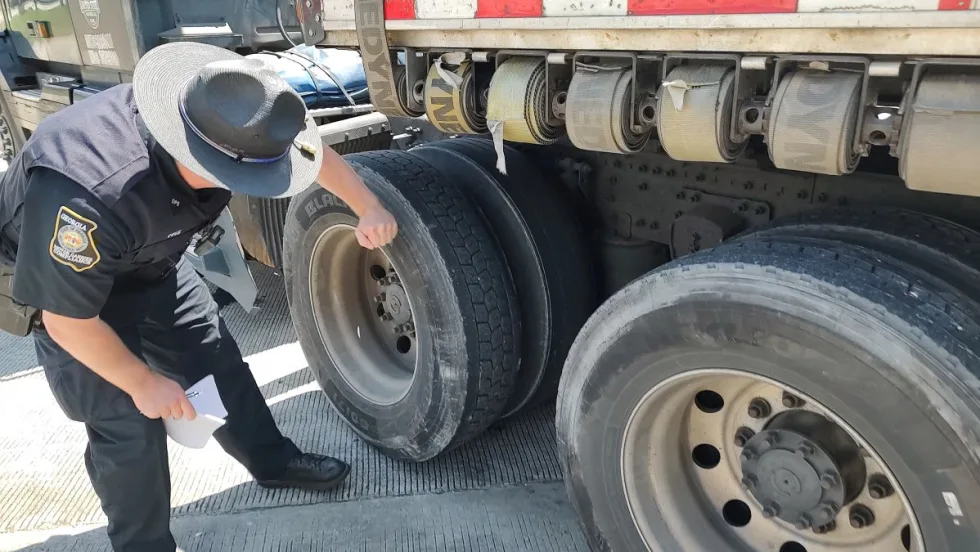
What an Out-of-Service Order Really Costs, and How to Plan for One
The repair invoice is the first number you see — and often one of the smallest. Here’s what else an out-of-service order can cost a fleet, and how planning can reduce the damage.
Read More →
International Launches Online Truck Parts Store
Fleetrite.com lets fleets and repair shops find OEM and all-makes parts, check prices and availability, and order without calling a parts counter.
Read More →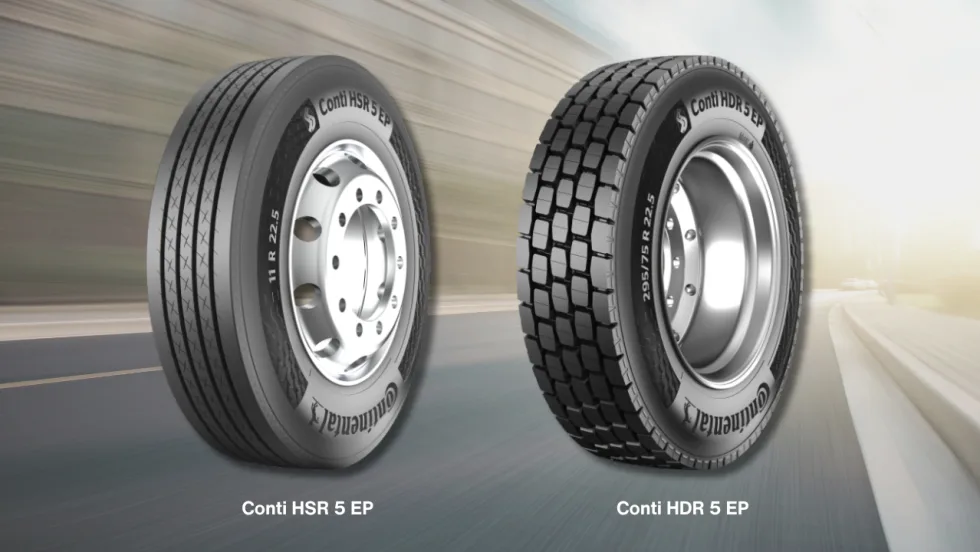
Continental Introduces New Regional Truck Tires
Continental says its new Generation 5 steer and drive tires for regional operations offer longer tread life, with estimated mileage gains of 22% and 19%, respectively.
Read More →
How AI Can Help Your Techs’ Efficiency
The technician shortage isn't going away, and no single fix can close the gap on its own. Trent Broberg makes the case that AI's real job in the shop is protecting the billable hours and job satisfaction of the techs you already have, not asking them to work faster.
Read More →
Color Match Smarter: Tools That Restore & Perform
For fleet managers and collision repair professionals keeping heavy-duty trucks on the road, getting the color right the first time isn't just about appearance — it's about efficiency, turnaround time, and bottom-line results. Discover how today's digital color tools are transforming the repair process from guesswork to precision.
Read More →
Wrong Repair Prompts Recall of Freightliner, Western Star 4x2 Trucks
DTNA is recalling more than 2,400 trucks that received an incompatible software fix instead of the hardware repair required to address brake valve corrosion.
Read More →