Could the next round of greenhouse gas reduction rules push more fleets over to wide-base single tires? It seems likely, given not only their relatively low rolling resistance but weight savings as well.
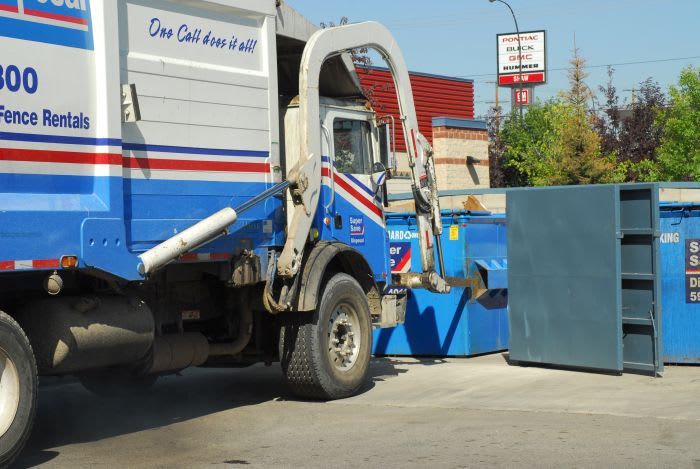
Wide-base single tires could start showing up on vocational trucks such as refuse haulers under GHG Phase 2. EPA likes the fuel efficiency, while operators like the weight savings.Photos: Jim Park
5 min to read
Wide-base single tires could start showing up on vocational trucks such as refuse haulers under GHG Phase 2. EPA likes the fuel efficiency, while operators like the weight savings. Photos: Jim Park
Could the next round of greenhouse gas reduction rules push more fleets over to wide-base single tires? It seems likely, given not only their relatively low rolling resistance but weight savings as well. While weight reduction is not necessarily a stand-alone criterion for the truck makers to gain build credits under the rules, it can be factored into the overall composition of the finished product.
Ad Loading...
“Weight savings remains the primary benefit of using wide-base truck tires,” explains Brian Buckham, general manager of product marketing at Goodyear. “Wide-base tires mounted on aluminum rims can reduce a truck’s GVWR by up to 1,100 pounds.”
In years past, fuel savings was touted as one benefit of running wide-base tires, but that dynamic is now less prevalent, thanks to the rise of super fuel-efficient duals that offer even more fuel efficiency, Buckham says. “In fact, super fuel-efficient duals have virtually eliminated the fuel savings advantage that wide-base tires enjoyed since their inception. This makes it tougher to quantify wide-base tires’ return on investment when it comes to reduced fuel consumption.”
Ad Loading...
But that’s not deterring the Environmental Protection Agency and the National Highway Traffic Safety Administration from putting them high on the list of credit-generating equipment specs. For the purposes of GHG Phase 2, the low-rolling-resistance attributes coupled with the overall weight savings make wide-base single tires a compelling choice.
“Product planners for the tire companies are looking at these rules very carefully right now,” says Tom Clauer, Yokohama’s corporate manager of commercial and OTR product planning. “It takes three years of development time to get a new tire to market. It’s trickier this time around because it’s not just long haul, but regional, urban, vocational and everything in between. I now have to start looking at the kind of rolling resistance we have on dump truck tires. I never had to worry about that before.”
Clauer says wide-base single tires could soon start appearing in that market to meet the requirements. There is already big demand for wide-single tires (the 445 tires as opposed to the 315-type tire) for weight savings in the refuse sector.
“Those fleets are looking for a lighter, very durable tire that can withstand many, many retreads,” he says. “They aren’t really concerned with fuel efficiency or rolling resistance, but EPA is going to force a new kind of tire onto that market and other markets that traditionally have not put fuel efficiency front and center.”
Building a tire with the kind of retreadability vocational and refuse haulers want will require a very durable casing, and that could compromise rolling resistance. But that’s still a few years off. The tire guys will likely get that sorted out in time, Clauer says.
Ad Loading...
Retreading
The retreading process for a wide-base single is no different from a dual, but casing integrity is a more important factor than it is for dual tires.
Meantime, while the benefits of retreading are manifest, retread rates for wide-base single tires are much lower than for standard tires in dual configurations. Perception has something to do with this, though there are some physical limitations associated with multiple retreads of these tires.
“In a broad sense, wide-base tires have a slightly lower retreadability lifecycle than traditional duals,” notes Buckham. “This is primarily due to wide-base tires operating closer to their maximum load carrying capacity compared to duals. Typically, we see fleets retreading wide-base tires once or twice in most applications in order to optimize the casing asset without over-extending it.”
According to Michelin, multiple retreading is feasible if the casings are treated well during their first go-around. Underinflation is the most likely culprit leading to the lack of casing integrity.
Information supplied by Michelin says that “a tire that is run 10% underinflated will lose 10% in tread wear and will come out of service quicker, while a tire that is 20% below the optimal air pressure is considered a flat tire.”
Running underinflated makes the tire more susceptible to casing fatigue, which could lead to a catastrophic failure or a zipper rupture. “If the tire has been run 20% underinflated, it should be removed from the vehicle and scrapped,” Michelin adds. Casing fatigue can also limit a tire’s retreadability.
Ad Loading...
It follows, then, that fleets lacking good tire management programs might be unsure of the tires’ lifetime inflation history and would therefore be reluctant to retread a wide-base single tire even once. On-road failures with these tires are more inconvenient because you’re basically stuck where you sit. Running on a flat tire will destroy the expensive wide-single wheel.
Fleets with more confidence in their tire inflation and casing management programs can enjoy several retreads, Michelin says, and for multiple wheel positions. For example, Michelin says drive tires can be retreaded for drive or trailer positions, while trailer tires can be retreaded for additional trailer-position service or to a drive position on its first retread.
“With a ratio of three trailers to one tractor, trailer tires tend to have less mileage than drive tires,” the company notes. That suggests a lot of low-mileage trailer tires could be eligible for retreading to a drive position – provided the casing is in good condition and inflation has been well managed.
Keeping wide-base tires inflated
Proper inflation is critical to casing integrity and blowout prevention, so tire inflation or monitoring systems make sense with wide-base single tires.
Given the cost of these tires and the wheels they mount on, and the mission-crippling potential of a flat, it almost goes without saying that a tire inflation and/or pressure monitoring system would be a huge advantage. Systems such as Aperia’s Halo Inflation System, Hendrickson’s TireMaax Pro, PSI from Meritor and Stemco’s Aeris system, maintain a preset pressure at all times, and can prevent or eliminate under-inflation-related casing damage, preserving retreadability.
Additionally, some of these systems are now coupled with tire pressure management systems that can easily identify a leaking tire as well as provide a temperature and pressure operating history for individual tires – a must for determining retreadability, especially for second and possibly third retreads. Systems such as Bendix’s SmarTire, Advantage PressurePro, Dana’s Spicer Optimized Tire Pressure Management System and TireStamp’s TireVigil, to name a few, will provide the low pressure alerts you need even when not coupled with an auto-inflation system, along with a rich data set for each tire.
Ad Loading...
Another solution is Goodyear’s DuraSeal puncture sealing technology. Goodyear claims it can instantly seal nail-hole punctures of up to ¼-inch in diameter in the tire’s repairable tread area. Buckham says it’s available on the G392A SSD DuraSeal + Fuel Max and the G394 SSD DuraSeal + Fuel Max tires for on-highway use.
“Underinflation is a threat to the longevity of any tire,” says Aperia CEO Josh Carter. “It’s particularly important to keep wide-single tires properly inflated, considering their cost and the potential for downtime.”
Tire compliance labels for GHG Phase 2
Tires will play a more significant role in the upcoming Phase 2 GHG reduction rules. The Environmental Protection Agency will be providing truck makers with GEM credits for equipping trucks with tires of varying degrees of efficiency and rolling resistance. Baked into those credits are a complex series of test and calculations that the tire manufacturers must perform to supply the OE with the data they need to claim their credits. The results of those tests, in very simplified form, will be displayed on a compliance label affixed to the door post of the vehicle. Vehicle owners will be required to maintain those trucks in their original compliance levels for the “reasonable” life of the vehicle.
Speaking during a mini-tech session at The ATA’s Technology & Maintenance Council’s annual meeting in February, Erin Luke, fleet sales administration manager at Peterbilt, explained what those labels will require of vehicle owners.
She indicated that vehicle owners would be required to maintain the same type of tire throughout the vehicle’s useful life. In other words, the owner may not switch tires from a low-rolling-resistance tire to a non-low-rolling-resistance tire throughout its useful life.
The “sticker does not differentiate between wide-base and dual wheels, for example, it just provides a rolling-resistance indication,” she explained. “The second owner would need to be aware of how the vehicle was originally built to ensure for the useful life of that vehicle they maintain that compliance. EPA expects that there might be some changes to that spec, for example, removing a roof fairing if you don’t need it. Despite a few exceptions, EPA will expect the second and maybe third owner of the vehicle to maintain its compliance as originally built.”
So it appears that the EPA will not differentiate between single and dual tires, provided that any tire installed meets the criteria of the originally installed tire. That suggests fleets will still be able to spec wide single tires originally and then switch them out for duals at trade time.
HDT Truck Fleet Innovator Jennie Abarca is building confidence in fleet electrification one load at a time while openly sharing the challenges she encounters along the way as a small-fleet owner.
The engine maker will gradually introduce its new Model Year 2027 diesel engines while continuing to offer current models during the transition, citing the EPA's proposed emissions rule changes.
The proposal doesn't change the tougher NOx standard, but it would revise key implementation requirements that manufacturers say have driven up costs and complicated fleet purchasing decisions.
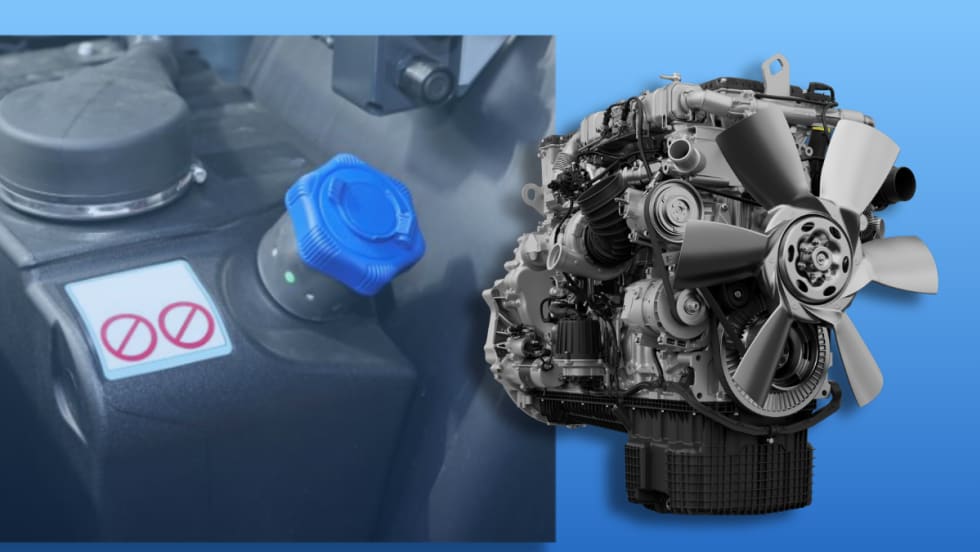
Updated diesel engine software gives truck operators more time to address emissions-system issues while staying compliant with EPA emissions standards.
Biodiesel can reduce emissions, improve fuel-system lubricity and use existing diesel infrastructure. But NACFE’s Messy Middle maintenance report says fleets must actively manage storage, cold-weather operation, filters and oil drain intervals to avoid problems.
NACFE's latest Messy Middle Powertrain Service & Maintenance report says renewable diesel gives fleets an opportunity to reduce carbon emissions without changing trucks, fueling infrastructure or maintenance practices. But technicians still need to understand several important operational differences.
NACFE’s new Messy Middle Powertrain Service & Maintenance report says keeping modern diesel engines running now depends as much on software, diagnostics and data as traditional mechanical service.
Questar analyzed a large mixed-class fleet and discovered it was wasting as much as $30 in fuel per vehicle, per day, because of mechanically degraded aftertreatment systems.