




Truck Parking Project Could Help Drivers Find Spaces
The Truck Parking Information Management Systems project is the first real attempt at a comprehensive system to help truck drivers find available nearby parking.

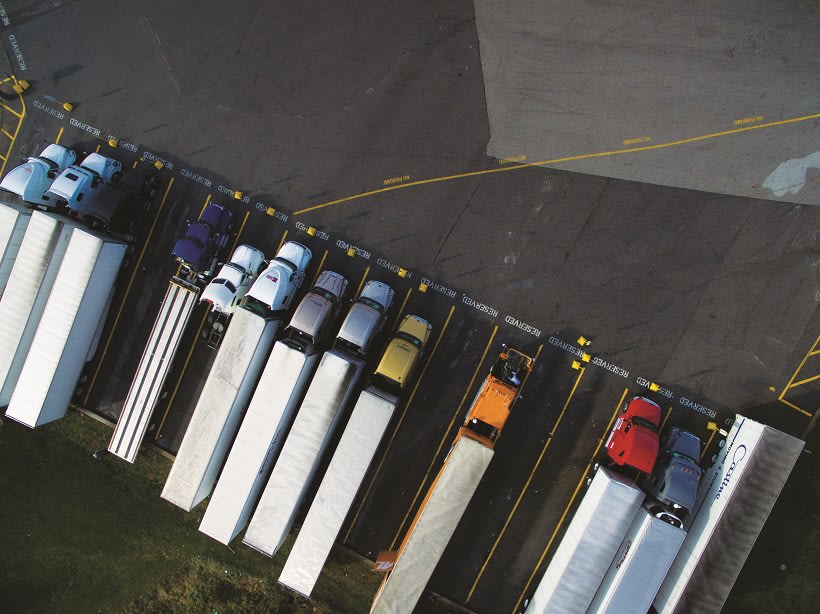
Before state governments invest in additional truck parking, the Truck Parking Information Management System will provide valuable data on where it is needed the most by efficiently filling available parking capacity where it already exists.
Photo: iStockphoto.com/skitzafrenic
Truck parking is one of those issues that continues to hover near the top of industry concerns, but finds itself just below the more pressing matters of the driver shortage, safety scores, the electronic logging device mandate, and hours of service. Perhaps this is why it has been allowed to fester for so long, putting pressure on long-haul drivers who are under the hours of service gun to find a place to take their mandatory rest breaks in peace and relative comfort.
The problem is twofold: Along the most frequently used interstate corridors, the trucking industry needs to have enough available parking for the thousands of trucks passing through each day. Some of it is provided by the states in free rest areas and the rest at truckstops — some spots are free, especially with purchase, and some for a nightly fee. But in many areas, neither parking option is adequate to meet demand.
The other issue is efficiently finding available parking so that all of that limited space is being used. With the full implementation of the ELD mandate, it is even more vital that truckers be able to find available parking in a timely manner, before their electronic timekeeper forces them to shut down or risk a violation.
A recent change by the Federal Motor Carrier Safety Administration has eased some of that pain, extending the definition of personal conveyance to allow a truck driver whose hours of service have run out more leeway in finding a place to park without it counting as a violation. But there still remains the issue of actually finding that legal place to park.
That’s the part of the problem that the Truck Parking Information Management Systems project, or TPIMS, is attempting to solve. Part of a joint initiative started in 2016 by eight of the 10 states that make up the Mid America Association of State Transportation Officials, TPIMS aims to provide a consistent, up to date, and free standard for reporting available parking along transportation corridors, the first of its kind on this scale.
Located along the busiest commercial trucking byways in the states of Kansas, Iowa, Minnesota, Wisconsin, Indiana, Michigan, Ohio, and Kentucky, TPIMS will help truck drivers quickly find available parking. Funded primarily through a U.S. Department of Transportation grant, the $28.6 million multi-state project uses a system of sensors to monitor truck parking availability at public and private rest areas and disseminates that information to truck drivers through multiple methods that include signs, mobile apps, and traveler information websites. The plan is to have the system up and running by next year. As of June 2018, the system is on schedule for a Jan. 4, 2019, launch.
The project is extensive, covering a large portion of the Midwest, but costs were consciously kept down by limiting construction to installing the digital signs that will display available truck parking at nearby rest areas. The rest is digital, broadcasting current parking information through public data feeds on top of other traffic and weather information that is already regularly provided by state DOTs.
States were given a lot of leeway in choosing which roads would deploy the parking information system. Even details such as how available parking would be monitored — via sensors, cameras, 3D analytics — were picked by each state. The system had to be simple and adaptable, easily deployable where it was needed, and expandable in the future.
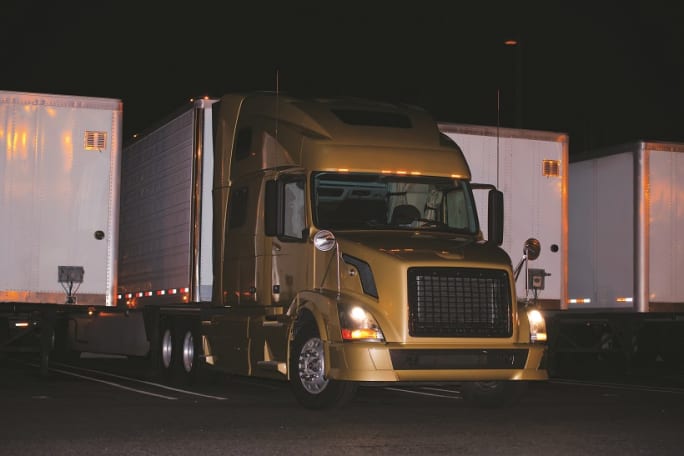
Once the Truck Parking Information System is fully implemented in 2019, it could be used by other state Departments of Transportation as a blueprint for new parking information systems. In the future they could be tied into other existing parking information systems, offering truckers comprehensive coverage across the U.S.
Photo: iStockphoto.com/vitpho
“This is a first-of-its-kind project, and we wanted it to be the national model that anyone who wanted to could plug in and play and build upon that,” says Davonna Moore, assistant bureau chief of transportation planning for the Kansas DOT and the project manager for TPIMS. “We’ve done a lot of work collectively as a group, and at this point anyone could come in and take that information and use the data format that we’re using to get this information out there.”
In fact, Florida has already taken the model and run with it and is ahead of TPIMS on deploying a similar parking information system, Moore says.
But what about the other part of the truck parking problem, the lack of parking, occupied or otherwise? By ensuring that the current available truck parking in a state is being efficiently used, TPIMS will also provide valuable information to states on what areas truly need additional capacity.
“One of our performance measures is parking utilization,” Moore says. “We know that truckers and states will say that there is a truck parking shortage. What this project will let us do is find out exactly where those locations are and where the money needs to be invested.”
The hope is that TPIMS will be able to give states the data they need to set priorities for adding truck parking capacity and improving overall freight movement, making their limited infrastructure budgets for such projects much more targeted and effective, a major sell for cash-strapped states.
Some of the eight states involved in TPIMS are further along with implementation than others, and a soft opening could go live this year, before the January launch date. Truckers and states will soon be able to tap into that data stream, and TPIMS has laid the groundwork for expansion potentially nationwide.
“We wanted this to be a national model and grow from that point — we’ve already done the hard work; there’s no need to reinvent the wheel,” Moore says.
Related: The Price of a Night's Rest
More Drivers

Truck Drivers Need More Than Another Alert
Fleets have more visibility into truck health, safety events, and driver activity than ever. The next challenge is turning all that information into useful guidance for the person who has to decide what to do next.
Read More →
FMCSA Removes 110 Truck Driver Training Schools from Certified ELDT List
Federal regulators also are targeting more than 160 additional training providers and launching a nationwide audit of third-party CDL skills testers as part of a broader crackdown on trucking fraud.
Read More →
Hours of Service Pilot Programs: FMCSA Readies for 2027 Rollout
Two pilot programs could eventually reshape hours-of-service rules, giving truck drivers options to pause their 14-hour clock or use longer split sleeper rest periods.
Read More →
Medical Cards, English Proficiency Reshape Roadcheck Violations
Medical-card violations jumped to the top of the driver out-of-service list during CVSA’s 2026 International Roadcheck, while English-language proficiency violations appeared among the leading violations for the first time.
Read More →
Driver Trust Can Make or Break the Success of Fleet Safety Technology
New Teletrac Navman research suggests that onboarding, transparency about driver data, and positive feedback can play a significant role in how commercial drivers respond to safety and coaching technology.
Read More →
EEOC Sues KLLM Over Alleged Sex Discrimination in Driver Training
KLLM is facing a federal sex-discrimination lawsuit over policies the EEOC alleges put female truck driver trainees at a disadvantage.
Read More →
FMCSA Moves to Codify English Language Requirements for Commercial Drivers
By changing regulations on English-language proficiency requirements for commercial drivers, rather than relying on a guidance memo, the FMCSA said future administrations won't be able to walk back the Trump administration's stricter enforcement with just a memo.
Read More →
Drivers Put Western Star Trucks to the Test at Star Nation Experience
Watch to get an inside look at the Western Star trucks, technology, and community behind the Star Nation Experience 2026!
Read More →
Trump Administration Looks to Put More Veterans Behind the Wheel
The Freedom Haulers program pulls together existing and expanded programs at several federal agencies to recruit veterans to drive commercial heavy-duty trucks and cut the red tape for them to get a CDL, training, and employment.
Read More →
Putting Mack’s Command Steer to the Test
A test drive of Mack’s Command Steer active steering system evaluates how it can make truck driving easier and less tiring.
Read More →