




Top Tools for the Tire Shop
Moving tire care in-house can save time and money - if you have the right tools.

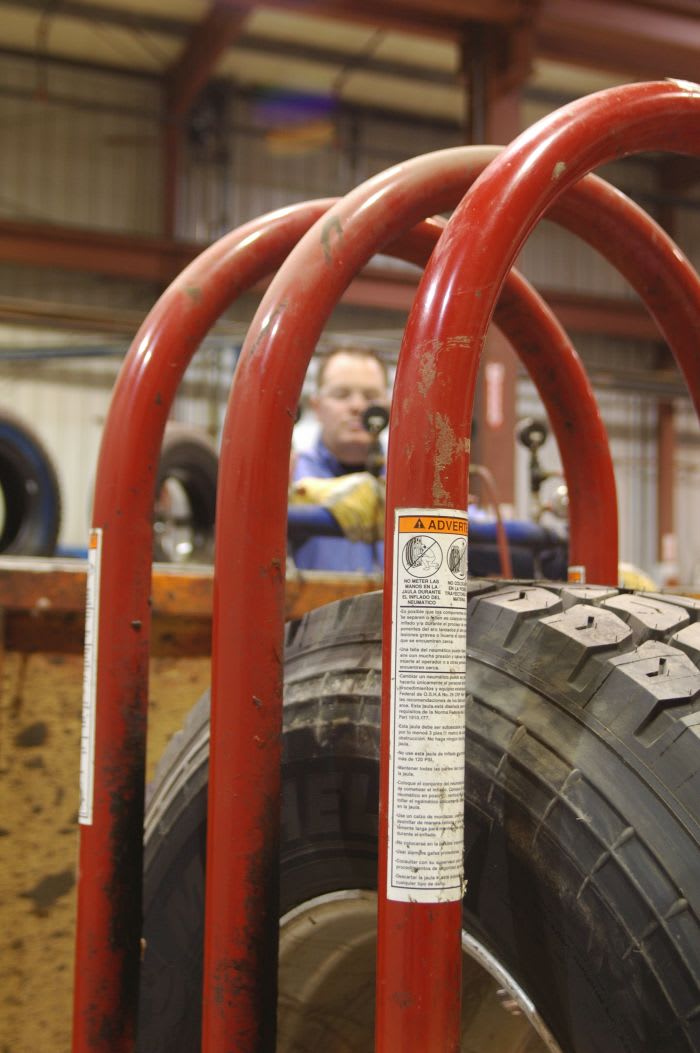
The one tool every tire shop needs is a tire inflation cage. It's designed to absorb the blast from a tire exploding during inflation.
It seems tire care is a never-ending chore, but it can be made easier. The right tools for the job can both lessen the drudgery of the task and improve the accuracy of the work. Some tools make the job safer and less labor intensive as well, which is something to consider with the worsening shortage of technicians. There are also tools that allow you to bring in-house some of the maintenance tasks you once farmed out. It might even be less costly in the long run to do some of that work yourself.
For really small fleets, the investment in a full-scale tire program might not make a great deal of sense, given the availability of many tire services, such as alignment, mounting/dismounting, balancing, etc. But as the fleet grows, taking trucks off the road for an appointment at a tire shop can be disruptive, especially if the work can be done in-house more conveniently.
The straight and narrow
Vehicle alignment, for example, is often cited as a luxury maintenance item. It's known that proper alignment reduces certain types of tire wear and can improve fuel economy. The problem is, alignment is often not performed unless there's an obvious need for it. Some fleets do annual alignments, but they are reportedly not in the majority. Cost is often cited as a barrier to more frequent alignments, as is the inconvenience of sending the truck out to have the work done.
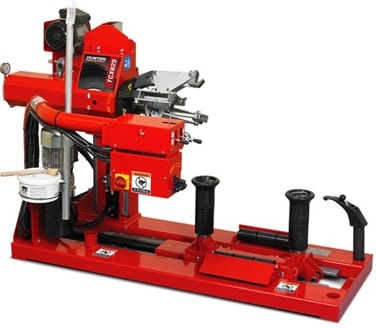
Tire mounting machines reduce the potential for tire and wheel damage by unskilled workers or improper procedures.
Dan Santry, the national sales manager at Beeline, says the cut-off point at which it makes sense to bring the equipment in-house is not as hard to reach as one might think. The minimum numbers for owning an alignment system, he says, are fleets with 100 vehicles or more that perform at least 75 alignments per year.
"The alignment itself takes almost no time at all, but you can tie up a truck and a driver or technician for hours getting the truck to an alignment shop," he says. "Plus, doing more frequent alignments on more vehicles provides better control over vehicle condition. When the equipment is right there in the shop, you will use it more and reap the benefits."
Another advantage to having your own alignment equipment is the pre-delivery inspection. It may come as a surprise to some that not all trucks and trailers are delivered set to the factory specs. You won't know that, of course until several months into the life of the vehicle when tire wear issues and driver handling complaints begin to manifest themselves. By then, it's too late. The OE likely won't honor the alignment warranty even though it may have not been correct in the first place.
It's also an opportunity to set up your trucks to your alignment specs. Factory settings are necessarily a broad and one-size-fits-all approach, but some tire industry experts maintain that trucks can perform better with a custom alignment.
"It depends a lot on what kinds of roads you operate on," says Mike Beckett of MD Alignment in Des Moines, Iowa. "Concrete interstates are a little different from asphalt paving, and they are both different from the typical two-lane we see in this country. If you spend a lot of time off-Interstate, chances are you will benefit from tuning the truck to the kind of roads you drive on."
Santry points out that trailers are often left out of the alignment equation, but they needn't be if the equipment is close at hand.
"Misaligned trailer axles will cause irregular wear on the trailer and power unit tires," he notes. "Maximum tire life is expected after a 'complete' alignment with corrections to all alignment angles including the trailer."
And as with most technology, the alignment machine need no longer take up a significant amount of precious floor space in the shop. Indeed, portable systems literally hang on the wall until you need them, taking up no space at all. They are easy to use, portable, accurate and most importantly, reasonably priced.
Check out this Fleet Cost Calculator from Beeline to see if an alignment machine of your own is in the cards.
Install and balance
Any fleet embarking on a tire program ought to look seriously at a mount/dismount machine, sometimes called a changer. Improper use of the duck-billed mallet to break tire beads can damage the tire sidewall, the bead and even the wheel itself. Automatic tire changers get the tire on and off the wheel properly and without damage. Plus, they usually feature components to lift and move the tire into position, eliminating potentially dangerous manual lifts for the technicians.
Balancing machines are another useful tool, if the fleet has a balancing program. With the numerous alternatives to static and dynamic balancing, the ROI might be a little high if there's insufficient volume to justify the expense. That said, balancing a tire/wheel assembly from the outset will never do any harm, and some of the more sophisticated balancing machines can also perform runout measurements as well as uncovering non-concentric mounting, damaged wheels and even improper matching of the high and low spots on the tire and the wheel.
"If you let the machine do its job, you'll know you have a perfectly mounted and balanced tire and wheel when you're done," says Justin Gonzalez, national HD market manager at Hunter Engineering Company.
Tire Inflation Cages
The one tool every tire shop needs is a tire inflation cage. It's designed to absorb the blast from a tire exploding during inflation.
The most important piece of equipment for any fleet tire shop is the tire cage. These are required by the Occupational Safety and Health Administration's tire shop regulations, and while they tend to be rather low-tech devices, their performance can vary.
Rock Tyson, vice president of sales and marketing at Kentool, recommends buyers look for the manufacturer's certification data to ensure the producer has a local distributor.
"Poorly made product from off-shore might look like a locally manufactured product, but if there was ever a need to make a claim or file a suit because the product failed in a fundamental way injuring or killing a worker, if they are off shore, you're out of luck," he says.
There are certain requirements for the use of tire cages, first and foremost that they are never bolted to the floor. Tyson says the cage is designed to absorb the force of an exploding tire, and the free movement of the cage helps dissipate the energy of the blast.
"If you have ever stood near a cage when a tire lets go, you'll have some sense of how much force is involved," he notes. "If the cage is bolted down, it's likely to rip away from its mounts anyway, and now you have the nuts from the mounting hardware flying around the shop as well -- like bullets."
Time & Labor Savers
From tire rotators to valve stem removal tools, there are tons of ways to save time, money and labor in the tire shop. Like the "Sky Mall" catalogs you find in airplane seat pockets, it seems there's a gizmo for nearly every facet of the tire maintenance process – except most of them really do work. Here are a few examples:
EZ Tire Rotator: A simple tire rotator placed inside a tire inflation cage allows the technician to easily roll the tire and wheel assembly into a more convenient position to connect the air chuck. Rather than wrestling it into position, he or she simply rotates the tire on the rollers until the valve is within easier reach.
Inflating multiple tires: Why top up just one tire at a time when you can do five at once? The Mobile Tire Pressure Equalizer from IPA Inc. lets the technician attach the air chuck and then set a target pressure and the system does the rest. The company says the regulators and gauges are accurate for consistent inflation pressure across multiple tires, say, four tires in a drive-axle group as well as the steer tire.
Reaching inside valve stems: New from Kentool is a rather ingenious device called the Valvecapper. Rather than a tech twisting and contorting to reach the inside valve stem for a manual pressure check, the Valvecapper slips over the valve cap for easier removal. The other end of the little blue wand is a valve core remover, which thanks to its 11-inch length, slides into the inner valve stem easily, and the parts are not dropped in the process.
Instant pressure and tread depth: There's a system on the market called Pneuscan (Pneu is the French word for tire) that measures tire pressure and tread depth and then populates a tire maintenance database, just by driving over an in-ground sensor plate. The system contains information about the load, profile and pattern of each type of tire in the fleet, and as the vehicle drives over the sensor plates, tire pressure and tread depth measurements are read and sent to the system for calculation.
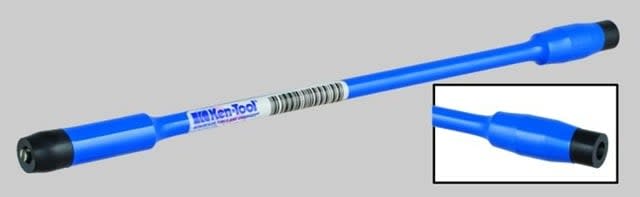
Kentool's ValveCapper makes life a little easier for technicians.
Pneuscan claims the system can quickly display tire pressure and tread depth readings for each tire. If results are within specified tolerances, a green signal will indicate the tire is cleared for driving. A red signal indicates the tire requires service. As an option, a paper receipt of the results can be generated.
That's just a sampling. Companies such as IPA and Kentool offer reams of similar labor-saving products such as bead seaters, tire mounting machines and more, that can help make tire maintenance a little less time-consuming and labor-intensive.
More Maintenance

Oil Crisis Squeezes Trucking Lubricant Supplies
Fleets report higher lubricant costs as Middle East disruptions tighten supplies of ingredients used in synthetic engine oils and some driveline lubricants.
Read More →
Shell Prepares Rotella Oils for 2027
New CL-4 and FB-4 formulations will begin arriving in early 2027, with improved protection against oil breakdown, wear and deposits, according to Shell.
Read More →
Mack Expands Extended Coverage With Four Chassis System Plans
Mack Trucks' new system-specific coverage options allow heavy-duty fleets to select protection for driveline, cab, HVAC, electronics, and advanced safety components.
Read More →
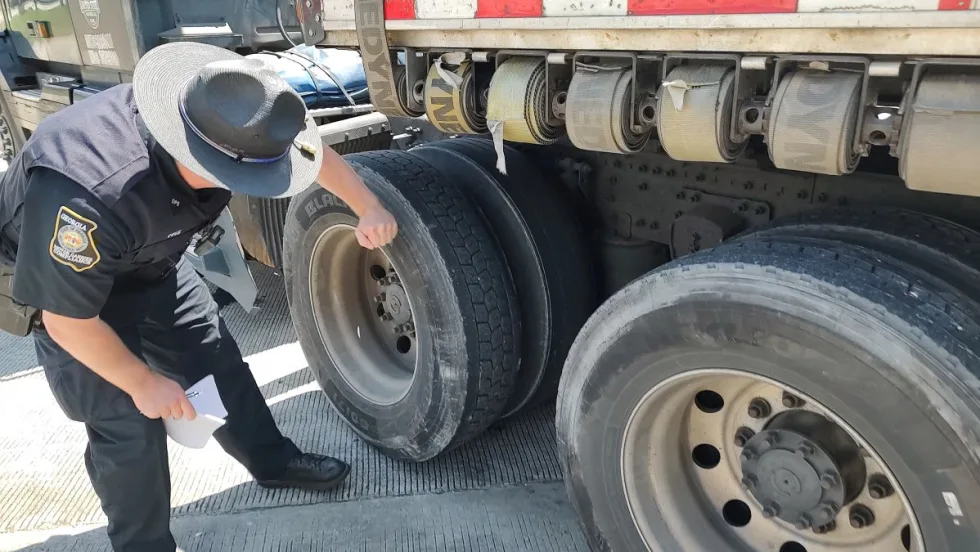
What an Out-of-Service Order Really Costs, and How to Plan for One
The repair invoice is the first number you see — and often one of the smallest. Here’s what else an out-of-service order can cost a fleet, and how planning can reduce the damage.
Read More →
International Launches Online Truck Parts Store
Fleetrite.com lets fleets and repair shops find OEM and all-makes parts, check prices and availability, and order without calling a parts counter.
Read More →
Continental Introduces New Regional Truck Tires
Continental says its new Generation 5 steer and drive tires for regional operations offer longer tread life, with estimated mileage gains of 22% and 19%, respectively.
Read More →
How AI Can Help Your Techs’ Efficiency
The technician shortage isn't going away, and no single fix can close the gap on its own. Trent Broberg makes the case that AI's real job in the shop is protecting the billable hours and job satisfaction of the techs you already have, not asking them to work faster.
Read More →
Color Match Smarter: Tools That Restore & Perform
For fleet managers and collision repair professionals keeping heavy-duty trucks on the road, getting the color right the first time isn't just about appearance — it's about efficiency, turnaround time, and bottom-line results. Discover how today's digital color tools are transforming the repair process from guesswork to precision.
Read More →
Wrong Repair Prompts Recall of Freightliner, Western Star 4x2 Trucks
DTNA is recalling more than 2,400 trucks that received an incompatible software fix instead of the hardware repair required to address brake valve corrosion.
Read More →
Truck Drivers Need More Than Another Alert
Fleets have more visibility into truck health, safety events, and driver activity than ever. The next challenge is turning all that information into useful guidance for the person who has to decide what to do next.
Read More →