




Tips on Using and Caring for Your Torque Wrench
A torque wrench is a precision instrument designed to apply a specific amount of force to a fastener
A torque wrench is a precision instrument designed to apply a specific amount of force to a fastener.
Whether tightening head bolts on an automobile engine, lugs for tire and rim installation or inspecting fastener tolerances on high-performance equipment, it is extremely important that proper care is used.
Guidelines are typically provided noting acceptable torque ranges, the order in which specific fasteners are tightened and the number of times a fastener must be tightened and loosened to ensure uniform torque application.
Failure to properly torque fasteners can lead to equipment damage, personal injury or worse. With proper care, a high-quality torque wrench should provide accurate measurements for many years.
It is important to follow acceptable maintenance and use practices, such as:
- Safety glasses or goggles should be worn at all times when using any hand tool.
- Always follow the manufacturer's directions regarding torque direction, proper force, torque pattern/sequence, use or non-use of lubrication on fasteners and torque "tighten/release" cycles.
- Do not exceed the recommended working range of the torque wrench. Reliable measurements are based on a percentage of the working range. In general, most mechanical wrenches have a useable range from 20% to 100% of full scale. Most electronic wrenches have a useable range from 10% to 100% of full scale.
- Do not use accessories or handle extensions unless specifically allowed by the torque wrench manufacturer.
- Take time to inspect the tool and check for worn or cracked sockets. Properly lubricate and replace worn parts.
- Avoid dropping or sliding a torque wrench. Dropping a torque wrench on a hard surface can cause the instrument to lose reliable calibration. If you suspect that a wrench has been dropped, have the tool inspected by the manufacturer or reputable calibration service.
- Always store a torque wrench in a protective case and/or location when not in use.
- Avoid exposure to temperature extremes, high humidity, fluid immersion and corrosive environments.
- If using a click-type torque wrench, always store it at the lowest level on the scale.
- Avoid marking, etching or placing labels on torque wrenches.
- Use a torque wrench to apply a specific torque value during the final assembly process. Do not use a torque wrench as the primary means of tightening or loosening fasteners.
- As most torque wrenches are length specific, always grasp the torque wrench in the center of the handle. If two hands need to be used, place one hand on top of the other.
- Apply torque in a slow, methodical manner and avoid sudden, jerking movements.
- When the wrench signals (by clicking, beeping or lights) that a specific torque has been reached, stop pulling immediately.
After 5,000 cycles or up to one year of use, whichever comes first, have your torque wrench inspected and recalibrated by the manufacturer or reputable calibration service.
Information courtesy of Snap-on Tools.
More Maintenance

Truck Drivers Need More Than Another Alert
Fleets have more visibility into truck health, safety events, and driver activity than ever. The next challenge is turning all that information into useful guidance for the person who has to decide what to do next.
Read More →
The Maintenance Checks Trucking Fleets Should Prioritize Before Fall Freight Picks Up
Making it through August isn’t the same as being ready for the next several months of operation. Find out what systems may have suffered from summer heat and need to be checked out before fall.
Read More →
What Three Fleets Are Doing Differently When Buying Truck Parts in 2026
With freight improving but costs still climbing, fleet maintenance executives explain how they're balancing price, quality, and supplier relationships.
Read More →
Paccar Recalls 2027 Trucks Built This Summer for Possible Electrical Problem
The nearly 6,000 Kenworth and Peterbilt trucks in the recall could potentially lose engine power, among other things.
Read More →
Will API PC-12 Oil Change Trucking Fleet Maintenance?
The new API PC-12 heavy-duty engine oil category reflects the changing demands of modern diesel engines. But fleets like Foodliner are looking to getting their own data before making decisions on adopting the new oils and questions such as extending oil drain intervals.
Read More →
Brake Safety Week to Focus on Drums and Rotors
Commercial vehicle inspectors are focusing on truck brakes during CVSA's Brake Safety Week, August 23-29.
Read More →
Possible Battery-Cable Fires Prompt Recall of 15,000+ International MV and HV Trucks
On the recalled vehicles, manufacturing variations can cause the battery interconnect cable to contact the auxiliary stud and hold down the bracket.
Read More →
Rush, MCT Team Up to Grow Refrigeration Service Network
The joint venture will operate MCT's network of Carrier Transicold dealerships and mobile service locations, with the companies promising greater service capacity and uptime for refrigerated fleets.
Read More →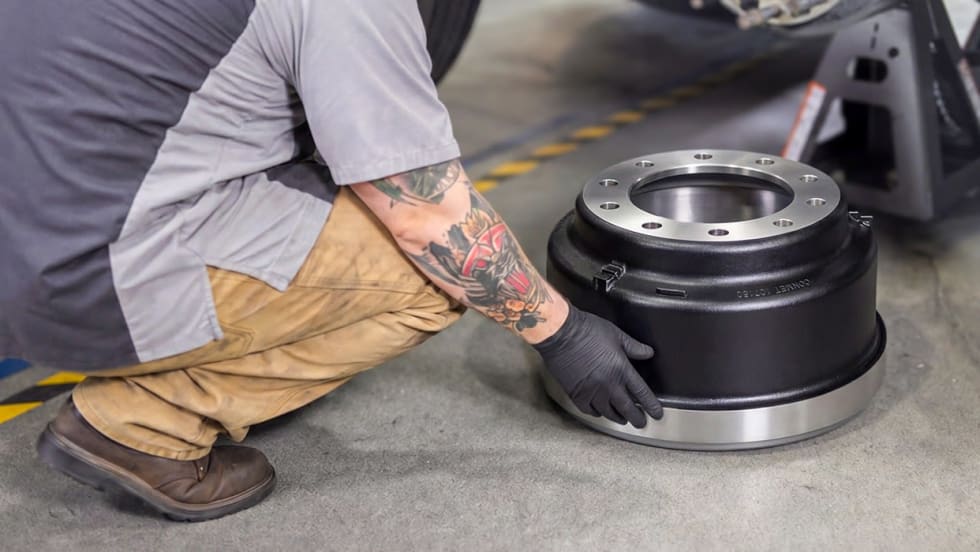
ConMet Expands Aftermarket Brake Drum Lineup With TruCast
A new heavy-duty truck brake drum option in the aftermarket gives customers more flexibility within the ConMet product family.
Read More →
Mack Expands Premium Service Contract Coverage to Medium-Duty MD
With a service contract, inspections, preventive maintenance and repairs can be handled in a single visit instead of multiple ones.
Read More →