




The Growth of Trailer Pools
Drop-and-hook and trailer pools aren’t exactly new ideas, but technology has made it possible to vastly expand their use.

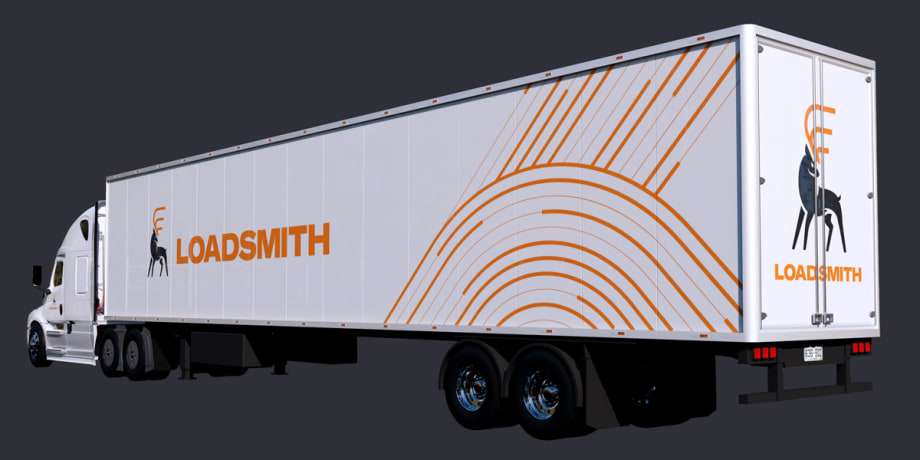
Loadsmith, a third-party capacity-as-a-service logistics platform for shippers and carriers, recently signed a deal with Wabash to increase the number of Loadsmith trailers through Wabash's Trailers as a Service.
Photo: Loadsmith
Drop-and-hook and trailer pools aren’t exactly new ideas. But technology such as trailer telematics, load-matching apps offering “power-only” runs, and route optimization algorithms have made it possible to vastly expand their use.
Shippers increasingly have been using drop-and-hook strategies, where shippers have extra trailers that get loaded and unloaded without a truck driver having to wait.
However, most motor carriers with five trucks or less rarely have the trailers to be able to participate in a drop-and-hook program in a traditional sense, because they need those trailers to be rolling all the time in order to make the business work, explains Grant Goodale, co-founder and carrier experience officer of Convoy.
“We had this idea that if we could flex trailer capacity efficiently and automatically across shippers and across the country, there was a massive efficiency gain to be unlocked," Goodale said. "Convoy Go [launched in 2020] was the outgrowth of that insight."
Convoy Go and other “power-only” apps allow small carriers to pick up a loaded trailer, or pick up an empty trailer and take it to a shipper, and be able to move more efficiently into and out of shipper facilities.
Loadsmith calls its third-party tech-enabled brokerage offering “capacity as a service” — a trailer pool without the capital investment. Carriers can book, track, and monitor trailers in real-time through the mobile Loadsmith Driver App and Carrier Portal.
Some other trailer pool and power-only options include J.B. Hunt 360box, Schneider FreightPower, and Transfix Drop.
This article appeared in the March 2023 issue of Heavy Duty Trucking, as part of the "How Freight Movement is Changing" series.
More Fleet Management

Kodiak Lines Up Fleets for Driverless Trucking
An agreement for 75 trucks, a new Texas freight lane, and progress on safety validation move Kodiak closer to its planned driverless highway launch.
Read More →
ITS Logistics Settles Religious Harassment Case
The Nevada-based logistics firm agreed to pay more than $396,000 to settle a religious harassment charge involving an employee's Jewish identity.
Read More →
Your Trucks Are Busy. That Doesn’t Mean They’re Winning.
High utilization doesn’t always mean strong margins. Looking beyond the current load can help fleets make better dispatch decisions and get more value from each truck’s time.
Read More →
Why This Trucking Recovery Is Different
Freight demand remains sluggish, but rising costs and tougher enforcement have taken enough capacity out of the market to change the outlook for motor carriers.
Read More →
Platform Science Adds Dispatch and Safety Tools
Four additions to PS Fleet help fleets monitor loads, manage driver coaching, share truck locations and adjust video system settings.
Read More →
PrePass Intelligence Mines Fleet Bypass, Toll and Safety Data
PrePass Intelligence helps fleets measure bypass savings, flag potential toll overcharges, and spot suspicious transactions by combining data from separate systems.
Read More →
Motive Adds AI Agents for Fleet Operations
New tools automate follow-up on fleet data, from maintenance work orders to driver alerts, with two-way voice conversations planned for later this year.
Read More →
Can You Beat Our Trucking Trivia Challenge?
Test your truck knowledge with 19 trivia questions from Heavy Duty Trucking Exchange. Can you keep up with the fleet pros?
Read More →
BeyondTrucks Adds Rules Checks to Dispatch
New Compatibility Engine checks driver qualifications, equipment requirements and fleet policies before loads are dispatched.
Read More →
Diesel Prices Hijack Trucking’s Worry List
ATRI’s annual survey finds cautious optimism about freight, but diesel costs, litigation, and insurance continue to squeeze fleets. Drivers have different priorities on several issues.
Read More →