




The Art and Science of Electrical Diagnostics on Trucks
Today’s complex electrical and electronic systems on heavy-duty trucks require a surgical approach to troubleshooting, some cutting-edge tools — and a great deal of skill. Are you up to speed?

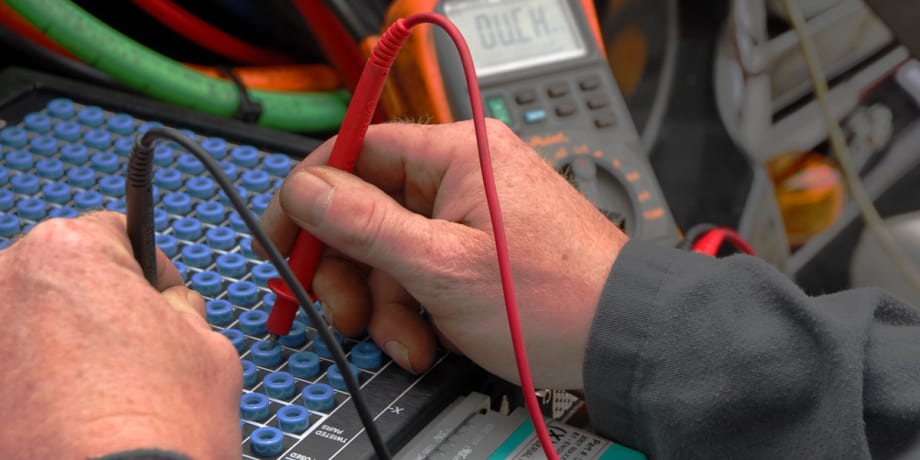
Electrical troubles don’t always present in a way that leads intuitively to the root of the problem. Semi-skilled technicians can do more harm than good with improper electrical repairs.
Photo: Jim Park
It takes more than luck to successfully diagnose electrical and electronic faults. The interconnectedness of today’s systems and components means that symptoms don’t always present in ways that lead intuitively to the source of the problem. A partially corroded wire here can shut down a circuit over there.
Even seemingly routine problems, such as rubbed-through or chafed wires, can cause calamities at some remote end of a system. If corrosion sets into the wire, it will increase resistance in the circuit. If some sensitive bit of electronics, susceptible to changes in impedance or voltage drops, is wired into that circuit, technicians may see fault codes that don’t point directly to corroded wiring.
Interconnectedness isn’t going to change. It’s making diagnostics very difficult. That’s why some technicians are abandoning their circuit-tracing tools and multimeters for more sophisticated diagnostic tools such as oscilloscopes and thermal imaging cameras.
“The tools we used back when I was on the shop floor are barely adequate anymore,” says Jim Pinder, corporate fleet director at Erb International, based in Baden, Ontario, about 40 miles northwest of Toronto. “Multimeters are fine for some jobs, but with all the multiplexing going on — sending multiple signals down the same wire — and the much lower voltages we’re seeing, we’re finding real benefits to tools like oscilloscopes now.”
An oscilloscope can take diagnostics to a much higher level, Pinder says, saving countless hours in hit-and-miss voltage and resistance tests and tons of money on improper repairs. It allows technician to physically see what is happening within the CAN network.
Oscilloscopes are still rare birds in most truck shops, but leading fleets like Erb and Canada’s Bison Transport sing their praises.
“It’s surprising what you can diagnose with an oscilloscope versus a multimeter,” says Tony DeGroot, Bison’s manager of technical training and product development. “They are widely used on the automotive side where they have a lot more sensors. You can see the interrelationship between two sensors, how they work, what the peaks and dwell times are, and everything else you need to know.”
Oscilloscopes are not cheap, but they can be incredibly useful for troubleshooting networked systems, sensors, and intermittent wiring issues. For example, the integrity of the CAN bus can be easily verified with an oscilloscope. It allows the technician to physically see what is happening on the network — not just testing voltage and resistance and hoping for the best.
Pinder says oscilloscopes are incredibly powerful tools in properly trained hands. “Every shop should have one and provide training on how to use it,” he says.
What to Know About Thermal Imaging
Pinder says a couple of the younger technicians (surprise, surprise) in his shop started using thermal imaging cameras or infrared thermometers to trace wiring problems, and found they work spectacularly well.
“Any part on a truck where excess or lack of heat might indicate a problem can be revealed by checking temperatures with a thermal imager,” he says, like he’s discovered the holy grail of diagnostic tools.
Corrosion and/or broken strands of wire increase resistance, which creates heat. The resulting hot spots in wires show up readily when scanned with a thermal imaging device.
In one example, Pinder said he had an electrical HVAC system that would run no longer than about 10 minutes before cutting out. One of his younger technicians shot a wiring harness with the thermal imager and found a hot spot. Closer physical inspection revealed a corroded section of wire caused by moisture from the AC system.
“There is a list of various causes for this issue, but the technician pulled out a thermal imager and without cutting a single zip tie or even reaching for a multimeter, he found a hot spot in a section of wiring that runs to the air conditioning system,” Pinder says. “After pulling the loom, he could see where it had rubbed through the casing on the wire and allowed moisture to get in, causing corrosion — and in return, resistance, which we know creates heat.”
Thermal imaging tools are also very useful for checking battery terminals and other electrical connections. In fact, Pinder says they are true multi-purpose tools. They are good for finding hot cups on failing universal joints, checking the shock absorbers and wheel bearings, and even verifying that a set of dual tires are somewhere close to properly inflated (an under-inflated tire will run hotter than the one beside it). They can even scan tire tread surfaces for warm spots after driving. That can reveal potential alignment problems as the tread face gets warmer in areas of higher friction.
But I digress.
Are Test Lights and Multimeters a Necessity for Fleet Maintenance?
Test lights and multimeters are must-haves — along with the proper training on how to use them. That’s sometimes lacking.
Kirk Altrichter, executive vice president of fleet services at Keenan Advantage Group, says his company is now investing heavily in training around the proper use of meters and all of their functionality. He says they are a necessity.
Some technicians can be misled by tools they don’t fully understand. Some circuits will show 12 volts when checked with a test light or a multimeter, which can lead a technician to assume there’s nothing wrong with the circuit. However, if you put a load on the circuit, such as when using a set of dynamic test leads from LoadPro, for example, the voltage might drop to something like three volts.
For example, a corroded 18-gauge wire with just four strands left intact will still show source voltage at the connector. In most cases it will still show zero ohms of resistance. However, when a load is applied to the circuit, the remaining strands of wire will not be able to supply the demand and the voltage from the source will drop significantly. This can be observed on the multimeter and would indicate what kind of problem the technician is facing.
“Without a load, an LED test light will light up at three volts,” says Bison’s DeGroot. “To get an accurate picture of what really going on, you probably need to put a load into the circuit.”
He says if you don’t have dynamic test leads, you can loop an old halogen headlight into the circuit to provide the load.
What to Watch Out For During Electrical Diagnostics
Wiring in a modern truck carries more than just volts and amps to various components. Many of those wires also carry multiplexed signals with messages to and from various controllers on the truck. Multiplex communications and the sensors that produce them can be very sensitive to voltage and resistance.
Think of the wiring bundle that runs to the driver’s door. It may have a dozen wires in it, and it sometimes opens and closes dozens of times each day. With all that movement, it’s easy to see why something in that bundle might fail, DeGroot says.
“Multiplexing is based on voltages. It’s no longer just this wire doing this function; it responds to different voltages,” he explains. “When you create resistance within a wire because it’s corroded or partially broken, strange things start to happen.”
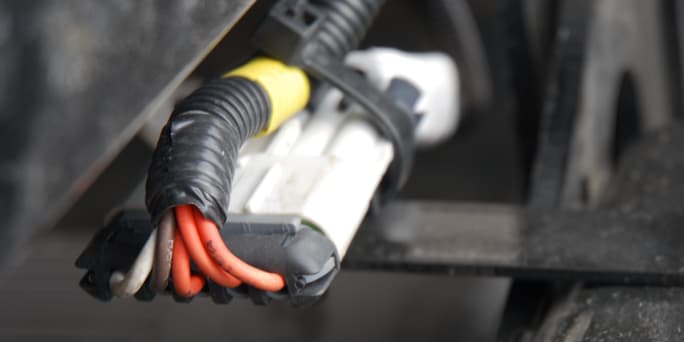
When checking connectors for possible corrosion or shorts, try using a thermal imager or infrared thermometer rather than breaking it open and risk damaging the seals.
Photo: Jim Park
Erb’s Pinder cautions that using load-testing equipment to test the condition of a wire using battery-level voltage can damage sensitive electronics.
“Technicians can simulate an electrical load on both the source and ground of the circuit, which is a great way to test for power sources that are connected to battery voltage. However, you need to be careful when using it on voltage supplied by control modules, and under no circumstances should it be used on datalink wiring.”
That’s just one more thing to worry about, and all the more reason to ensure your electrical technicians are properly trained.
Electrics is one aspect of truck repair where a little bit of knowledge can be more harmful than helpful. Electrical troubles don’t always present in a way that leads intuitively to the root of the problem. Because of the complex nature of modern electrical and electronic systems, unskilled, lazy, or even overconfident technicians can waste tons of time and money chasing ghosts or replacing perfectly good parts.
This article appeared in the November/December 2022 issue of Heavy Duty Trucking.
More Maintenance

Color Match Smarter: Tools That Restore & Perform
For fleet managers and collision repair professionals keeping heavy-duty trucks on the road, getting the color right the first time isn't just about appearance — it's about efficiency, turnaround time, and bottom-line results. Discover how today's digital color tools are transforming the repair process from guesswork to precision.
Read More →
Wrong Repair Prompts Recall of Freightliner, Western Star 4x2 Trucks
DTNA is recalling more than 2,400 trucks that received an incompatible software fix instead of the hardware repair required to address brake valve corrosion.
Read More →
Truck Drivers Need More Than Another Alert
Fleets have more visibility into truck health, safety events, and driver activity than ever. The next challenge is turning all that information into useful guidance for the person who has to decide what to do next.
Read More →

The Maintenance Checks Trucking Fleets Should Prioritize Before Fall Freight Picks Up
Making it through August isn’t the same as being ready for the next several months of operation. Find out what systems may have suffered from summer heat and need to be checked out before fall.
Read More →
What Three Fleets Are Doing Differently When Buying Truck Parts in 2026
With freight improving but costs still climbing, fleet maintenance executives explain how they're balancing price, quality, and supplier relationships.
Read More →
Paccar Recalls 2027 Trucks Built This Summer for Possible Electrical Problem
The nearly 6,000 Kenworth and Peterbilt trucks in the recall could potentially lose engine power, among other things.
Read More →
Will API PC-12 Oil Change Trucking Fleet Maintenance?
The new API PC-12 heavy-duty engine oil category reflects the changing demands of modern diesel engines. But fleets like Foodliner are looking to getting their own data before making decisions on adopting the new oils and questions such as extending oil drain intervals.
Read More →
Brake Safety Week to Focus on Drums and Rotors
Commercial vehicle inspectors are focusing on truck brakes during CVSA's Brake Safety Week, August 23-29.
Read More →Possible Battery-Cable Fires Prompt Recall of 15,000+ International MV and HV Trucks
On the recalled vehicles, manufacturing variations can cause the battery interconnect cable to contact the auxiliary stud and hold down the bracket.
Read More →
Rush, MCT Team Up to Grow Refrigeration Service Network
The joint venture will operate MCT's network of Carrier Transicold dealerships and mobile service locations, with the companies promising greater service capacity and uptime for refrigerated fleets.
Read More →