




Speed AND THE LAW
Former State Troopers say split speeds make truckers `the fall guy;` predict rise in speed trap enforcement
Now that speed limits have been increased on many interstate highways and a nationwide speed limit no longer exists, truckers, four-wheelers and law enforcement officers alike are constantly adjusting to a changing dynamic on the road. Will the revamped speed limits and car/truck speed limit differentials truly promote safety on the highway?
Norman Fulcher and Sheila Moak, authors of the recently published No Limits — Fighting Speeding Tickets offer more than just an educated opinion on the matter. Fulcher spent 12 years as a Highway Patrol Trooper with Texas Department of Public Safety, while Moak worked as a Wyoming Highway Patrol Officer.
Both agree with the speed limit hike. "Drivers and vehicles have changed in the 20 years since the 55-mph speed limit was instituted," Moak says. "Vehicle safety features like antilock brakes, airbags and even more efficient fuel consumption make the 55-mph speed limit outdated."
Split speeds, however, are another matter. Though Moak and Fulcher understand the idea behind split speeds, they believe the differentials are a detriment to safety, interrupting the smooth flow of traffic and leading four-wheelers to weave dangerously to pass slower-moving trucks.
As a trooper, Fulcher often issued "impeding the flow of traffic" citations to motorists who drove too slowly, blocking other vehicles. He says that this dangerous situation is exactly what's being created and advocated by car/truck speed limit differentials, as truckers are forced to travel at slower speeds than the majority of vehicles on the highway.
Fulcher says split speeds make truckers "the fall guy," claiming to make the roadways safer by not letting the trucks drive fast. "But statistically, truckers are the safest drivers," Fulcher says. "In the 81/2 years I worked the road, I responded to only two trucking accidents, but saw several car accidents each day. It doesn't make sense that we impede the truckers when the car drivers — who primarily cause the accidents — are being allowed to drive 65. It's like giving the bad guys the guns and saying, "go enforce the laws.' People always [tailgate] truckers, claiming they're driving too slow. But today, truckers are just obeying the law. They're driving at their legal speed limit."
SPEED & CITATIONS
Billed as an insider's guide covering everything from traffic radar to contesting tickets in court, No Limits — Fighting Speeding Tickets also details common mistakes made by officers due to radar fallibility and poor training.
Moak claims the new limits will add to these errors. "With the changes in speed limits, there has also been an increase of enforcement awareness," she says. "An increase in speeding tickets is also an increase in mistakes — various government and consumer groups have conducted studies that conclude approximately one in four tickets are issued incorrectly. These statistics have a direct impact on the trucking industry."
She and Fulcher believe truckers may pay for improper use of radar. Fulcher says officers should only use it as a measuring tool to confirm visual observations. But "often, radar is used in the opposite manner," he says. "The officer watches the radar unit, sees an excessive speed in the display window and then pulls over the first [vehicle] that comes by. This method creates the atmosphere for many mistakes." Mistakes which can prove costly for truckers, particularly if they're receiving speeding citations based on four-wheelers' excessive speeds.
To safeguard themselves against this situation, Moak tells truckers to not only obey posted speed limits, but to be aware of the surroundings and cautious in areas where radar may be used — freeway overpasses, on-ramps at the edges of large cities and construction zones. Fulcher adds that truckers should warn one another about notorious speed traps.
A speed trap is essentially a patrol or zone specifically designed to nab speeders. Questions of ethics arise when officers use radar incorrectly, or employ "deceptive" tactics in their quest to issue tickets. As an example, Fulcher mentions Florida Highway Patrol officers under fire recently for disguising themselves in orange highway maintenance uniforms and hiding radar guns behind umbrellas to catch speeders.
Though this practice may not be ethical, Fulcher thinks more states will employ such tactics to generate more speeding tickets — a response to original concerns that the new speed limits might lead to a drop in citations and therefore, a drop in state revenue.
He says that states have already "lowered the tolerances," eliminating the 10-mph leeway that motorists are traditionally allowed before a citation is issued. "Officers may now allow a 3-5 mph leeway before writing a ticket, but only to compensate for speedometer differences." And truckers, Fulcher adds, are often a trooper's favorite target since most drivers are only traveling through the state and will not return to contest the citation.
SPEED & SAFETY
Both Fulcher and Moak agree that it's the car drivers — not the truckers — who pose the threat.
Montana, for example, posts no daytime speed limits and allows motorists to travel at whatever speed they deem "safe and prudent." Is this subjective limit safe? "A trucker with 15 years' safe driving experience can drive 75-mph and that might be safe and prudent, but a 16-year-old reckless driver in a hotrod may do 65 and not be safe," she says. "It's a question of judgement."
Often, Fulcher says, truckers are the victims of the poor judgement of inexperienced motorists. He cites the example of a trucker who literally gave his life to avoid running down a four-wheeler who cut him off. "The solution to this boils down to training and education. Slowing trucks down is not the way to increase safety on the roadways," Fulcher says.
"We need to improve education for lay people — truckers already get the proper training. I hate to see truckers getting the bum rap. The Commercial Driver’s License program was designed to "professionalize' truckers. But in all my years working the road, I've seen nothing but trucking professionals. It's the car drivers that we have to educate."
More Fleet Management

How Innovative Trucking Leaders Turn Change Into an Advantage
As the pace of change accelerates in trucking, the fleets that adapt best have more than the latest technology. They have cultures that embrace improvement.
Read More →
Freight Broker Bonds Just Got Harder to Get. Here's What That Means for Your Fleet.
When it gets harder for a freight broker to prove they are financially sound, the ones who cannot clear that bar get pushed out of the market. And those are exactly the brokers who used to leave motor carriers holding the bag.
Read More →
Long-Awaited Canadian Border Bridge to Open in Detroit
For trucking, the bridge opening should offer immediate improvements in efficiency and reliability, with new customs facilities, expanded inspection capacity, and direct freeway-to-freeway connections.
Read More →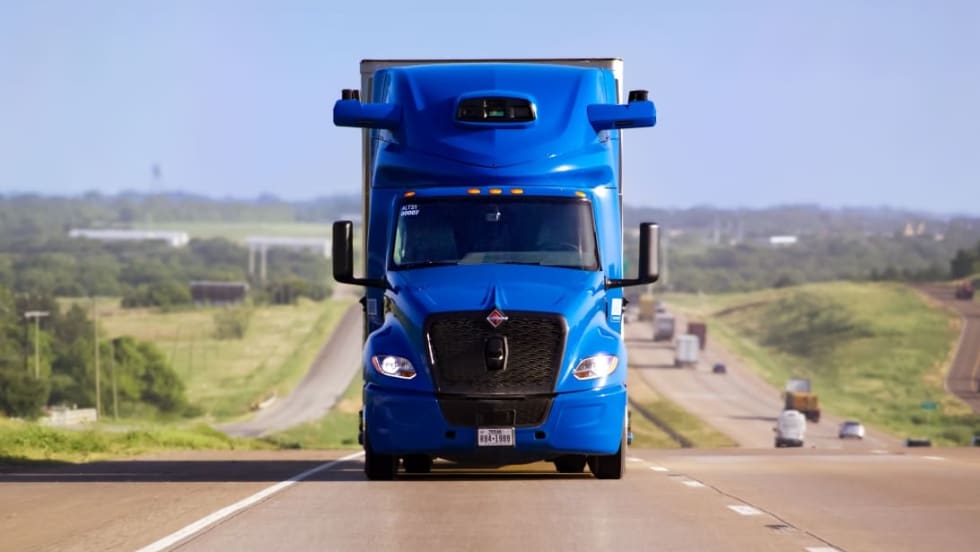
Aurora Rolls Out Next Generation of Driverless Trucks for Commercial Freight
Aurora's latest autonomous trucks it's rolling out with International feature lower-cost hardware designed for a million miles as the company expands commercial driverless freight operations across the U.S. Sun Belt.
Read More →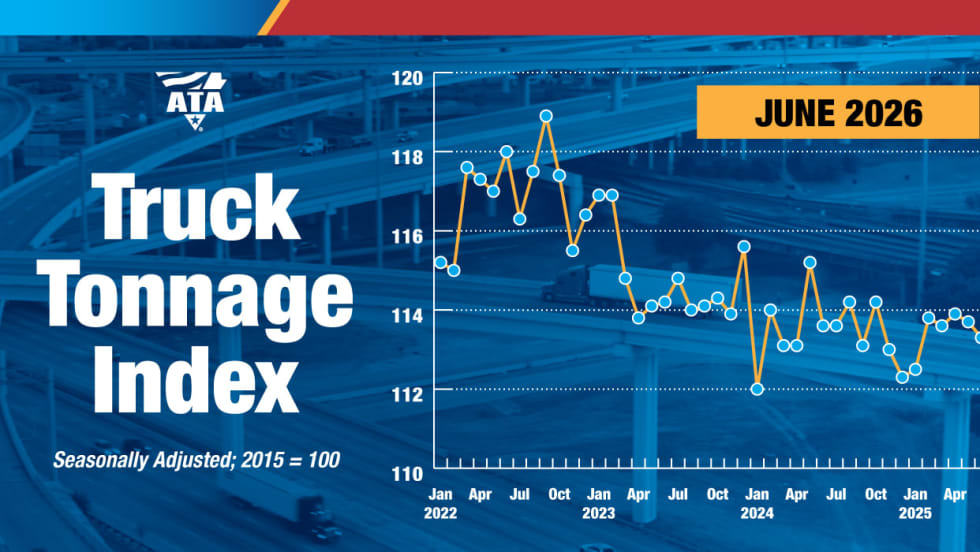
Freight Tonnage Down, Rates up, as Lower Capacity Powers Trucking Recovery
The recovery from the freight recession continues to be driven by reduction in capacity rather than by increased demand.
Read More →
Think Your Trucking Fleet Isn't Using Much AI? Think Again
Shadow AI — the use of unauthorized artificial intelligence tools at work — is becoming increasingly common, putting sensitive company data at risk. Learn how trucking fleets can protect sensitive data while embracing AI.
Read More →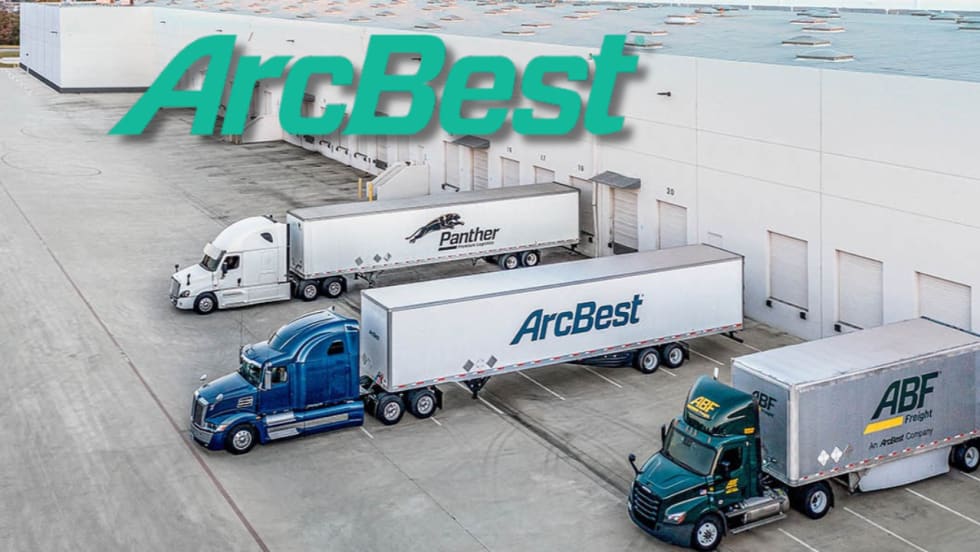
ArcBest Consolidates Brands, Cuts Workforce
The company will bring three business units under the ArcBest brand, eliminate about 2% of positions, and expects the changes to generate $40 million in annual savings.
Read More →
Trucking Fleets Faced Record Operating Costs During Third Year of Freight Recession
ATRI's annual operational cost report shows carriers trimmed fleets, delayed equipment purchases, and ran older trucks as expenses continued to outpace freight rates.
Read More →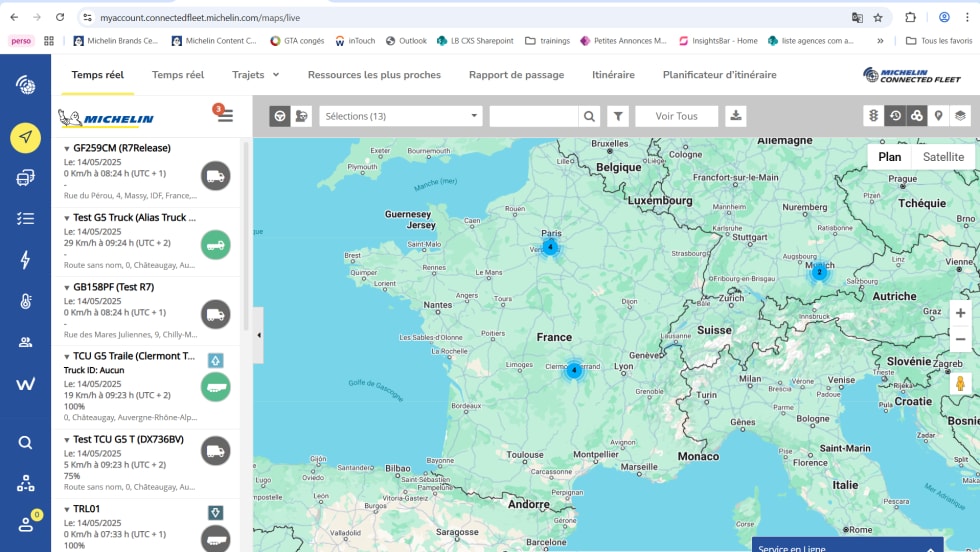
Michelin Adds AI Assistant to MyConnectedFleet Platform
Michelin’s new generative AI tool delivers instant fleet insights, helping managers analyze fuel use, tire maintenance, vehicle status, and operational performance without manually creating reports.
Read More →
LytxOne Platform Now Features AI, Compliance, and Asset Tracking Tools
New enhancements add AI-powered insights, asset tracking, compliance automation, and configurable privacy controls to Lytx's all-in-one fleet management platform.
Read More →