




Snow, Cold Welcomed by Ram Truck Testing Crews
Every year, Ram's truck engineering teams take advantage of the naturally recurring elements to reproduce the harsh environments some customers and operators experience.
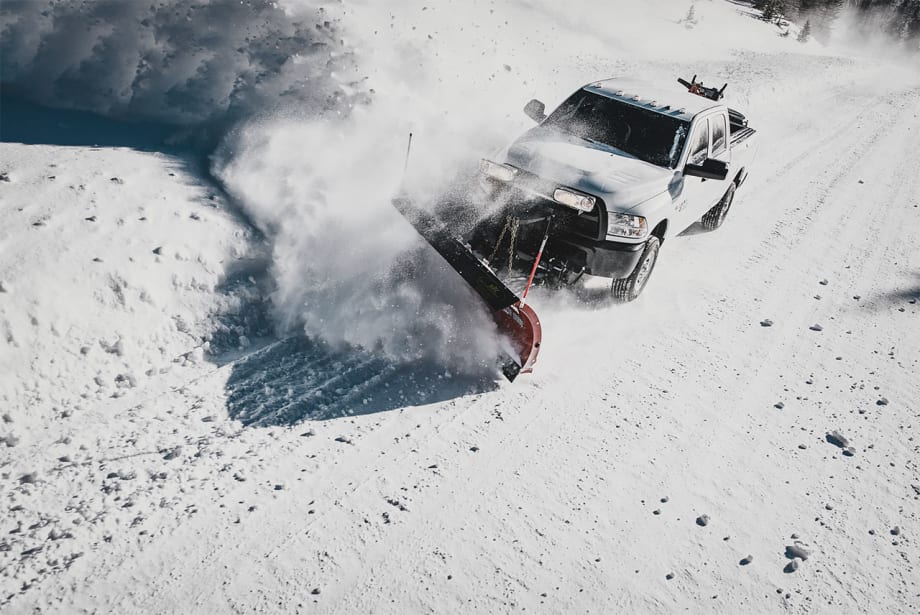
Photo courtesy Ram Truck.

Photo courtesy Ram Truck.
Piles of snow and below-zero temperatures in Houghton, Mich., Bemidji, Minn., and other hostile winter areas are the cue for Ram Engineering to suit up and get to work -- running severe cold weather and plow testing.
Every year, the dedicated truck engineering teams take advantage of the naturally recurring elements to reproduce the harsh environments some customers and operators experience. Although the conditions are far from humanly comfortable, those folks running a “Cold Trip” could not ask for a finer setting.
“Only a small percentage of Ram truck owners will subject their truck or van to the harshest winter conditions, but for those who do, our durability testing procedures instill confidence,” said Mike Cairns, engineering director for Ram Truck.
The Cold Trip
Ram Engineering conducts a multitude of lab tests at the company’s Technical Center in Michigan and full vehicle tests at two major proving grounds there and in Arizona. The Cold Trip serves as the engineering team’s final validation, assuring all Ram trucks are fully capable and the components will withstand the harshest environments in the U.S. and Canada.
Michigan offers a naturally cold environment for testing, but the northern region amplifies the experience. Houghton, in the Upper Peninsula, not only provides below zero temps, it also is home to a testing facility dedicated to winter conditions. Bemidji, in northern Minnesota, is where the trucks soak in the frigid below-zero temps for extended periods of time.
Slush test
When deicer is spread on the road at around 28 degrees, slush can collect. Because slush is water during an in-between state of liquid and solid, it can shift either way, but when the sun goes down and temperatures drop, solid has the advantage. Slush does not drip off the undercarriage. It hangs on, filling gaps and covering components.
During a hard freeze, anything covered in slush becomes encased in ice -- fuel lines, diesel exhaust fluid tanks, engine oil pans, brakes, etc. Ram engineers run trucks through 12-inch-deep slush and immediately park the truck overnight in a refrigeration facility set at minus 20. The truck is then inspected top to bottom to assure components and systems are functioning properly.
Ram trucks feature dedicated systems to protect areas of potential vulnerability. For example, the diesel exhaust fluid tank is allowed to freeze in such conditions. The tank and lines are made of materials to allow a hard freeze without breaking. An independent heating system keeps just enough DEF above freezing to allow start-up while meeting tailpipe emissions.
Another example is the location of vent lines. Water can freeze, clogging vent lines for the axles, transmission and transfer case. Windows must continue to roll up and down and more importantly windshield wipers and defrost mechanisms must function.
Arctic blasts
Anyone who has walked across a windy parking lot in bitter cold knows the effects. Imagine that force at higher wind speeds and even lower temps while delivering a healthy dose of snow and ice. That’s exactly what Ram executes during the Arctic blast test.
Ram engineers create a convoy of trucks and drive in-line for hours on end, switching positions in the order. The leader pulls a “drag” or rake to kick up ice and snow. This test addresses performance of windshield wipers, lighting and defrosters, but also systems related to engines.
Snow ingestion can be particularly bad in such conditions. Much like driving though a sandstorm, the snow does not dissipate in low temperatures, which can pack the truck’s air filter and air box, limiting the truck’s breathing capabilities. If the intake system is compromised, it will dramatically reduce engine performance. It is important to place the engine’s air intake in a location that avoids too much snow ingestion.
Alternatively, areas such as Arizona in the summer can create a need for the air intake to be present at the front of the truck for maximum flow of cooler air. The Industry-exclusive Ram Active Air intake system addresses both scenarios.
When the intake system senses extreme heat, it draws cooler air from the front of the vehicle – a function that also engages at high altitudes for superior throttle response in low-oxygen environments. When conditions are wet from snow, ice or water fording, the system pulls air from an under-hood inlet, clear from snow packing and water.
Plowing Exercises
Each season, Ram engineers plow more than 10,000 tons of snow to validate every system and ensure reliable operation. Moving a large amount of snow is vital to a plow operator, which is why most commercial and private plow trucks are ¾-ton or greater. Although the Ram’s 2500 and 3500 are very popular for such duties, Ram also sells a large number of Chassis Cab trucks for snow removal.
Ram 2500 and 3500 are available with a Snow Chief Package, which includes upgraded cooling system, higher-amp alternator, anti-spin differential, stronger front suspension, a plow lighting interface so plow lights override the headlights upon plow installation, transfer case skid plates, auxiliary switches to operate the plow, clearance lamps, and OWL 18-inch tires.
Similar equipment is standard or available on Ram Chassis Cab trucks in 3500, 4500 and 5500 series. Like the pickups, they are thoroughly tested in the blessed snow and cold on the North Country. Ram Truck has produced this winter video:
About the Author: Nick Cappa is a media spokesperson for the Ram Truck brand. This article was authored under the guidance and editorial standards of HDT's editors to provide useful information to our readers.
More Maintenance

Color Match Smarter: Tools That Restore & Perform
For fleet managers and collision repair professionals keeping heavy-duty trucks on the road, getting the color right the first time isn't just about appearance — it's about efficiency, turnaround time, and bottom-line results. Discover how today's digital color tools are transforming the repair process from guesswork to precision.
Read More →
Wrong Repair Prompts Recall of Freightliner, Western Star 4x2 Trucks
DTNA is recalling more than 2,400 trucks that received an incompatible software fix instead of the hardware repair required to address brake valve corrosion.
Read More →
Truck Drivers Need More Than Another Alert
Fleets have more visibility into truck health, safety events, and driver activity than ever. The next challenge is turning all that information into useful guidance for the person who has to decide what to do next.
Read More →
The Maintenance Checks Trucking Fleets Should Prioritize Before Fall Freight Picks Up
Making it through August isn’t the same as being ready for the next several months of operation. Find out what systems may have suffered from summer heat and need to be checked out before fall.
Read More →
What Three Fleets Are Doing Differently When Buying Truck Parts in 2026
With freight improving but costs still climbing, fleet maintenance executives explain how they're balancing price, quality, and supplier relationships.
Read More →
Paccar Recalls 2027 Trucks Built This Summer for Possible Electrical Problem
The nearly 6,000 Kenworth and Peterbilt trucks in the recall could potentially lose engine power, among other things.
Read More →
Will API PC-12 Oil Change Trucking Fleet Maintenance?
The new API PC-12 heavy-duty engine oil category reflects the changing demands of modern diesel engines. But fleets like Foodliner are looking to getting their own data before making decisions on adopting the new oils and questions such as extending oil drain intervals.
Read More →
Brake Safety Week to Focus on Drums and Rotors
Commercial vehicle inspectors are focusing on truck brakes during CVSA's Brake Safety Week, August 23-29.
Read More →Possible Battery-Cable Fires Prompt Recall of 15,000+ International MV and HV Trucks
On the recalled vehicles, manufacturing variations can cause the battery interconnect cable to contact the auxiliary stud and hold down the bracket.
Read More →
Rush, MCT Team Up to Grow Refrigeration Service Network
The joint venture will operate MCT's network of Carrier Transicold dealerships and mobile service locations, with the companies promising greater service capacity and uptime for refrigerated fleets.
Read More →