




Searching For Middle Ground In Highway Debate
Searching for a middle ground in the highway debate

It's still early in the debate over the federal highway program, but several things are clear. First, the stakes could hardly be higher. The surface transportation system is at risk due to underfunding and administrative inefficiency, and it is not possible to have a first-class economy with a second-class transportation system.
Second, even though the Highway Trust Fund is running on fumes, it is going to be exceedingly difficult to convince Congress to increase fuel taxes.
Third, the resounding rejection of congestion pricing in New York City indicates a rough road for that fund-raising technique as well.
Ideas, anyone?
The message from those who study this issue professionally is that the outcome will depend in large part on the actions of the shipping and carrier communities.
"Congress will not come to a solution on their own," said Kathy Ruffalo, a former congressional staff member who now serves on the National Surface Transportation Infrastructure Financing Commission. She spoke last month at a meeting of the National Industrial Transportation League.
"We have to help them. We need to convince Congress there is an historic opportunity in front of us to revolutionize our transportation systems and ensure that we remain the world's most productive country."
Jeffrey Shane, a long-time policy professional at the Department of Transportation who most recently served as under-secretary of transportation, gave the shippers a similar message.
"It's got to happen at the grass roots," he said. "Write op-eds in your newspapers. Get people talking about it on local talk shows. Get people thinking about transportation and the possibilities that exist. Otherwise people will conclude that there's nothing we can do about this problem ... and we'll become a second-rate economy. I'm absolutely convinced of that unless we do something very different."
By something very different, Shane means radical reform of the current system. His thinking echoes that of the Bush administration's minority report in the National Surface Transportation Policy and Revenue Study Commission, which favors devolving decision-making authority to state and local governments and relying more on tolling, congestion pricing and private financing than on fuel taxes.
"Is today's federal-centric system better calibrated to deliver transportation improvements efficiently and responsively to localities than a system that vested greater resources and discretion in local governments?" Shane asked. "What would happen if we simply deemed much of today's 'federal' gas tax a 'state' tax and allowed the states to use the proceeds as they saw fit?"
American Trucking Associations President and CEO Bill Graves gave a trucking industry answer: "If we want world-class infrastructure we have to come up with world-class funding sources," he told the shippers. "I have yet to find a better one than the fuel tax, but we are open to dialogue with folks who have creative ideas."
He added: "It's got to come from somewhere. If it doesn't come from somewhere we're going to get what we pay for, which is nothing."
ATA already has determined that it will support a tax increase, provided the spending is properly focused. "This is no small offer," Graves said.
In the context of the current debate, that assertion is an understatement. Graves recounted telling a congressman about ATA's openness to an increase, only to get the reply that there is no way a tax hike will clear Congress. And, Graves added, this was a Democrat.
Ruffalo said there appear to be two camps emerging: those who believe raising the fuel tax is the only way to go, and those who believe the federal government should get out of it and let the states and private sector take over. There will have to be a melding of these views, she said.
In fact, the outlines of that melding are already visible. The majority of the National Surface Transportation Policy and Revenue Study Commission supports using a variety of funding techniques, including tolling, congestion pricing and private financing, as well as near-term tax increases. Further into the future, the commission envisions taxing vehicles on the basis of how far they drive rather than how much fuel they use. And ATA, representing the primary commercial user of the highway system, supports controlled use of alternative financing techniques as well as taxes, provided the benefits are not lost to bad decisions and inefficiency.
Even truck sizes and weights, that perennial boulder in the road for productivity improvements in trucking, are open for discussion.
On hand at the shipper meeting was Ed Hamberger, president and CEO of the Association of American Railroads, who said AAR is open to talks.
"But we continue to be concerned about whether or not an increased truck size and weight regime would further tilt what we consider to be a competitive imbalance in terms of whether or not larger trucks pay their fair share of the damage done to the bridges and highways," he said. "That's the issue for us. It is not going to be an issue of safety but it will be an issue of economics."
Graves replied that Congress will not support an initiative for the trucking industry without a clear sense that the industry is paying its fair share. "I would expect, before the day is done, some resolution of the concern that Ed expresses."
Carriers that haul heavier loads will have to pay upfront costs for new equipment, and they also have made it clear that they expect to pay more for the privilege of running heavier equipment, he said.
Shane said that many economists believe that pricing, also known as congestion pricing - tolls on specific routes at specific times to keep non-essential traffic to a minimum - is the obvious solution to highway congestion. So why, he asked rhetorically, isn't this type of pricing more widely adopted?
The answer may have come from New York, where a plan to charge vehicles a fee for entering sections of Manhattan was soundly rejected by the state Legislature. Under the plan, trucks would have paid $21 and cars $8 per weekday to enter Manhattan below 60th Street between 6 a.m. and 6 p.m.
The measure failed due to opposition from the suburbs, where it was viewed as elitist and regressive, according to a report in the New York Times. One Bronx official said it would be unconscionable to subject residents to a congestion pricing tax with no guarantee that they won't be hit with a transit fare hike as well.
ATA applauded the defeat. "Congestion pricing schemes are unfair, ineffective and ignore our real transportation needs," said Graves in a statement. "While there is a need to heavily invest in infrastructure, congestion pricing does little to relieve congestion and is merely a revenue raiser."
More Fleet Management

How Innovative Trucking Leaders Turn Change Into an Advantage
As the pace of change accelerates in trucking, the fleets that adapt best have more than the latest technology. They have cultures that embrace improvement.
Read More →
Freight Broker Bonds Just Got Harder to Get. Here's What That Means for Your Fleet.
When it gets harder for a freight broker to prove they are financially sound, the ones who cannot clear that bar get pushed out of the market. And those are exactly the brokers who used to leave motor carriers holding the bag.
Read More →
Long-Awaited Canadian Border Bridge to Open in Detroit
For trucking, the bridge opening should offer immediate improvements in efficiency and reliability, with new customs facilities, expanded inspection capacity, and direct freeway-to-freeway connections.
Read More →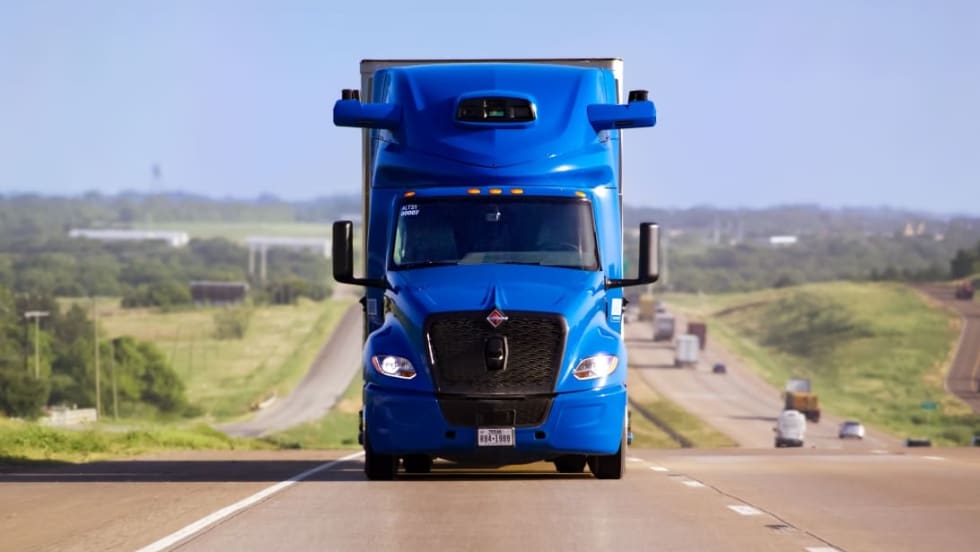
Aurora Rolls Out Next Generation of Driverless Trucks for Commercial Freight
Aurora's latest autonomous trucks it's rolling out with International feature lower-cost hardware designed for a million miles as the company expands commercial driverless freight operations across the U.S. Sun Belt.
Read More →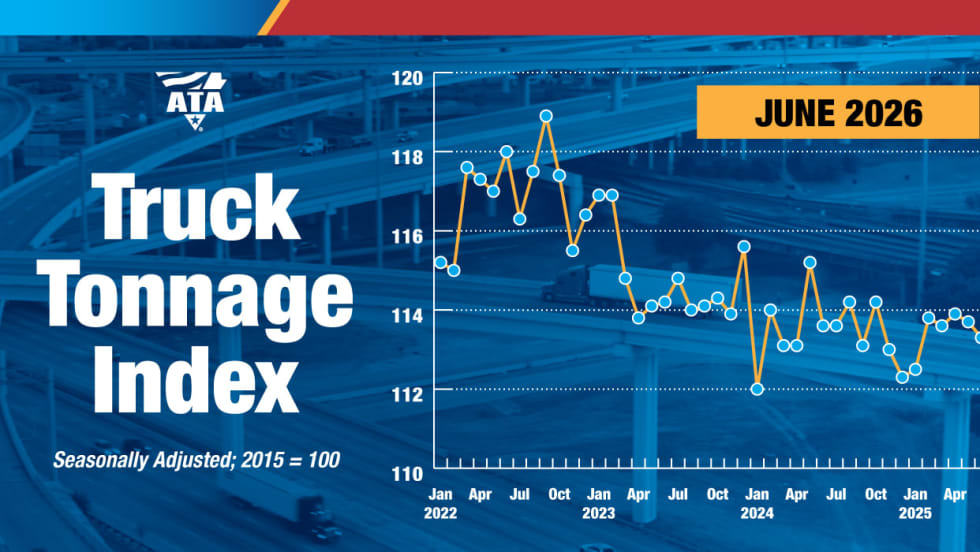
Freight Tonnage Down, Rates up, as Lower Capacity Powers Trucking Recovery
The recovery from the freight recession continues to be driven by reduction in capacity rather than by increased demand.
Read More →
Think Your Trucking Fleet Isn't Using Much AI? Think Again
Shadow AI — the use of unauthorized artificial intelligence tools at work — is becoming increasingly common, putting sensitive company data at risk. Learn how trucking fleets can protect sensitive data while embracing AI.
Read More →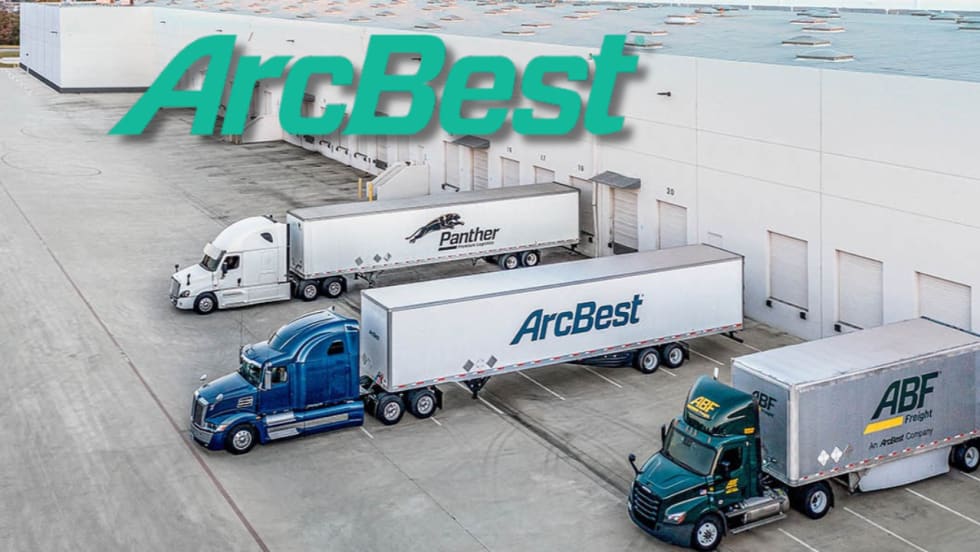
ArcBest Consolidates Brands, Cuts Workforce
The company will bring three business units under the ArcBest brand, eliminate about 2% of positions, and expects the changes to generate $40 million in annual savings.
Read More →
Trucking Fleets Faced Record Operating Costs During Third Year of Freight Recession
ATRI's annual operational cost report shows carriers trimmed fleets, delayed equipment purchases, and ran older trucks as expenses continued to outpace freight rates.
Read More →
Michelin Adds AI Assistant to MyConnectedFleet Platform
Michelin’s new generative AI tool delivers instant fleet insights, helping managers analyze fuel use, tire maintenance, vehicle status, and operational performance without manually creating reports.
Read More →
LytxOne Platform Now Features AI, Compliance, and Asset Tracking Tools
New enhancements add AI-powered insights, asset tracking, compliance automation, and configurable privacy controls to Lytx's all-in-one fleet management platform.
Read More →