




Related: FMSCA to Exempt Short-Term Truck Rentals from ELD Rule
Ready or Not: 5 Important Questions in the Countdown to ELDs
Fred Fakkema, VP of compliance at Zonar Systems, and Annette Sandberg, former administrator of the Federal Motor Carrier Safety Administration, answer in depth five pressing questions of concern to fleets as the Dec. 18 ELD mandate compliance deadline looms ever closer.
by Fred Fakkema and Annette Sandberg
October 11, 2017
7 min to read

Since the electronic logging mandate that kicks in on Dec. 18 was first released, Fred Fakkema, vice president of compliance at Zonar Systems, and Annette Sandberg, former administrator of the Federal Motor Carrier Safety Administration and currently principal at TransSafe Consulting, have heard a plethora of questions and concerns from customers and other stakeholders about the new and far-reaching rule.
They say that even at this late date, there is "still quite a bit to understand about the mandate and its impact on the industry and fleets." Here, they answer together in depth five pressing questions of concern to fleets as the ELD rule's initial compliance deadline looms ever closer:
1. Driver turnover is always a concern. Is there any way the ELD mandate can help?
Retention is a major issue for our industry and we’re currently experiencing a shortage of qualified, experienced operators on the road. According to the American Trucking Associations, the driver turnover rate for large companies is at 90% – even though so much of what we need and use each day, like food, medical supplies and other goods, is transported by truck drivers. There’s no one solution because there’s no one cause for why an operator will choose to leave a company or the industry as a whole.
That being said, good driving conditions are a major factor in why drivers will choose to stay. This means making certain processes easier and simpler for the people behind the wheel. The ELD mandate makes ELDs a requirement for almost every commercial driver on the road and the benefits of ELDs are apparent.
Authorized ELDs can help drivers avoid unintentional violations, help them stay compliant, and decrease the time it takes to file paperwork and other logs that can often cause confusion between the driver and safety or fleet manager. Having ELDs can also relieve the burden on truck drivers in disputes around service failures or other issues and inspections since there is a real-time record available.
Scheduling and dispatch issues can also be prevented by ELDs, helping drivers decrease their time away from home and also help them stay alert and well-rested during long hauls or complicated sections of their routes.
Providing a good working environment for drivers includes ensuring they can concentrate on the issues that matter while on the road and not get bogged down in the logistical details that are necessary but take time. This is how the mandate and ELDs can play a part in helping curb retention.
2. What happens if my ELD solution fails while a driver is on the road? Will a driver get fined if the device stops working?
Technology fails – unfortunately, that’s something we all have to deal with, especially as we all get more reliant on our smartphones, the internet, our laptops and everything else that usually makes life easier. Having an ELD device fail while on the road isn’t catastrophic, but it can certainly cause issues for both the driver and the fleet manager.
According to FMCSA, a driver needs to be able to share the current day and previous seven days’ worth of logs if requested by an inspector during a roadside check. If an ELD fails, they will need to reconstruct that data on paper logs if the ELD doesn’t have logs available or the company isn’t able to forward the logs to the driver. Failure to provide logs when asked during an inspection will result in a violation for the driver.
Outside of inspections, if an ELD fails during a route, the operator will need to immediately alert their employer and reconstruct previous logs on paper until the device is up and running again. They will then have eight days to repair or replace a malfunctioning ELD or face penalties.
However, there are ways to decrease the chances of ELD failure before it happens. While no device is perfect, carriers should conduct research into the manufacturers that have self-certified to ensure that they are choosing the best solution for their fleet.
Beyond making sure that the solution is on the list of registered ELDs, they should ask providers about the customer service and maintenance support they provide for devices, request a demo, and ensure they have each required feature or function as directed by FMCSA.
You should be able to gauge whether or not a provider can deliver on their promise of an ELD mandate-compliant solution with a little digging. A little foresight will go a long way in minimizing the possibility of a device failure.
3. What happens if my ELD provider turns out not to be compliant after the December 18, 2017 deadline?
Since the mandate was first introduced, there has been an influx of companies and organizations that claim to provide inexpensive, easy-to-use ELD solutions. While the majority of them are legitimate, there are some that may push out products that don’t quite meet the FMCSA’s technical standards.
If a fleet manager or owner finds out the solution they chose is not compliant, they have eight days to replace their existing ELD devices with compliant ones. Eight days is the magic number – this is the same amount of time the FMCSA gives fleets to repair their ELD devices if they break down.
If FMCSA finds a provider on their list is not ELD compliant, they will alert the provider and may remove them from the list. If a provider is removed from the site, the vendor will be placed on a “revoked device” list. Ultimately, the responsibility of ensuring compliance is on the fleet owner or manager.
4. I won’t be ready for the ELD mandate deadline, but I do have an AOBRD (automatic onboard recording device). What can I do to make sure I’m compliant now?
Fleets that already have an AOBRD have two additional years to implement ELDs across their fleet so they are technically compliant until December 16, 2019. But those fleets should use this time wisely – as we’ve learned since the mandate was first published, two years is not really that much time!
Fleets should research ELD providers to make sure their solution fits the needs of their fleet, has a solid customer service track record, and has established credibility within the industry. Fleets should also use this time to train stakeholders and drivers within their organization to make sure they understand how the new devices work and how to use them.
5. How will anyone know if my fleet isn’t ELD compliant? Will anything actually happen to a driver or company if they aren’t ELD or AOBRD compliant after the mandate kicks in?
According to the Commercial Vehicle Safety Alliance, approximately 4 million commercial motor vehicle inspections are conducted every year. After the ELD mandate deadline, operators can expect inspectors and roadside enforcement staff to be ready to ensure commercial vehicles are compliant with all regulations, including the ELD rule.
On April 1, 2018, inspectors will begin placing drivers out of service if their vehicle is not compliant with the mandate. If during an inspection a driver is found not to have an ELD or AOBRD on board, or is using an ELD that is not authorized, they will be considered to have no record of duty status and will be put out-of-service for eight consecutive hours. They may also receive an Hours of Service or Record of Duty Status violation (even if they have paper logs) and may be subjected to fines up to $10,000 for each offense found by an inspector.
Though some companies may think that staying on the road will help their bottom line, not complying with the mandate, either by having an ELD or AOBRD, will cost them fines, out-of-service time, and potentially risk the health and lives of truck operators or other drivers on the road.
Last Word...
At this point, the mandate is quickly approaching and it’s unlikely the government will delay or extend the date it goes into effect, point out Fakkema and Sandberg.
They note that in a recent survey conducted by C.J. Driscoll & Associated, 35% of the fleets surveyed indicated they would deploy ELD solutions in the last quarter of the year and 25% said they would put it off as long as they could. “There are many reasons why drivers and owners are choosing to stall on compliance with the ELD mandate. But unless they’re exempt, they increase the chance they’ll be faced with fines and violations each time they go out on the road.”
This article was authored and edited according to the standards of HDT's editors to provide useful information to our readers.
Subscribe to Our Newsletter
More Safety & Compliance
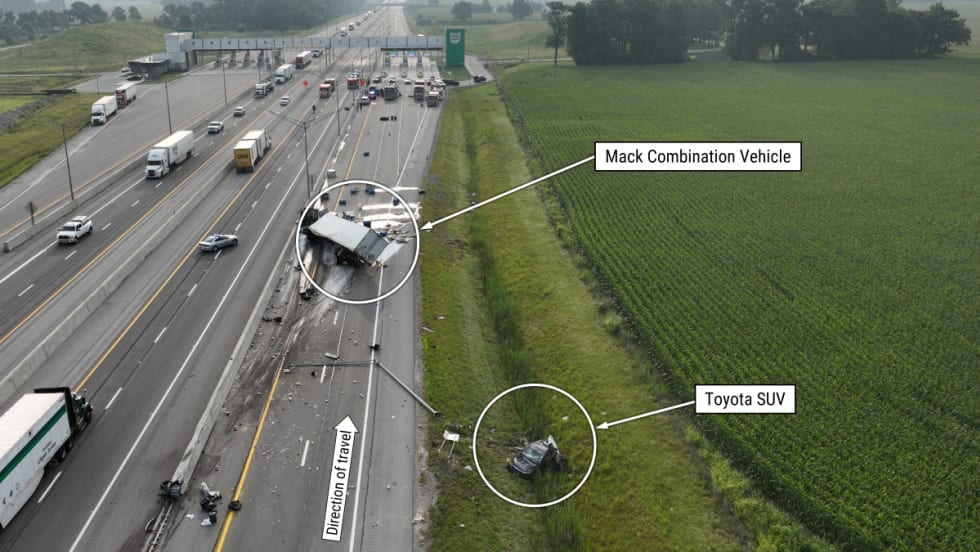
Fatal Crash Exposes Toll Plaza Risks
An NTSB investigation found that last-minute lane changes and large speed differences at an Ohio toll plaza created a hazard the truck driver couldn't avoid in time.
Read More →
When Language Stops the Truck: The Return of ELP Out-of-Service Orders
English language proficiency rules for commercial drivers aren’t new, but renewed out-of-service enforcement has raised the stakes. Here’s what carriers need to know before a driver reaches a roadside inspection.
Read More →
Sponsored•October 6, 2026
A Camera Isn't a Safety Program. Here's What Brokers Are Screening for Now
Footage alone may not be enough to pass broker vetting processes. Here's what counts as a defensible safety program now.
Read More →

Marijuana and Trucking’s Drug-Testing Dilemma
Marijuana is getting stronger, laws are changing, and drug tests still can’t reliably establish impairment. What does that mean for truck drivers and the fleets that employ them?
Read More →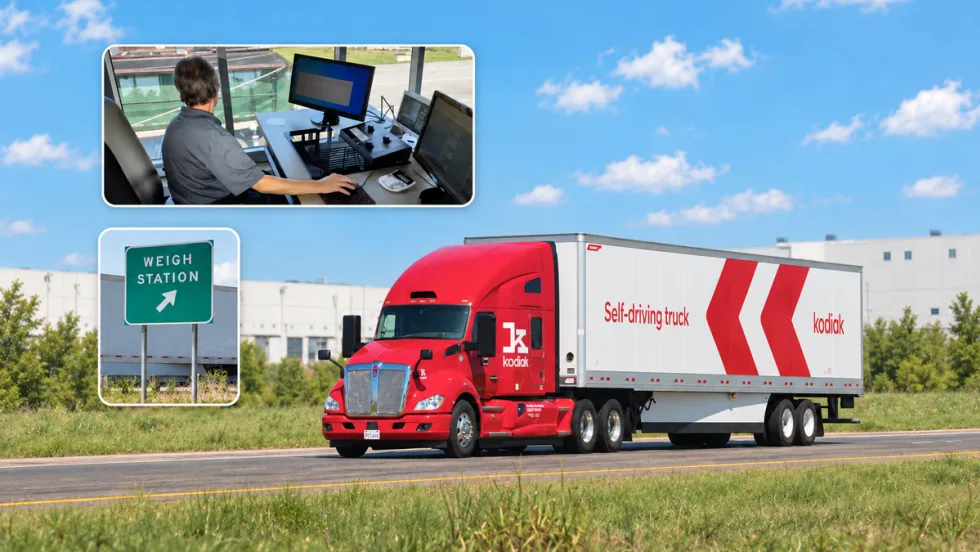
PrePass, Kodiak Connect Driverless Trucks to Roadside Enforcement
The system will allow enforcement agencies to verify Enhanced Inspection information and decide whether Kodiak’s autonomous trucks can bypass roadside screening sites.
Read More →
From One Generation to the Next: How Mentorship Builds Safer Truck Drivers
After three decades in trucking, Harold Perry shares what he's learned about driver safety, mentorship, and helping the next generation build confidence behind the wheel.
Read More →
FMCSA Pauses Biennial-Update Enforcement Amid Motus Transition
Carriers whose updates were due on or after June 1 have more time, while FMCSA works to stabilize its new registration system and warns of phishing sites impersonating its new carrier registration system, Motus.
Read More →
ZF Expands Commercial Vehicle Push in North America
ZF is expanding its North American commercial-vehicle presence with new transmission applications, electrification, trailer technology and autonomous-driving systems.
Read More →
Truck Drivers Need More Than Another Alert
Fleets have more visibility into truck health, safety events, and driver activity than ever. The next challenge is turning all that information into useful guidance for the person who has to decide what to do next.
Read More →
Tesla Wants a Self-Driving Semi. Are Cameras Enough?
Could Tesla’s camera-only autonomous driving technology work on an 80,000-pound Semi? In this commentary, HDT's Deborah Lockridge takes a look at Tesla, Cybercab, and how autonomous trucks see the road.
Read More →