




Quickspin: Driving the new Cat Truck
We came, we saw, we drove -- but not far. Caterpillar people are very proud of their CT660 vocational truck. They introduced it earlier this yea

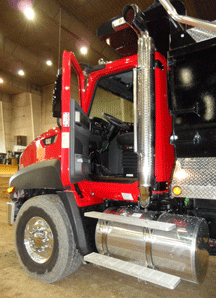
Short demo drive of Caterpillar's first on-highway truck reveals whether it lives up to its 'premium' billing.
We came, we saw, we drove -- but not far. Caterpillar people are very proud of their CT660 vocational truck.
They introduced it earlier this year
at the ConExpo show in Las Vegas, and in October they seemed pleased to allow members of the trade press to drive it. We were a little disappointed to be limited to a short course at Cat's demonstration center near Peoria, Ill. It was sufficient to sample the premium features in a quartet of demo trucks, but not get any feel for how the model performs at road speeds.
Premium is the word for the Cat Truck, the builder's first road-legal piece of equipment. It was evident as I climbed in and looked at the specially designed dashboard, instruments and controls. The door slammed with a solid thunk! and the power windows rolled up and down smoothly. The interior trim includes a lot of plastic, but the panels have a look of ruggedness and class. I wasn't in any seat long enough to make a comfort judgment, but I'll bet they're good ones.
Executives say much effort went into designing the truck to complement the big yellow machines that many customers already operate. The truck will come with Cat's Product Link telematics capability, which will wirelessly tie the truck and its operating data to owners and to Cat dealers, who can then efficiently manage its maintenance. Productivity gains might also be possible by linking a truck with the machines it's supporting.
The Cat Truck will compete primarily against premium vocational models from Mack, Kenworth, Peterbilt and Western Star, executives said in briefings. The CT's list price is every bit as much as theirs, and Cat dealers are grappling with the idea of discounting their selling prices, something they're not accustomed to, one exec commented.
The truck is based on the International PayStar 5000 from Cat's strategic partner, Navistar International. The PayStar is also a premium-level truck, and International dealers could lose some sales to the Cat rendition. The CT's chassis and engines are the same as the PayStar's, but its cab interior is one of the main areas that Cat designers redid. The other is the hood, with its massive, chromey nose.
Some customers have ordered their CTs in Cat yellow, which two of the demonstration trucks sported. Unlike Cat's dirt- and material-handling machinery, however, these trucks are available in more hues, like the red of the other two demo dumps.
The yellow trucks were equipped with Cat's own CX31 6-speed powershift automatic transmission. A couple of trips in these were enough to show that the CX, which is based on the unit used in Cat's off-road articulated haul trucks, efficiently gets power to the wheels and operates smoothly. It's not as smooth as a comparable Allison, as I felt nearly all upshifts - maybe that's a good thing - and I noticed an occasional thumping downshift.
The red trucks had Eaton Fuller 8LL manuals, which I couldn't quite come to grips with. In each truck I immediately noticed that the gearshift lever was mounted several inches farther back than in other truck makes. A driver would adjust to this, and would have to, because on the floor the lever is about as close to the doghouse as it can be. Even if it could be moved up, its top would collide with the massive right-side panel of the dashboard.
Although the two trucks were identically spec'd, I could shift one 8LL better than the other. Even with double-clutching I got a lot of crunching while up- or downshifting one, but was nonetheless able to upshift it after starting out in Low on a 5% or 6% upgrade The other tranny crunched less in normal shifting, but I could not get it to upshift on the slope, and had to crawl up in Low. (There's another reason to spec the CX automatic.) In fairness, each truck had barely 1,500 miles on its odometer, so some break-in time will probably benefit both gearboxes and whoever ends up operating them.
HDT Editor at Large Rolf Lockwood, while agreeing the truck appears to live up to its "premium" billing, also noticed the rearward-mounted shift lever. He also noted the narrowness of the entryway into the cab. This was caused by a vertical exhaust stack that crowded each cab corner, and a limited door opening imposed by the cowl-mounted side-view mirrors. Every truck equipped like that imposes a similar penalty, and again, drivers get used to this - and they would never give up those twin chromed stacks.
Power was ample in all the trucks because each had a 485-horsepower, 1,650-pounds-foot diesel. Cat and Navistar designate them as 13-liter models, but they're actually 12.4 liters in displacement. The CT13 and a 10.5-liter CT11 are currently the only engines installed in the Cat Trucks. In the first quarter of 2012, Navistar's more powerful 15-liter diesel will be available.
The engines may be from Navistar, but they are all painted yellow. All ratings are governed at 2,100 rpm because any proper vocational engine needs the revs for flexibility on jobsites and to grab a gear while climbing a hill, Cat execs say. Of course I used those revs while upshifting, or trying to, on that slope. The engine brake could be felt and was especially strong in lower gears at slow trail speeds.
Ride quality was excellent on smooth portions of a gravel trail. But the front end of each truck bounced as we started out in the demo building, where the dirt was slightly rippled. In the manual-transmission trucks, this caused my foot to rapidly goose the accelerator and the engines to surge, whereupon I'd hit the clutch pedal to quit the silly motion. Clearly, I needed more practice time in the vehicles. This might happen later, Cat people said, and I hope so.
By the way, we were supposed to hold our trail speed to 25 mph, but I got a couple of trucks going to 40 mph and more. Hey, they had good brakes, and the escort drivers didn't complain when they saw that I seemed to know what I was doing. There were no Cat-yellow cop cars on the course, so no tickets. It was a good day.
From the November 2011 issue of HDT.
More Equipment
Kenworth Names Peter Ahrens General Manager
Leadership changes at Kenworth take effect July 1 as the OEM promotes two longtime Paccar executives to key management roles.
Read More →
Hino Adds Electric Class 6/7 Truck
Hino says the Le Series is an important step in the company's efforts to reduce environmental impact and support its customers’ sustainability goals.
Read More →
ACT Expo 2026: Highlights in Photos
The 2026 Advanced Clean Transportation Expo featured a broad range of commercial vehicle technologies, from EVs to autonomous trucks to the latest diesel and alternative-fuel engines.
Read More →
Hendrickson Debuts Electraax E-Axle for Medium-Duty Trucks
Developed with Driventic, Hendrickson's new integrated e-axle is designed to improve efficiency, reduce weight, and extend range in Class 6-7 EV applications.
Read More →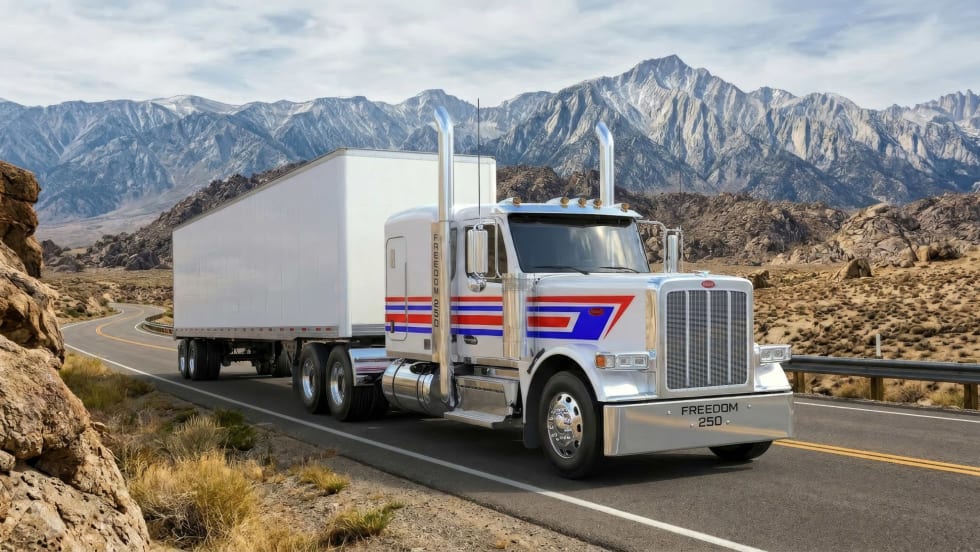
Peterbilt Unveils Freedom 250 Special Edition Model 589
Peterbilt’s just-announced limited-run patriotic Model 579 tractor celebrates America’s 250th birthday with custom styling and premium features.
Read More →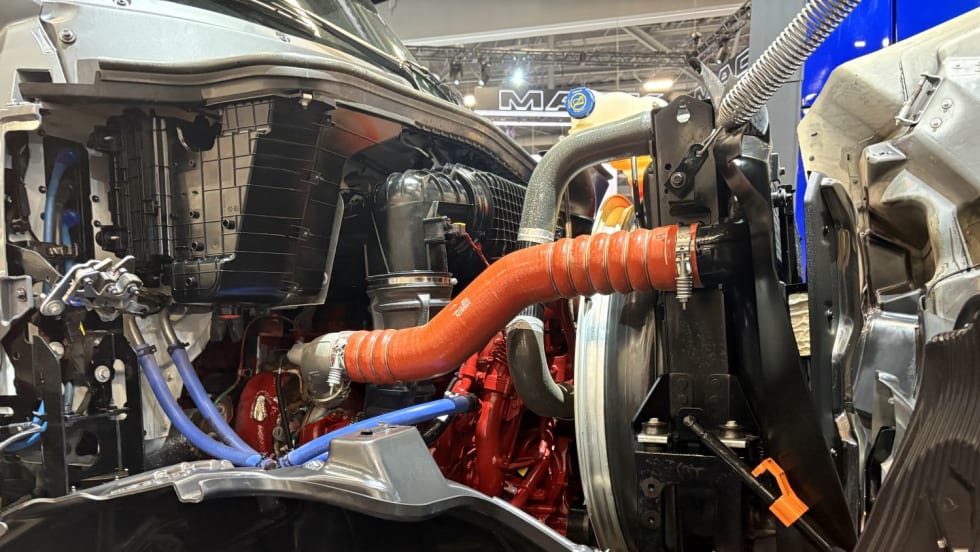
Mack Unveils EPA 2027-Compliant MP13 Engine With More Power, Better Fuel Economy
Along with unveiling its EPA 2027-compliant MP13 engine, Mack outlined powertrain changes across its Class 6-8 lineup, including new Cummins-based X10 engines.
Read More →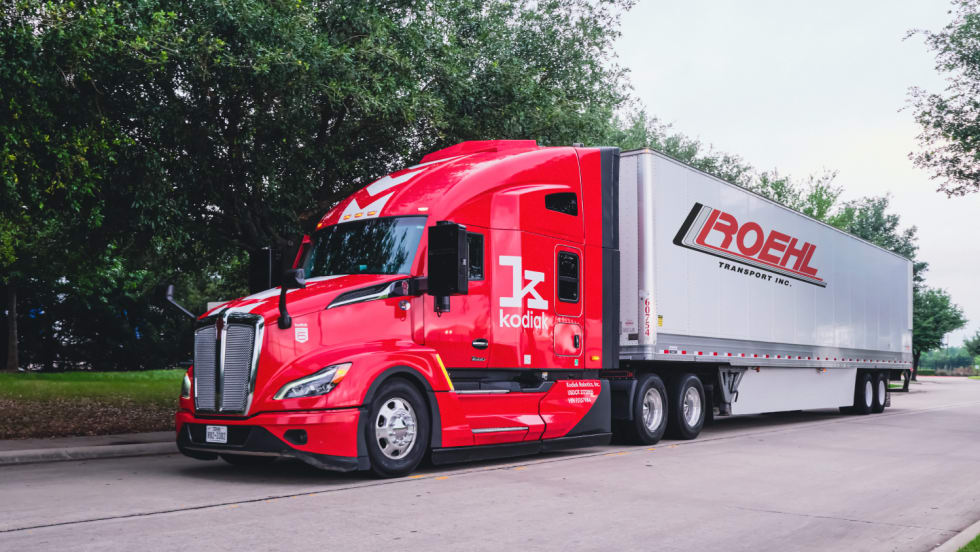
Kodiak and Roehl Transport Launch Autonomous Route Between Dallas and Houston
Kodiak AI and Roehl Transport have begun autonomous freight operations on a regular Dallas-Houston route, marking another step toward Kodiak’s planned driverless launch by the end of 2026.
Read More →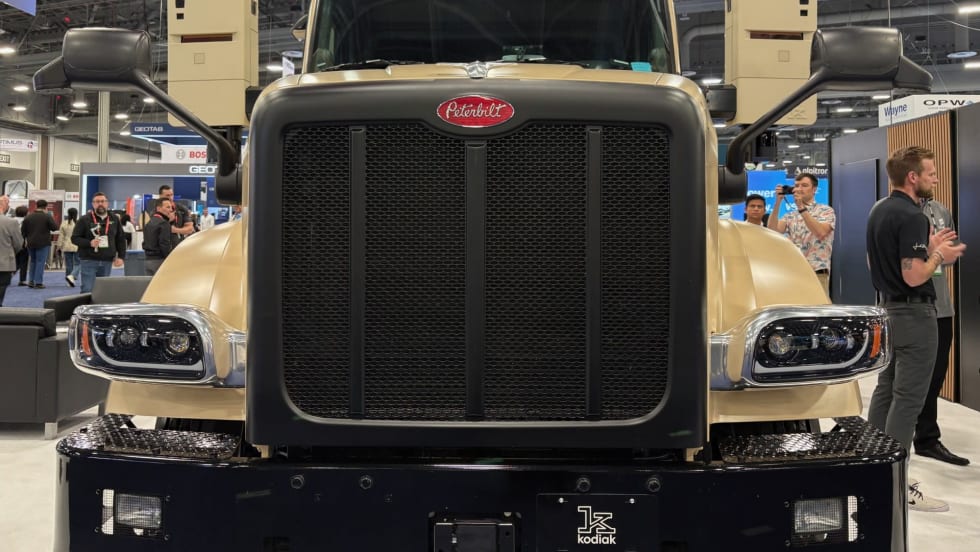
Autonomous Trucks at ACT Expo 2026
Autonomous trucks commanded a lot of attention from attendees at ACT Expo this year. Check out this photo gallery.
Read More →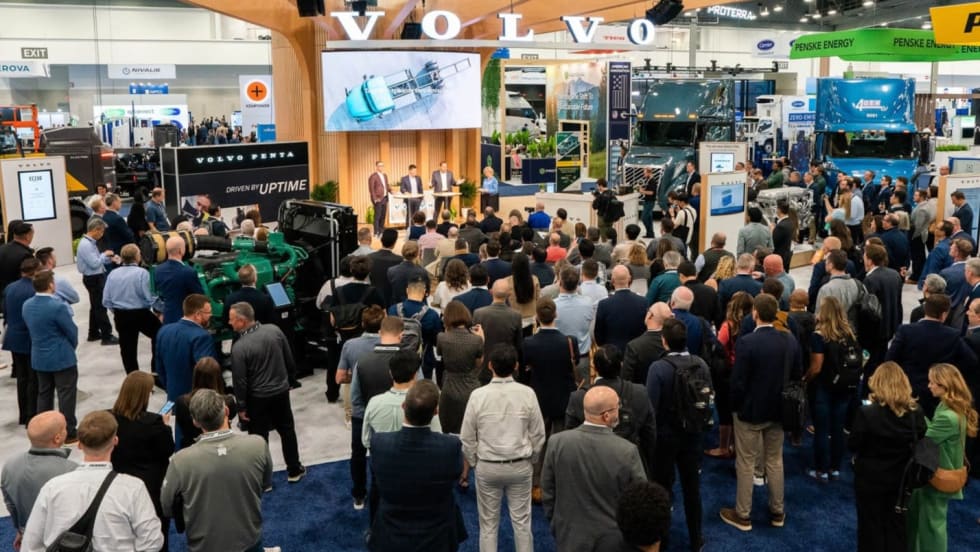
How Volvo’s New D13 Engine Meets EPA 2027 Emissions Without Sacrificing Power or Fuel Efficiency
Volvo says advances in combustion and aftertreatment helped its new EPA 2027 D13 engine avoid the fuel-economy penalties many once expected from tighter NOx emissions limits.
Read More →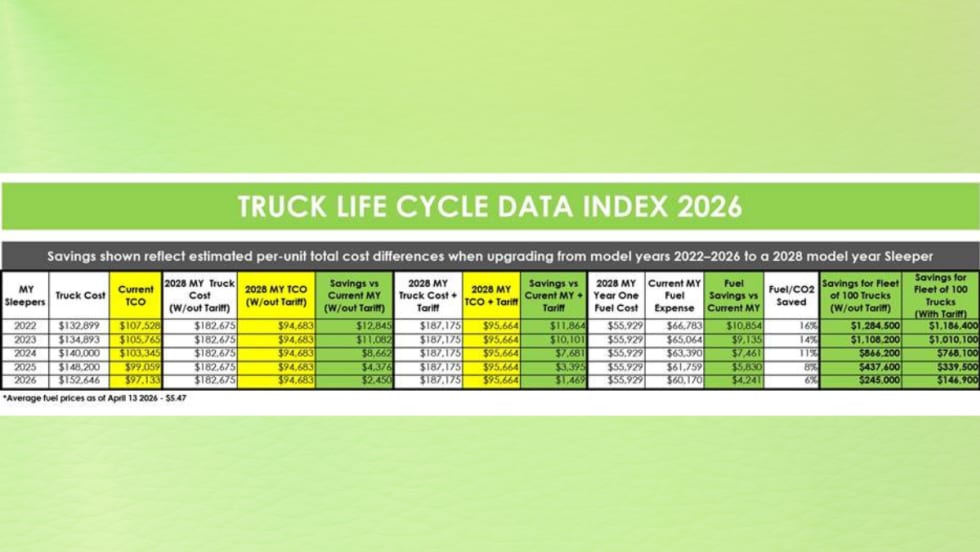
Fleet Advantage TLDI Highlights Rising Costs of Aging Fleet Equipment Amid Higher Diesel Prices
Fleet Advantage’s latest Truck Life Cycle Data Index shows fleets operating older Class 8 trucks could face significantly higher costs as diesel prices rise, while newer 2028 equipment may deliver savings of more than $12,000 per truck annually.
Read More →