




Q&A: Volvo Sees Hydrogen as Key Player in Green Trucking
In an interview with HDT, Volvo Group's CTO Lars Stenqvist explains his company's strategy for integrating hydrogen into a decarbonized supply chain.

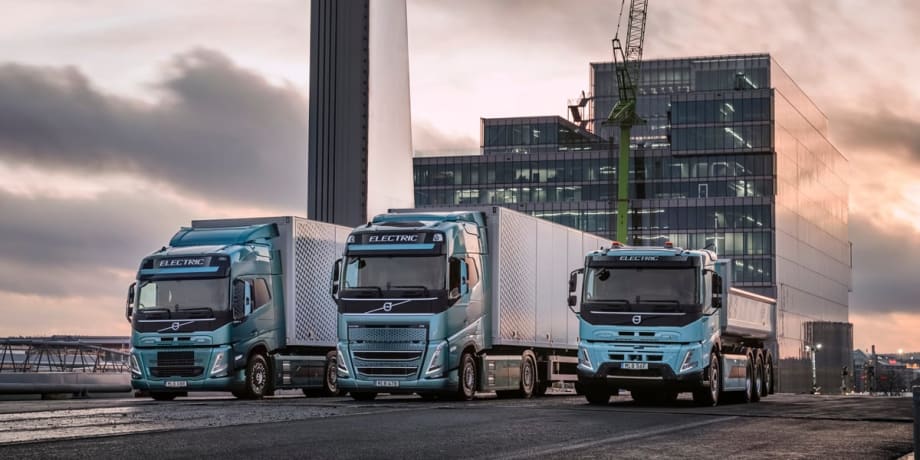
Volvo sees hydrogen as key part of its fossil-fuel free vision, using hydrogen fuel cells alongside battery-electric vehicles and biofuel- or hydrogen-powered internal combustion engines.
Photo: Volvo Trucks
Volvo Trucks has committed to decarbonizing its share of the road transport system by 2050, which means given the typical life cycle of a diesel truck, the company will need to have a viable solution on the ground and earning revenue for customers by 2040.
Volvo sees hydrogen as key part of its fossil-fuel free vision, using hydrogen fuel cells alongside battery-electric vehicles and biofuel- or hydrogen-powered internal combustion engines.
Volvo recently demonstrated its commitment to accelerating the use of hydrogen as a transportation energy source by forming a joint venture with Daimler Truck AG called cellcentric. The joint venture plans to build one of Europe’s largest series production facilities for fuel-cell systems, with operations slated to begin in 2025.
While there is significant interest in hydrogen fuel cells in Europe and China, North America has yet to embrace hydrogen as a viable alternative fuel. Here, the battery-electric alternative has gained significant traction with regulators and green-energy proponents. But that's not deterring cellcentric.
In fact, the group sees battery-electric and fuel-cell-electric trucks as complementary rather than competitive, depending on the individual customer use case.

Volvo Group's Chief Technology Officer Lars Stenqvist.
Photo:Volvo Trucks
Volvo Group's Chief Technology Officer, Lars Stenqvist, believes battery-power will be likely dominate the lower cargo weight classes in smaller trucks over shorter distances, while fuel-cell power will do the heavy lifting in long-haul applications.
In a recent interview with Heavy Duty Trucking, Stenqvist explained his company's strategy for integrating hydrogen into a decarbonized supply chain.
Q: Why do you think the debate between battery and hydrogen is so polarizing?
A: I think it's important to start with our strategy in the Volvo Group because, we decided not to be polarized here. We are committed to the Paris Agreement and we are committed to decarbonize road transport. If we're talking about having a decarbonized road transport system by 2050, when you consider that a commercial vehicle has a 10-year life span, then it means that from 2040 onwards, we can only deliver fossil-free solutions to our customers. Otherwise, it will not be fossil-free by 2050 for real out there.
We made a thorough analysis of what technologies we think that we could rely upon towards 2040. The starting point is, of course, the combustion engine and we could have stated that we'll rely on combustion engines running on biodiesel/biofuel towards 2040, but we are convinced that there will not be enough biofuel available to decarbonize all road transport. Many people are saying the internal combustion engine is dead, but I don't believe that at all. We will continue to invest in internal combustion engines running on biofuel, but they will be a minority of our vehicles.
Most of the vehicles [sold beyond 2040] will be electric — a mix between battery-electric and fuel-cell electric vehicles — and we are convinced that those two technologies will out compete each other in different applications. We think that the "sweet spot" for the two technologies is a little bit different.
The preferred applications for battery electric vehicles would be in somewhat lighter applications such as local and regional distribution, even refuse trucks, where the vehicle returns to the depot at the end of the day and can charge the batteries on a local charging network.
For fuel-cell electric vehicles, the sweet spot for them is transcontinental transport, the long-haul operators that need range, do not return home in the evening, require fast refueling times.
I don't think it will be one sharp borderline where we have fuel cells to the right and battery electric on the left. There will be a gray zone where both can be beneficial and it could also depend on electricity pricing, hydrogen pricing, availability of infrastructure, etc. Coming from the two directions, we will see high volumes of both. So, there's no silver bullet. You have to have at least three bullets in your gun to meet future demands.
Q: I've been doing some reading on the hydrogen combustion engines. Are you looking at those as an alternative to diesel? If so, where will they fit into the market?
A: When it comes to combustion engines, we are working with several different solutions. The hydrogen combustion engine is just one of our development tracks. We have not decided to industrialize that yet, but we are looking into different solutions, different injection systems, etc. They certainly have some drawbacks and some technological challenges but running on pure hydrogen you get no carbon at all because there is no carbon in the fuel. There is no soot produced, but soot can be good for lubrication. It's a very dry combustion and that means you have to work on the lubrication or on the material selections. You also get a lot of water in a combustion engine when you're using hydrogen, and a lot of water is a risk for corrosion.
Q: Do you still get nitrogen oxides out of the hydrogen combustion engine?
A: Yes. That is very good point. You get NOx, but you get NOx on a lower level, so it's rather easy to meet the current emission legislation. It's a good point that you raise because from a regulated emission perspective, it's not a zero-emission solution when it comes to NOx. To be honest, it's not zero emission when it comes to soot particulates either because you will still have minimal soot particles coming out from the oil system of the engine. But for certain applications, like long haul, for example, when you're out of city centers, then I would dare to say that it is a very, very good solution from a societal perspective. But if you're really strict in talking about CO2 emission, also including NOx, then most likely those engines will not serve in the city centers and then you will have the battery-electric or fuel-cell electric vehicles.
Q: Looking at energy efficiency, how would you compare a hydrogen combustion engine versus a hydrogen fuel cell? For the same 10 kilograms of hydrogen, which would be more efficient on the road?
A: That's what we are exploring now. Most likely in the long run fuel cells will be more efficient, but you have to put many parameters into the equation. It's not just about fuel efficiencies; it's the total cost of ownership per mile that counts; the investment, cost of the vehicle etc. There's still a lot to explore when it comes to efficiency of the fuel cells, but also when it comes to efficiency of the combustion engines running on hydrogen.
Q: Among of the criticisms we hear about hydrogen are the energy losses when hydrogen is extracted from a source, like through steam methane reforming for example. And there also the question of producing hydrogen from so-called gray sources, such as natural gas or methane. I know we're working to green hydrogen sources, but we're not there yet. How does that all rationalize?
A: To be honest, everything that we are doing is done towards fossil-free. Talking about gray hydrogen can only be acceptable as some kind of starting point or a quick transition because if the solution is gray hydrogen, then we have not gained anything at all. It must be green hydrogen and that means we will need a lot of green electricity — a lot of low-priced green electricity, such as electrolyzers converting water into hydrogen and oxygen. We believe that about 20% of the world's energy demands can be met with hydrogen, and that will foster the right cost level for green hydrogen going forward. That's the assumption we are betting on for fuel cell technology.
Q: It can only be an assumption, at this point, because there's not a lot of green hydrogen around yet.
A: Definitely, [the total amount of green hydrogen produced today] is almost nothing. If you look at what is produced today, you will need to increase the amount of hydrogen produced in the world by five to seven times compared to today. Since today almost all the hydrogen produced is gray, we have to increase that by five to seven times and replace gray hydrogen with green hydrogen. So, we definitely have a way to go. But I can say, if trucking was the only industry relying on hydrogen in the long run, then I would be much more concerned than I am today. But since so many other industries committing to hydrogen today and they need sources of cheap clean hydrogen too. That is the reason I'm so optimistic that we will reach these targeted levels.
Q: So trucking won't be driving the hydrogen economy. It'll just be going along for the ride.
A: It's very important to understand that we are far from the only consumer of hydrogen going forward and the hydrogen that will be used for road transport will only be a fraction of the hydrogen that will be used in society — far less than 10% of total hydrogen consumption. The big hydrogen consumers will be the steel industry, the concrete and cement industry, chemical producers and aviation. That means there will be a lot of green hydrogen available in society at a very attractive price point. We believe that from an infrastructure perspective, this is beneficial for society because there will be hundreds of thousands of trucks out there along with millions of passenger cars. We think it would be beneficial if not everyone is running on battery electric vehicles. It will be helpful to have a combination of charging points for battery electric vehicles and hydrogen refueling stations because otherwise it will put enormous pressure on the electrical grid.
Q: What kind of a timeline do you see in a transition toward this fossil-free economy?
A: Since we are serious about 2040, it's obvious that by 2030, about 35% or one-third of the vehicles will have to be electric — battery electric or fuel cell electric. We will need to accelerate in the decade between 2030 and 2040 to 100% fossil-free solutions. 2030 is an ambitious target, but if we are to meet 100% by 2040, then we need to be on levels like 35% by 2030.
Q: How about the fueling and fuel distribution infrastructure? Will those costs fall top the fleets like we're seeing with terminal charging stations or will commercial distribution develop like we have with diesel?
A: I'm convinced that hydrogen will be a boon for commercial networks and commercial players. A lot of the big energy companies are looking at producing hydrogen. I think we will see a mix of local production and a distributed network around different continents. It could evolve around steel mills, for example, where you will have a big consumption and production. In other places it will be distributed by tankers because certain countries in the world will out-compete others when it comes to the cost of green electricity, solar-based electricity for example. They cannot export electricity as such, but they can convert it into hydrogen and export it.
On the distribution side, we will see a commercial hydrogen supply infrastructure grow as we know it today with diesel or gasoline. we have had clear commitments from politicians in the European Commission to start building up to 500 refueling stations by 2025, and up to 1000 by 2030. We have helped out with that point to various places on the map where these stations should be placed. I see the same thing emerging in North America, but you don't have to start with four refueling stations on the same corner or even every 10 miles along the road.
Q: From the end users' point of view, cost parity with diesel is the objective, how long do you think it will take us to get there with either of these solutions.
A: I think that's up to our politicians and how they want to make this transition. There must be some kind of pricing or negative incentive on fossil-based fuel going forward. Higher diesel costs will automatically speed up this transformation. It's hard to say, but we have a clear target to reach 35% electric vehicles by 2030, and I can tell you, we have no intention of subsidize the sales of these trucks over diesels. We think they will be competitive and that our customers will choose these ones because they are delivering the lowest total cost of ownership by 2030. We foresee a rather quick shift, a rather quick transformation.
Listen to the full interview on the HDT Talks Trucking podcast.
More Fuel Smarts

EPA Proposal Could Ease 2027 Truck Costs and Buying Uncertainty
The proposal doesn't change the tougher NOx standard, but it would revise key implementation requirements that manufacturers say have driven up costs and complicated fleet purchasing decisions.
Read More →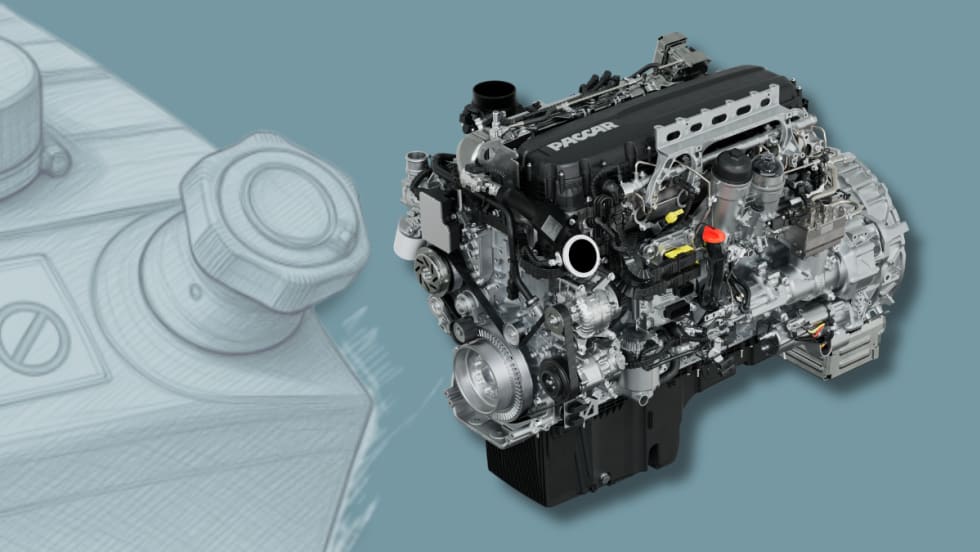
Cummins, Paccar Ease DEF Derates After EPA Guidance
Updated diesel engine software gives truck operators more time to address emissions-system issues while staying compliant with EPA emissions standards.
Read More →
Maintenance in the Messy Middle Part 3: Biodiesel
Biodiesel can reduce emissions, improve fuel-system lubricity and use existing diesel infrastructure. But NACFE’s Messy Middle maintenance report says fleets must actively manage storage, cold-weather operation, filters and oil drain intervals to avoid problems.
Read More →
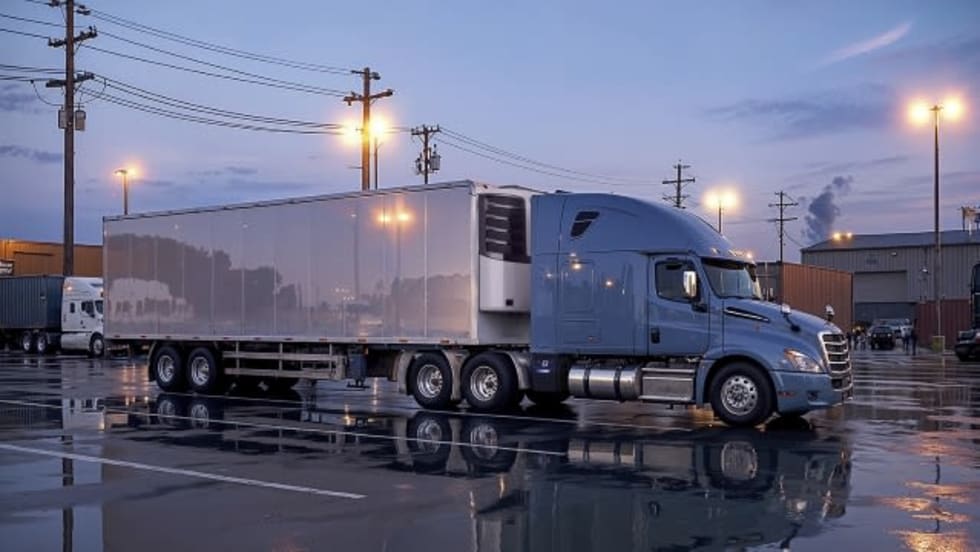
Enhance Fleet Performance with High-Efficiency Auxiliary Power Units
Drive sustainable cost savings while increasing driver comfort during short- and long-haul logistics operations.
Read More →
Maintenance in the ‘Messy Middle’ Part 2: Renewable Diesel Fuel
NACFE's latest Messy Middle Powertrain Service & Maintenance report says renewable diesel gives fleets an opportunity to reduce carbon emissions without changing trucks, fueling infrastructure or maintenance practices. But technicians still need to understand several important operational differences.
Read More →
The Diesel Engine Enters NACFE’s ‘Messy Middle’
NACFE’s new Messy Middle Powertrain Service & Maintenance report says keeping modern diesel engines running now depends as much on software, diagnostics and data as traditional mechanical service.
Read More →
DTNA Software Update Gives Truckers More Time Before DEF Derates Take Effect
The changes reflect EPA guidance aimed at reducing downtime caused by emissions-system faults while maintaining compliance requirements.
Read More →
New Agentic Predictive Maintenance Report Demonstrates How Degraded Aftertreatment Systems Waste Fuel
Questar analyzed a large mixed-class fleet and discovered it was wasting as much as $30 in fuel per vehicle, per day, because of mechanically degraded aftertreatment systems.
Read More →
New York City's Microhub Project is Delivering Results
Trucking, last-mile delivery companies, and environmental advocates like what they are seeing so far with New York's microhub program.
Read More →
Lessons Learned About Alternative Fuels: Start Small, Stay Flexible
Practical advice on adopting alternative fuels and ZEVs from HDT's 2026 Top Green Fleets, from renewable diesel and natural gas to electric trucks.
Read More →